A Guide to ODSP Vision Care Benefits

What Is ODSP

Today, we are going to learn about ODSP vision care benefits. So far in our series of provincial vision care benefits, we have covered OHIP. Let’s see how the ODSP vision care benefits are going to unfold! ODSP or the Ontario Disability Support Program is a provincial social assistance service provided by the Ministry of Children, Community and Social Services (MCSS). ODSP provides assistance with essential life and medical expenses for individuals with a physical or mental disability, who are not able to work due to the complications caused by their disability. It also covers the individual’s family members, like their spouse, and dependant children under 18.

Frequency of ODSP Vision Care Benefits

ODSP recipients are eligible to receive vision care benefits as long as the frequency criteria are met. Frequency criteria are slightly different for adults and kids.

Adults and their spouses are eligible for;

  • A routine eye exam once every 24 months (2 years)
  • Prescription eyeglasses once every 3 years
  • Repairs or replacements as necessary

Dependent kids under 18 are eligible for;

  • Prescription eyeglasses whenever there is a change in prescription
  • Repairs or replacements as necessary

If you are wondering about kids’ eye exam, read this post to learn more.

What Vision Care Benefits ODSP Offers

ODSP offers a number of vision care benefits to its recipients, including;

  • Full coverage for Routine Eye Exam
  • Partial coverage for Prescription Eyeglasses for Adults & Kids

Below, I’m going to explain the process for each service briefly.

Routine Eye Exam

The cost for a routine eye exam will be fully covered by OHIP. However, to use this benefit the recipient has to provide his/her health-card, Statement of Assistance, or other forms of ID to the optometrist. Using any fo these, the optometrist can determine whether the recipient is eligible for a routine eye exam and if eligible claim the expense so the patient doesn’t have to pay out of pocket.

Prescription Eyeglasses

ODSP covers costs associated with prescription eyeglasses up to a maximum, once every three years. After an eye exam, an eye care provider can inform the patient whether an upgrade is necessary. The optometrist or the optician does that by considering both the up-to-date prescription and the patient’s current glasses (if any available). Patients have the option to purchase prescription eyeglasses from a different provider. Nonetheless, before purchasing eyeglasses there are a couple of things the patient and the provider should do. First, discuss the available options, coverage amount referring to the MCSS Vision Care Fee Schedule, and inform the patient of any out-of-pocket expense. Then, make sure the patient obtains an Authorization/Invoice for Vision Care Form, before proceeding with the order. To obtain this form the patient can take the prescription to their local ODSP office in person. Alternatively, the eye care provider can fax it in, given that they have the contact information for the patient’s caseworker.

Summary

ODSP is a provincial social assistance program for people with disabilities. Vision care benefits are one of the many services provided by ODSP. Patients receiving ODSP are eligible to receive vision care services as long as the frequency criteria are met. MCSS has a fee schedule available for service providers, which sets out the maximum amount payable to the provider. If the cost for prescription eyeglasses is more than what’s covered by MCSS, the patient has to pay the difference out of pocket. So it is important that a clear discussion with the patient is done during the consultation and recorded for both the provider and the patient’s reference.

Is Your Optician Coronavirus Ready?

Since the Coronavirus lockdown started in Ontario, opticians and other healthcare professionals are required to avoid non-essential services. The Ministry of Health issued this directive to protect the public and healthcare providers. So for as long as the lockdown continues, we should expect this to be the new norm. The good news is all regulatory bodies, including the College of Opticians of Ontario (COO), have issued guidelines to help both healthcare providers and the patients to navigate through these challenging times. So if you are wondering how to know your optician is going to be Coronavirus ready, today’s post is going to be your guide.

What to Do During the Lockdown

The rule of thumb is only to visit your optician if it is necessary. But what is considered “necessary” during the pandemic? The College of Opticians of Ontario says “critical repairs or replacements of eyeglasses and refilling contact lenses that impact the health and daily functioning of the patient”. The best way to find out if your specific issue needs urgent care is to contact your optician and consult them. However, don’t fret if you don’t know an optician or if your optician is unavailable, the COO can help you find one. As of April 15/2020, the COO announced working on building an online directory on their website, where you can search for available opticians in your area.

Remote Dispensing

Opticians are encouraged to practice “remote dispensing” to protect the safety of their patients, themselves, and their families. Although it is not the standard or the ideal way to dispense eyewear, it eliminates the risk of contracting or spreading the Coronavirus in the community. Remote dispensing could be the solution to your specific problem, but only your optician can tell you that using their professional judgment. So don’t hesitate to call them!

Things to Consider if You Are a New Patient

If you are consulting an optician as a new patient,  be prepared to disclose;

Your contact information

Provide your full name, DOB, phone number, home address, and email address as alternative communication (you can ask not to receive promotional material)

Your medical history

Let the optician know whether you are suffering from any systemic diseases, taking medication, had any eye-related injuries or procedures done, and the date of your last eye exam. Also, make sure to provide a copy of your most recent eyewear prescription.

Your use of eyewear (i.e. glasses, contact lenses & other visual aid devices)

Let the optician know the type of eyewear you use, how long you have been using them, and how you use them (i.e. wearing contact lenses occasionally, or wearing protective eyewear due to an injury, and so on). The more information you provide, the better the optician could help you.

Things to Consider if You Are a Returning Patient

If you are a returning patient, your optician should have the information from your last visit on file. However, consider disclosing any updates or changes to your health, vision, and living conditions that could impact your use of eyewear.

When the Lockdown Is Over

You might have heard health officials warning about the risk of a resurgence. To prevent that, we should continue to take safety measures even after the lockdown is over. As the days go on the health regulatory bodies will continue to update their members on safe practice guidelines. Let’s have a look at the safety procedures your optician should take to be prepared.

What to Expect From Your Optician

To make sure your optician is Coronavirus ready, don’t hesitate to call in and ask questions. In “Is Your Optometrist Coronavirus Ready?” we covered necessary safety measures, that applies to opticians and other health professionals as well. So let’s review things you should ask your optician before visiting the dispensary.

Personal Protective Equipment (PPE)

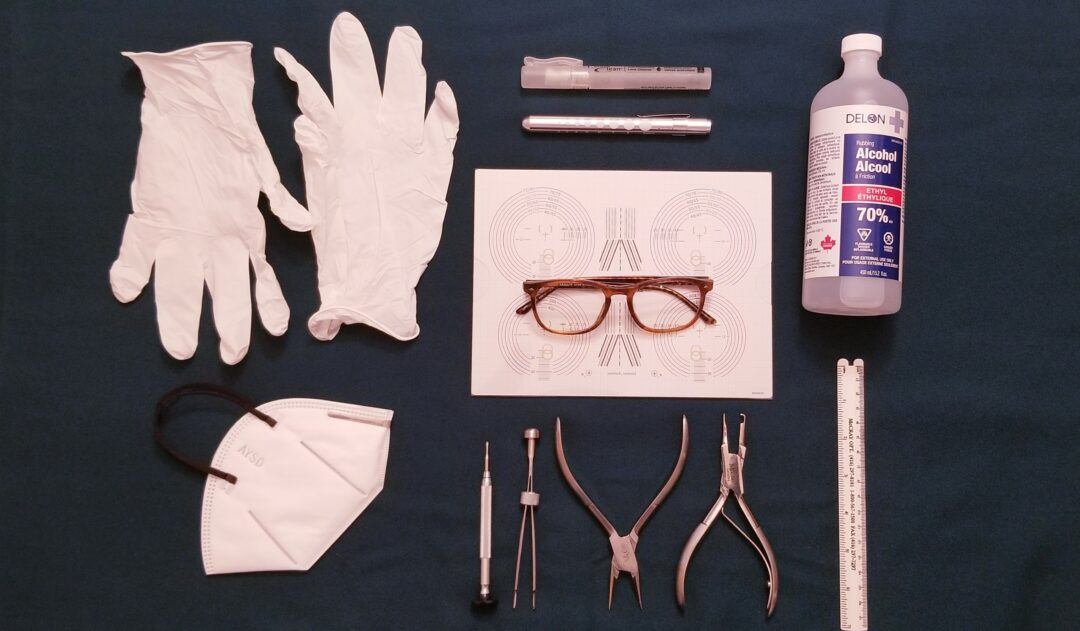
Naturally, when you visit a dispensary to get fitted with eyewear, the optician has to be close to you to assess the fit of the eyewear, make necessary adjustments, and take the required measurements. This violates the minimum standard for physical distancing, which is 2 m. So for safety reasons, both you and your optician should wear PPE to minimize the risk of COVID-19 spread. So when you call in, make sure to ask whether they have proper PPE, or know an optician who has.

Proper Cleaning & Disinfecting Procedures

The dispensary must be cleaned on a regular basis, and the optician has to make sure all common areas, equipment, and frames are properly disinfected in between patients;

  • Any frames that have been put on by patients must be disinfected before returning to frame boards.
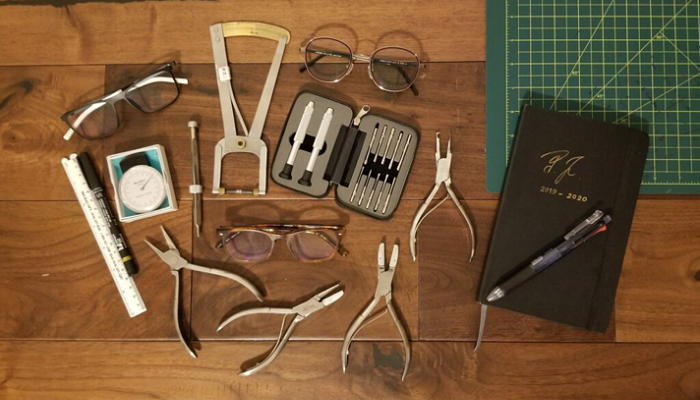
  • All tools and equipment, such as the PD meter, the PD ruler, trial frame, pliers, and screwdrivers have to be disinfected in between patients.
  • Common areas, such as the reception, the waiting area, and the dispensing table must be disinfected between patients, as well.

Scheduled Visits, Only!

Ask your optician about their visit schedule. The safest option would be to book an appointment in advance. Since most dispensaries have limited floor space, you want to make sure you can maintain the required physical distance with others.

Service Delays

Next, you should keep in mind service delays due to the COVID-19 pandemic. Ask your optician about the approximate length of consultation and the wait-time for service delivery. It is possible that you have to wait longer than usual for your optician to properly disinfect equipment for your use or to process and dispense your eyewear order.

Remote Dispensing

When the risk of contamination is high, avoid in-person visits. Instead, arrange for a virtual consultation with your optician.

What Your Optician Expects From You

Scheduled Visits

Ideally, during the pandemic, your optician would want you to call in advance and schedule an appointment. This way they can make sure no one’s safety is going to be compromised with a surprise walk-in visit.

Updates on Health Condition

Let your optician know if you had any changes in your health condition recently. If you suspect you might have contracted the Coronavirus take the online self-assessment, and cancel any non-essential visits.

Communication

Make sure to provide multiple communication methods, such as email address and alternate phone number. During these uncertain times, your optician might need to update you on crucial information. Examples would be delays in your orders or temporary closure of the dispensary due to contamination.

Summary

During the COVID-19 lockdown, access to many services has been limited. It is challenging, but it serves the best interest of all of us. If you are experiencing any eyewear-related issues, it is best to contact your optician for consultation. They can tell you if an in-person visit is necessary or not. There are safe practice guidelines for opticians to follow to be Coronavirus ready, even after the lockdown is over. However, before any in-person visits, you should communicate your concerns with your optician.

I hope this post finds you well!

As always, feel free to ask your questions or leave a comment about your recent visit to the optician. And remember to stay safe!

how-to-make-the-most-of-your-studies-person-studying

How to Make the Most of Your Studies

In this post, I’m going to share with you some tips to help you make the most of your studies. Note that I chose Opticianry as an example, but these tips can be applied to any field of study. Ready? Let’s dive in!

1. Know What to Expect

Knowing what to expect from your chosen program, is mentally preparing yourself for what lies ahead, so that you are less likely to feel stressed out, confused, and frustrated down the road. This is especially important if you have been away from school for a while or are going to enter a new school system in a new country. If you are considering studying Opticianry, I recommend reading my previous posts on;

In general, you want to gather as much information as you possibly can, and there are many ways to do that. 

The Website

The first and most obvious one is; read the school’s website inside and out! Usually, all schools have a website that highlights key information for new applicants and current students. You can learn about the school’s reputation, and faculty, the specific program’s curriculum, and possible career paths. You can also directly contact the program coordinator, or join a student forum if you have specific questions.

The Regulatory Body & Association

Next, look up the profession’s regulatory body website. This should be your primary reference for field-specific information, such as; regulations, and standards of practice. Professional association websites have a variety of resources available, as well. You can access educational material, updates and news on the industry, and much more. For Ontario Opticians, the College of Opticians of Ontario (COO) is the regulatory body, and the Ontario Optician Association (OOA) is the professional association. Provincial associations are usually part of national associations, like the Optician Association of Canada (OAC) for OOA.

Orientation & Open House

Make sure to attend the school’s open house and orientation days. If you happen to miss the open house, make sure you do attend the orientation day! Because it would be your first official day at the school! You will have the opportunity to;

  • Get a feel for the school’s atmosphere,
  • See the facilities, such as your classrooms and labs,
  • Meet your program coordinator, future classmates, and some of your teachers in person,
  • Ask any unanswered questions that came up during your research,
  • And if the weather condition allows, you can party under the sky and eat hot dogs and veggie burgers! Yay!

Other Resources

Last but not least, take your research a step further by looking up other field-specific forums, websites, online magazines, and blogs. An example would be…ahem…The Lost Contacts 🙂 You can find useful information that might help you before, during, and after your studies! I will share with you a list of these resources in the near future.

Remember to collect any and all information you find during your research in a file; it can be a folder in your browser’s Bookmarks section, a folder on your computer, or a physical copy. Keep this collection, and use it as your reference throughout your studies.

2. Develop a Plan of Action

Now that you know what to expect, it’s time to develop a plan of action. To do so, there are a few things you need to gather;

  • Your list of strengths & weaknesses (We covered this here)
  • Your research collection (explained above)
  • Pen & paper (or your journal)

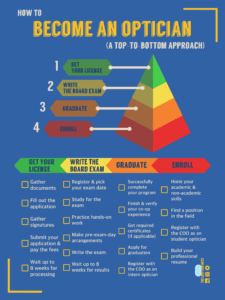
To create your plan of action the best way is the top-down approach. I divided the study period into four general categories;

  • Getting Licensed,
  • Writing the Board Exam,
  • Graduate,
  • and Enroll.

You can assign a time-line to each category, plus definitive sub-categories that are necessary to complete, to climb the pyramid. Here’s when your research collection comes handy!
To paint a clearer picture for you, I used Opticianry as an example in the diagram below. Let’s have a look;

As you see, at the top of the pyramid is “registered/licensed Optician” which is where you want to land after finishing your studies. (Now, of course, getting your license is not the end of the journey, rather it’s the beginning. However, for the sake of this article, our focus is on studies, only.) From the top, we work our way backward, creating a list of requirements step by step. As you progress through school, you can update your plan to reflect your current situation and help you stay on track.

3. Prepare Your Environment

Now that you know what to expect and have your plan of action, it’s time to prepare your environment for execution! And by that I mean, submerging yourself into your field of study. Since we have limited resources, like time and energy, the best way to make the most out of them is to focus our attention. It’s not easy to do so, not at all! But there are things we can do to minimize distraction as much as possible. Let’s get down to it!

First, look at your strengths & weaknesses list.

In Choosing your field of study we talked about how to identify your strengths and weaknesses. Your time at school is the best opportunity to work on improvement areas. It is also an opportunity for you to start building your resume, by relying on your strengths to get involved in extracurricular activities.

Second, start looking for a position in the field.

If you are not currently working in your field of study, I suggest starting your job search ASAP. The position you come across during your job search, probably will not be your dream job. However, I recommend taking it even if it’s slightly/remotely related to your field. This helps to keep your mental energy more focused, and you could explore the career possibilities out there with your specific education. For instance, if you are starting to study Optometry or Opticianry, but don’t have any experience in the optical field look for jobs as a sales associate, or a frame stylist at an optical store, or a receptionist position at an Optometrist’s or Ophthalmologist’s office. 

Third, connect with your teachers, classmates and other students.

Not only you will be creating an academic support system for yourself, but also you might end up making valuable connections that can help you in the future.

And finally, register with the regulatory body and professional association as a student.

As I mentioned in part 1, you will have access to valuable resources, and you get discounts and offers to attend professional events.


Summary

Today we learned the key to making the most of your studies lies in three things, and those are;

  • Do your research, so you know what to expect,
  • Categorize the information you collected to develop a plan of action,
  • Start executing your plan, by preparing your environment to work your way up.

I hope you find this post helpful!
Feel free to share your tips for making the most out of your studies, I would love to hear your thoughts!
Talk to you in the next post!

Opticianry Schools II- NAIT

Opticianry Schools Part II

Welcome to part II of Opticianry Schools! In Part I, we reviewed opticianry schools in Ontario offering the program in traditional-classroom-style delivery. We also did a comparison of the two schools and briefly went over what to expect from your studies.

Here we are going to learn about a third option to become a licensed optician in Ontario, and that is through NAIT – the Northern Alberta Institute of Technology.

I know, sounds a little weird. Alberta and Ontario are some 2000 km apart, and they each have their own rules and regulations for opticians, so how is that you can become a licensed optician in Ontario by studying a program in Alberta?

Well, that’s exactly what I’m going to do in this post; telling you how!

How is NAIT different from Seneca and Georgian college?

In comparison to Seneca and Georgian College, NAIT has a different delivery mode, program structure, and licensing. NAIT offers multiple disciplines under the Optical Sciences field, including accredited and non-accredited programs. We are going to focus on accredited education today.

As discussed in Part I, in Ontario your studies encompass both eyeglasses and contact lenses. You can choose to specialize in one category when you are applying for your license, but you must complete the school’s curriculum nonetheless. At NAIT, however, the accredited education designed for opticians is primarily focused on eyeglasses dispensing. After receiving your diploma, if you wish to expand your scope of practice, you can study a 1-year post-diploma certificate program focused on contact lenses.

Now, let’s take a closer look at things.

NAIT Optical Sciences-Eyeglasses

Delivery Mode & Program Structure

If you are currently working in the eye care field and wish to pursue it professionally, then this program could be a great fit for you. Why? Because, NAIT’s Optical Sciences-Eyeglasses program is an online optician training program, and entry to the program is conditional upon having secured employment with a licensed supervisor, such as a licensed optician, optometrist or ophthalmologist. This is especially important, as your dispensing hours and the practical portion of your studies must be verified by a licensed practitioner for you to be able to graduate.

That means you can get your license without disrupting your work schedule, and build upon your skills in the field you love. It’s a luxury to be able to study and work in the same field; I mean doing one while doing the other!

As an applicant outside of Alberta, you can apply through the Opticians Association of Canada. Once you send your inquiry you will receive an application package, which guides you through the registration process.

NAIT’s online optician training program is 2 years long and made up of 4 terms, each with its own practicum portion.

In year one you will start by learning about frames, basic mathematics and optics, instruments and measurement techniques. Then in 2nd term, you delve deeper by studying communication, prescription interpretation, and design of single vision lenses.

In the 2nd year, you will continue building upon your knowledge by studying eye health (which covers basic principles in anatomy, physiology, and pathology of the eye). You also further your knowledge of dispensing by learning about multi-focal prescription interpretation and lens design. Finally, in term 4, you will learn about patient /practice management, work ethics, and standards of practice. In each term, you are required to complete a Clinical portion, before levelling up.

Licensing

After successfully finishing your online optician training program you will receive your diploma from NAIT. However, you are not entitled to practice independently as an optician yet! First, you have to write the national examination for opticians called NACOR (National Association of Canadian Optician Regulators). Once you passed your NACOR exam, then you can apply to register with the College of Opticians of Ontario. Throughout this process, you have to continue to work under the supervision of a licensed eyecare professional. When you receive your registration number and license from COO, you can officially call yourself an optician!

This was just a brief overview of the optician training programs in Canada, specifically Ontario. If you’re not sure which one is the best fit for you or you have any questions about the different schools, let me know in the comments below!

Choosing Your Field of Study

Choosing Your Field of Study

Choosing your field of study, or more specifically, choosing what to take on as your career, can be one of the hardest decisions anyone has to make in life. No matter what stage of life you are in, it is worth taking some time to get to know yourself better. This is called self-awareness, and if you commit to it before making any life-changing decisions, in a few years when you look back, you will see how much physical, mental, and emotional energy you have saved, not to mention money!

Now, some of you might say that’s not the case for you! And you decided on a career at a young age! If that’s you, well…kudos to you! However, I bet there are some of you who don’t know what to pursue. At least not as of yet! In that case, don’t worry…you are not alone! 

Today, I’m sharing with you a few tips that helped me in making a decision.

Make a list of your strengths & weaknesses

When choosing a field of study it’s a good idea to take inventory of your strengths and weaknesses before committing to anything. All of us have some sort of idea of what we do well and what we don’t. However, having a tangible representation, such as a list, can help in reinforcing the good qualities and developing a plan of action for areas of improvement. I suggest taking your time when preparing this list, maybe over a few days. Try to find a time and place where you cannot be distracted and can gather your thoughts. To start identifying your areas of strength and weakness think of the things you have done and your experiences until this point in time, and look at them objectively.

For instance, think of any subject you have studied at school, hobbies or activities that you do, compliments or criticism you’ve received from someone regarding your character or skills, something you have done or accomplished that made you feel proud or disappointed. If you are still in high school, looking at the rubrics from your assignments and the mark you received can be very helpful to gain more insight into things. Remember to give yourself a break after spending some time thinking and writing. 

You can also, talk to your trusted acquaintances – friends, family, colleagues, etc. – to learn more about yourself. Usually, people see us differently than we see ourselves. It can be interesting to hear their point of view, as well. When you are done, keep your list as a reference to go back to every once in a while to see where you stand with your improvements, and to remind yourself of the good things about you.

Consider Volunteering

How to choose your field of study

Volunteering is a great opportunity to meet new people and learn new things. The experience you gain through volunteer work can impact what you choose to study in the future. 

Try to find a position in a field you are interested in or are curious about. If you are a student try to take on different roles in different industries to expand your views. You might end up hating a field or falling in love with one. Whatever the outcome, you will have a better understanding of your likes and dislikes. If you are interested in giving it a try, check out the links below to get started;

  1. Volunteer Canada
  2. Volunteer Match
  3. Ontario Nature
  4. Canadian Red Cross
  5. Volunteer Ontario
  6. Toronto Charities
  7. City of Toronto
  8. Volunteer Toronto
  9. The CNIB Foundation

Take Personality Tests

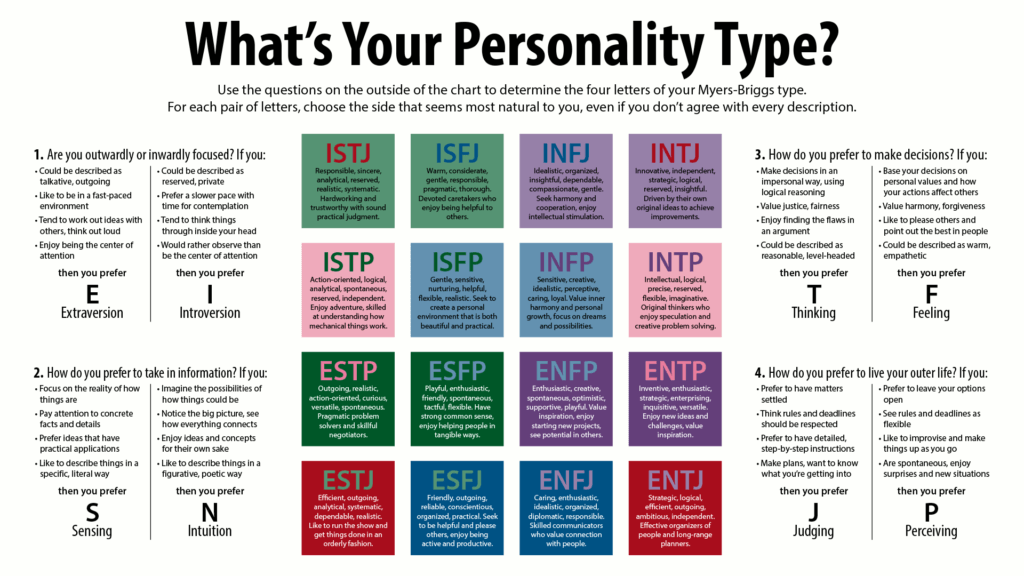
Chart of Myers Briggs Types

Another way to learn more about yourself is by taking standardized personality tests. Standardized Personality tests are tools developed by scientists and scholars, especially in the field of psychology. The purpose of these tests is to identify and categorize different aspects of human behaviour. The insight that these tests give us, can have many practical applications, one of which is finding a suitable field of study or career.

 One of the most popular personality tests out there is the Myer-Briggs Type Indicator or MBTI. Some of you might already be familiar with this test. For those of you who might not be, here’s a little background;

MBTI or Myer-Briggs Type Indicator is named after its developers, Isabel Briggs Myers and Katharine Cook Briggs, a mother-daughter duo, who developed this tool over 30 years of careful study, research, and analysis of similarities and differences between humans. The test identifies 16 personality types each made of 4 major indicators of human behavioural tendencies. Each of these 4 indicators has 2 contrasting qualities. Based on MBTI our personalities are made up of how we view the world, how we perceive information, how we process that information to make decisions, and how we structure our values. Take a look at the chart below, for a summary of these 16 personality types, and their characteristics.

If you can’t wait to find out what your personality type is, and you love to learn and have fun, then you’re going to love these;

Truity

Take Personality Tests

Truity is a website dedicated to psychometric tests, and it offers both free and paid tests. An account is not needed to take the tests and view your results. However, you might want to consider one if you want to save your results & review them later on. What I like about Truity is that the test results include potential career options. And if you find yourself interested in a field you can go ahead and read on job-specific requirements, or take their career aptitude test to narrow down your options. You can take the MBTI test here, for free!

16 Personalities

Take Personality Test

As you might have guessed, 16 Personalities offers only the MBTI test. What makes it interesting is that you can join their community and find like-minded people to connect with, or read on interesting blog posts to learn more about your type and maybe those of your friends!

Frank James

And my personal favourite, Frank James, a Youtuber who specializes in MBTI comedy sketches! So, if you are tired after all the test-taking, check out his channel and refresh with a good laugh. You might also learn a thing or two about other personalities in your life! 😉

Visit Job Bank Canada

Last but not least is a useful resource, great for gaining insight not only into your qualities but also into different fields of study and work. Job Bank Canada provides local, and current data and trends on occupations and fields of study. You can use the career planning tool to;

  • learn about a field of study,
  • take career quizzes or in other words, personality and aptitude tests,
  • discover job profiles,
  • and use the skills and knowledge checklist to take inventory of your abilities.  

I hope this post helps you to have a better understanding of what your desires are. Also, I hope you find these ideas helpful in choosing your field of study. If you are interested to know about my field of study, check out this post. I  also recommend reading this post on optometry, to learn more about careers in the eye care industry.  As always feel free to ask any questions, or leave a comment. I would love to hear about what helped you choose a career!

Opticianry Schools I - Featured Image

Opticianry Schools Part I

In the previous post, we covered what opticianry is and what opticians do. Today, we are going to learn about education and training options available for those of you interested in entering the field. I decided to write this post in two parts to keep things easy to navigate through. Now, let’s get started with the part I of Opticianry Schools!

Opticianry Schools in Ontario

Like most college programs, opticianry is a combination of theoretical and practical work and is usually offered as a two-year full-time program. In Ontario, there are two schools offering Ontario College Diploma in opticianry; Seneca College, located in Toronto, and Georgian College, located in Barrie. Both schools have facilities to teach practical courses, which gives students the opportunity to learn the procedures and work with the common tools & instruments. Although what both schools have to offer are fundamentally similar, you might prefer the curriculum design of one over the other. Ultimately, your decision comes down to your life situations. I prepared a comparison chart for you, with external links, to give you a glimpse of what you could expect from each school. Let’s take a look;

Seneca Vs. Georgian

 Seneca CollegeGeorgian College
Program NameOpticianryOpticianry
Program CodeOPTCOPTI
LocationNewnhamBarrie
Duration4 Semester (2 years)4 Semester (2 years)
Co-op OptionAvailable & MandatoryAvailable & Mandatory
Credentials AwardedOntario College DiplomaOntario College Diploma
SchoolSchool of Health SciencesSchool of Health, Wellness and Sciences
DeliveryFull-time & Part-timeFull-time
Start DateSeptemberSeptember & January
Admissions RequirementsOntario Secondary School Diploma (OSSD), or equivalentEnglish: Grade 12 C or U, or equivalent courseMathematics: Grade 12 C or U, or equivalent courseScience: Grade 12 C or U chemistry or physics, or Grade 11 C or U biology, or an equivalent courseMature ApplicantsOthersOntario Secondary School Diploma (OSSD), or equivalentEnglish: Grade 12 C or UMathematics: Grade 12 C or UGrade 11 or 12 Biology (C or U) OR Grade 11 (U) or Grade 12 (C or U) ChemistryOR Grade 11 or 12 (U), or Grade 12 (C) PhysicsMature Applicants & Others
Courses  Downloadable PDFDownloadable PDF
Tuition$7,247$3,057.26
Books & Supplies$1,485$1,023.07
Seneca VS. Georgian

Subjects Covered

I mentioned in this post, that opticianry is a mix of hard and soft sciences. So if you are thinking about studying opticianry, it would be really helpful to have some background knowledge in; biology, mathematics, physics (specifically optics), business and communications, and chemistry. However, don’t worry if that’s not the case for you! There are many resources available at both schools to help you succeed in your studies. In general, these are the subjects you can expect to study throughout your program (with each school having its variations of the titles);

Anatomy and Physiology of the Eye:

You will study the structures of the human eye and how they work in relation to each other and the nervous system to produce vision. Check out lesson 4 for a head start.

Geometric Optics:

In this course, you will learn the fundamental principals of optics, which is the study of what light is, how it helps us see and how it behaves. Check out lesson 1, to start learning.

Ophthalmic Optics:

This course builds on your Geometric Optics foundation, and focuses mainly on corrective eyeglass lenses and their properties. See lesson 2 & lesson 3 to learn the basic principals.

Eyeglass Dispensing Theory:

This course teaches you about the most common refractive errors, how to identify them by looking at a prescription for eyeglasses, how to correct them, how to take necessary measurements, what type of lens to use, and what type of frame to choose to meet your patient’s specific needs.

Eyeglass Dispensing Labs:

This course puts your theoretical knowledge to practice. You get to work in pairs or groups to practice dispensing procedures with or on your classmates. Get ready to get intimate! You will also, work individually and will learn how to fix or adjust a pair of glasses, and how to neutralize one.

Eyeglass Fabrication Labs:

In this lab you will learn how to shape a pair of lenses to fit into an eyeglass frame. You are going to apply your knowledge in dispensing to troubleshoot your work, and you will learn some new techniques.

Contact Lens Dispensing Theory:

This course will give you the fundamental knowledge on contact lenses including, but not limited to; types, applications, and dispensing procedures.

Contact Lens Dispensing Labs:

If you thought eyeglass dispensing lab was intimate, wait until you attend a contact lens dispensing lab! Here you will usually work in pairs, and get to practice contact lens dispensing procedures on your poor classmates. You will also work with a variety of instruments involved in contact lens fitting, and you will learn fitting procedures, assessment, and troubleshooting techniques.

Business courses:

You will study some introductory business courses to learn about economics, procedures involved in establishing your own business, and more.

Communications courses:

You will study introductory communications courses, which covers the following topics; communication in different settings, across cultures, within groups and organization, and more.

Pathology of the Eye:

Pathology is the study of disease, conditions, and abnormalities of a system, in this case, the human eye. You will learn to identify signs of various eye diseases and conditions.

Professional Education:

This subject covers the ethics and scope of practice regulated by the College of Opticians of Ontario. You will learn standards of practice in Ontario. Depending on the program’s demands, you might learn other useful information that will help you in practice such as product knowledge, customer service, and marketing basics.

Refraction:

In this course, you will learn the necessary procedures for determining a patient’s prescription. As of now, opticians in Ontario are not allowed to refract. However, knowledge of refraction will help you to communicate with other professionals (i.e optometrists) effectively and dispense eyewear with more confidence, plus you’d be able to provide better customer care.


Summary

Today, we learned about opticianry schools in Ontario. We briefly compared the two schools offering opticianry diploma and went over the subjects taught in those schools. In part II  I will introduce an alternative option to study opticianry. Meanwhile, go ahead and check out our courses and articles to start learning some basics, and join our newsletter to receive updates. Don’t forget to download the course lists available for you in the chart, it will give you a clearer picture of how the two curricula compare. And finally, feel free to ask your questions in the comments section below, and I’ll try my best to answer them. Cheers!

What is Opticianry - Featured Image

What is Opticianry?

Opticianry is an exciting field of study, as it touches on a variety of topics, from hard and soft sciences to design and art. However, if we define the word “Opticianry” in itself, it is the practical study of light and its properties (i.e. optics), as applied to correct problems associated with the human visual system.

  • What does that mean?

Well, it basically means opticianry is the practice of making or dispensing eyeglasses, contact lenses, and other visual aid devices.

Now that you have a rough idea of what opticianry is, let’s get technical and take a look at who opticians are and what they do, exactly!

Let’s get started!

Who Are Opticians?

Opticians are, in some sense, interpreters. They interpret prescriptions written by Ophthalmologists & Optometrists and dispense eyeglasses, contact lenses, and other visual aid devices, accordingly.

Like Ophthalmologists & Optometrists, Opticians are regulated healthcare professionals, too. According to WES;

“The government regulates occupations that affect a large number of people directly, such as those in healthcare, engineering, law, finance, and education. In a regulated profession, you need a license or certificate from the regulatory body that governs that occupation to be employed in that field.”

In Ontario, the College of Opticians of Ontario (COO) regulates Opticians. COO protects public safety by ensuring Opticians follow standards of practice of the profession.

What-is-opticianry-coo-logo

Besides the COO there are 9 other provincial regulatory bodies for opticians in Canada, including;

College of Opticians of British Columbia

Alberta College & Association of Opticians

Saskatchewan College of Opticians

The Opticians of Manitoba

Opticians Association of New Brunswick

Nova Scotia College of Dispensing Opticians

P.E.I. Board of Dispensing Opticians                  

The Dispensing Opticians Board of Newfoundland and Labrador

Each provincial regulatory body has its own set of regulations that could be slightly different from other provinces. But who regulates them?

Well, that would be NACOR’s job!


NACOR’s logo

NACOR is the National Association of Canadian Optician Regulators. In the future, I will tell you more about what NACOR does…stay tuned!

What Do Opticians Do?

Sometimes people confuse Opticians with Optometrists and vice versa. While there are some similarities between the two professions, they are, in fact, two different fields of study. To help distinguish between the two, imagine a lab setting. The optometrists would be the scientists, and the opticians would be the lab technicians. To learn about what optometrists do check out this page. For now, let’s have a look at what opticians do.

Refraction: In eye care settings, refraction is the procedure through which an eye care professional checks a patient’s visual acuity and determines his/her prescription for glasses. As of now only a small number of opticians in Ontario perform refraction.

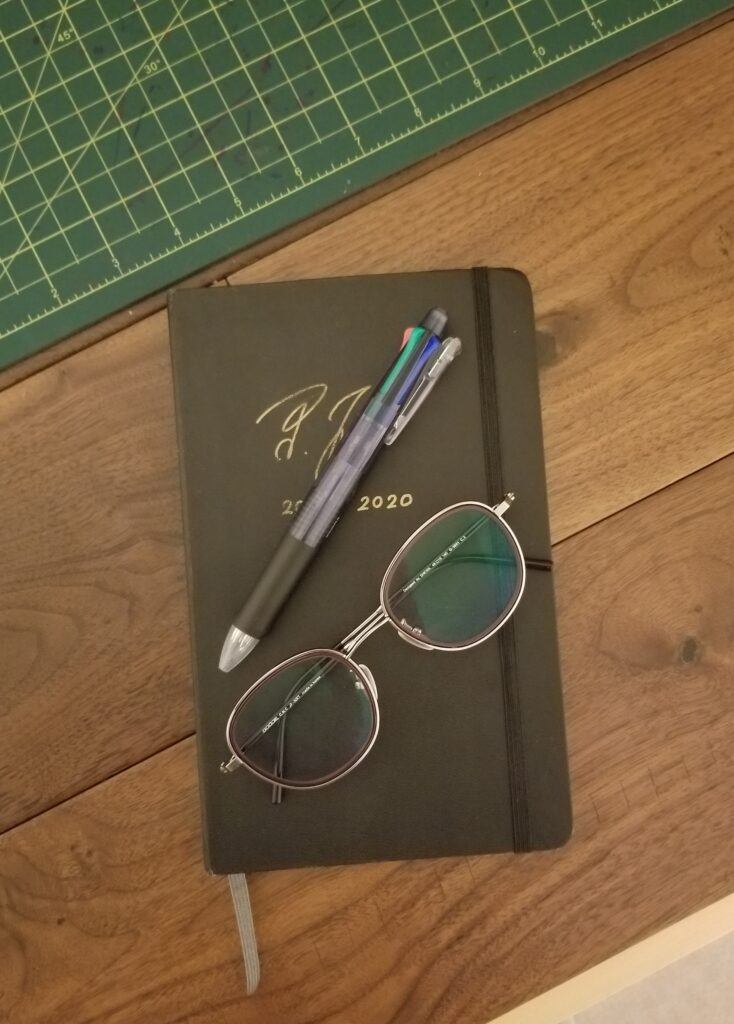
Opticianry-Optician's tools-Consultation

Consultation: Opticians consult their client in choosing eyewear that is both compatible with the prescription and the client’s needs. They can also consult patients on eye care and eyewear care, and refer them to other health professionals when necessary.

Opticianry-Optican's-tools-Measurement-pd-meter

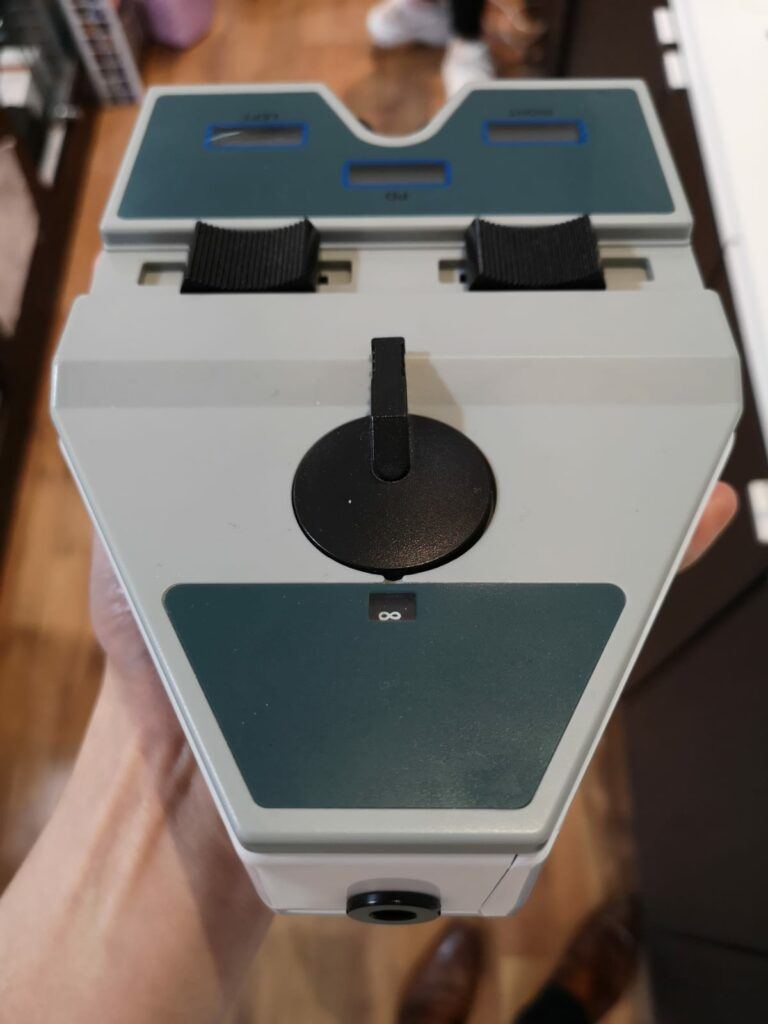
Measurements: This is a crucial part of opticians’ job. Whether fitting a pair of glasses, contact lenses or other visual aid devices accurate measurements are key to patients’ comfort and satisfaction.

Opticianry-Optician's tools-Adjustment

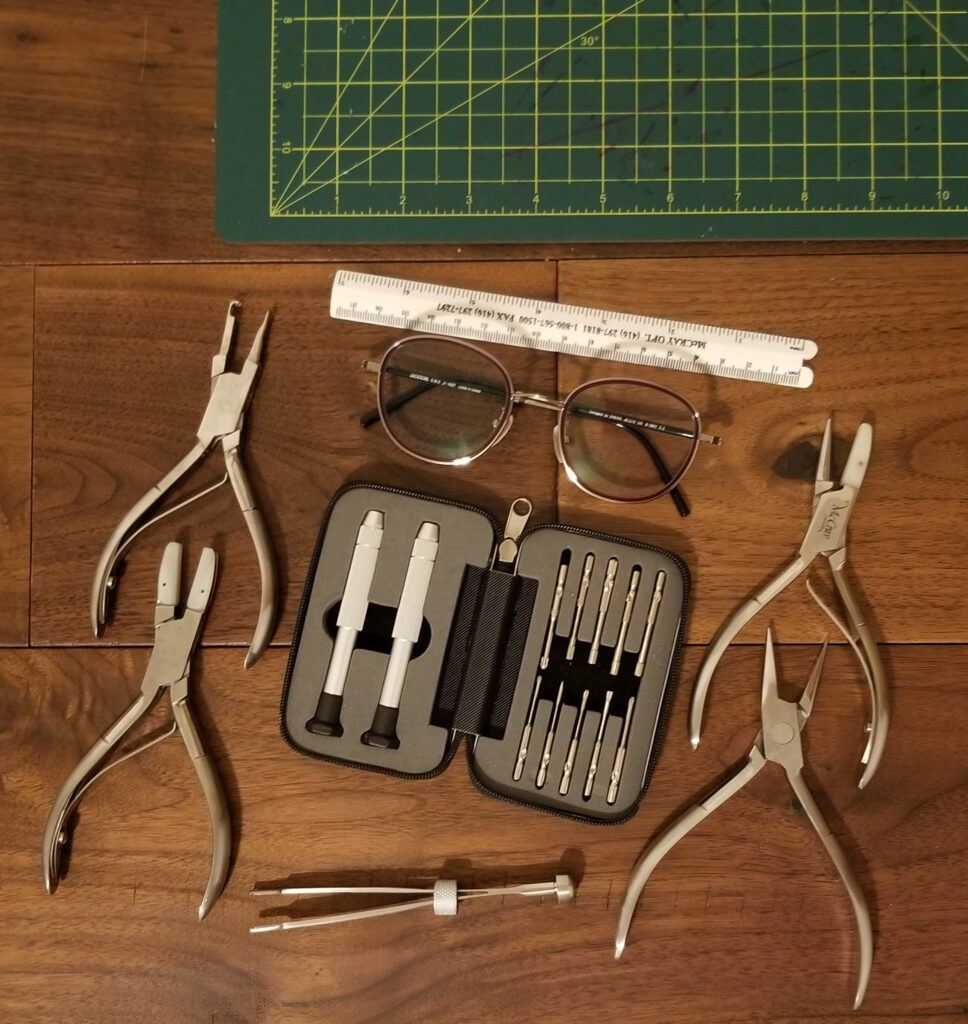
Adjustments: Adjustment is another crucial step! In fact, adjustments can make or break the accuracy of measurements. Adjustment and measurement usually happen simultaneously, based on the optician’s judgement.

Opticianry-Fabrication-auto-lens-groover

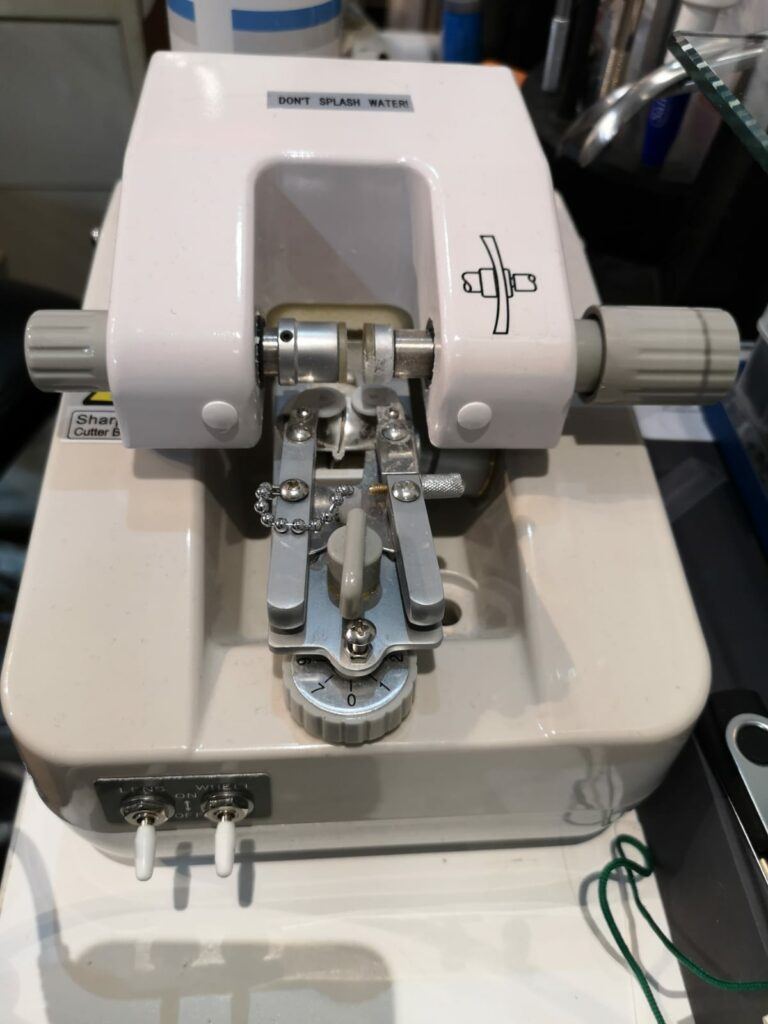
Fabrication: Fabrication is the process of making a pair of glasses based on an order form. Fabrication includes interpreting the data collected during consultation and measurement and edging (i.e. cutting) a pair of lenses to fit into an eyeglasses’ frame.

Opticianry-Neutralization-auto-lensometer

Neutralization: Is the process of verifying the prescription of a pair of glasses against an existing order, for accuracy.

Opticianry-Dispensing-woman-trying-on-eyeglasses

Dispensing: Is the final step in which the optician gives the ready-made eyewear to the client to physically try on. This is when both the optician and the client get a chance to see whether the eyewear is functioning the way it should be. So, it is an opportunity for both to address any issues.

Do you find Opticianry interesting? Do you like to know more about it? Then go ahead and check out my post on How to become an Optician.

There are many other aspects of an optician’s job that I will share with you in future posts. Meanwhile, feel free to ask your questions or leave a comment in the comments section below. Don’t forget to like, share, and subscribe to our newsletter, if you find this post helpful. 

Talk to you soon!