Is Your Optician Coronavirus Ready?

Since the Coronavirus lockdown started in Ontario, opticians and other healthcare professionals are required to avoid non-essential services. The Ministry of Health issued this directive to protect the public and healthcare providers. So for as long as the lockdown continues, we should expect this to be the new norm. The good news is all regulatory bodies, including the College of Opticians of Ontario (COO), have issued guidelines to help both healthcare providers and the patients to navigate through these challenging times. So if you are wondering how to know your optician is going to be Coronavirus ready, today’s post is going to be your guide.

What to Do During the Lockdown

The rule of thumb is only to visit your optician if it is necessary. But what is considered “necessary” during the pandemic? The College of Opticians of Ontario says “critical repairs or replacements of eyeglasses and refilling contact lenses that impact the health and daily functioning of the patient”. The best way to find out if your specific issue needs urgent care is to contact your optician and consult them. However, don’t fret if you don’t know an optician or if your optician is unavailable, the COO can help you find one. As of April 15/2020, the COO announced working on building an online directory on their website, where you can search for available opticians in your area.

Remote Dispensing

Opticians are encouraged to practice “remote dispensing” to protect the safety of their patients, themselves, and their families. Although it is not the standard or the ideal way to dispense eyewear, it eliminates the risk of contracting or spreading the Coronavirus in the community. Remote dispensing could be the solution to your specific problem, but only your optician can tell you that using their professional judgment. So don’t hesitate to call them!

Things to Consider if You Are a New Patient

If you are consulting an optician as a new patient,  be prepared to disclose;

Your contact information

Provide your full name, DOB, phone number, home address, and email address as alternative communication (you can ask not to receive promotional material)

Your medical history

Let the optician know whether you are suffering from any systemic diseases, taking medication, had any eye-related injuries or procedures done, and the date of your last eye exam. Also, make sure to provide a copy of your most recent eyewear prescription.

Your use of eyewear (i.e. glasses, contact lenses & other visual aid devices)

Let the optician know the type of eyewear you use, how long you have been using them, and how you use them (i.e. wearing contact lenses occasionally, or wearing protective eyewear due to an injury, and so on). The more information you provide, the better the optician could help you.

Things to Consider if You Are a Returning Patient

If you are a returning patient, your optician should have the information from your last visit on file. However, consider disclosing any updates or changes to your health, vision, and living conditions that could impact your use of eyewear.

When the Lockdown Is Over

You might have heard health officials warning about the risk of a resurgence. To prevent that, we should continue to take safety measures even after the lockdown is over. As the days go on the health regulatory bodies will continue to update their members on safe practice guidelines. Let’s have a look at the safety procedures your optician should take to be prepared.

What to Expect From Your Optician

To make sure your optician is Coronavirus ready, don’t hesitate to call in and ask questions. In “Is Your Optometrist Coronavirus Ready?” we covered necessary safety measures, that applies to opticians and other health professionals as well. So let’s review things you should ask your optician before visiting the dispensary.

Personal Protective Equipment (PPE)

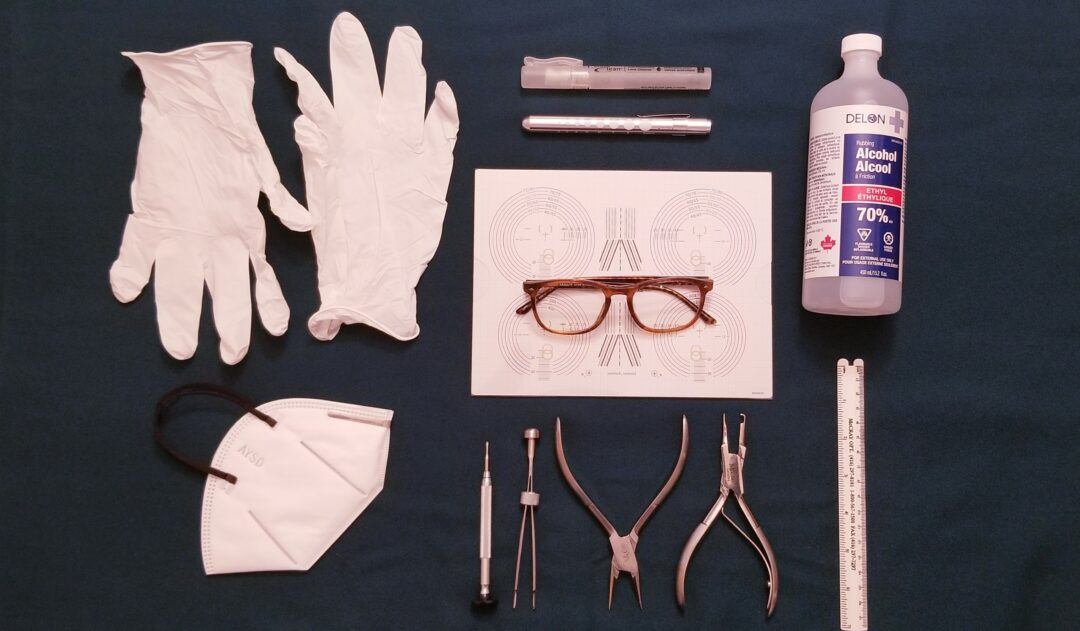
Naturally, when you visit a dispensary to get fitted with eyewear, the optician has to be close to you to assess the fit of the eyewear, make necessary adjustments, and take the required measurements. This violates the minimum standard for physical distancing, which is 2 m. So for safety reasons, both you and your optician should wear PPE to minimize the risk of COVID-19 spread. So when you call in, make sure to ask whether they have proper PPE, or know an optician who has.

Proper Cleaning & Disinfecting Procedures

The dispensary must be cleaned on a regular basis, and the optician has to make sure all common areas, equipment, and frames are properly disinfected in between patients;

  • Any frames that have been put on by patients must be disinfected before returning to frame boards.
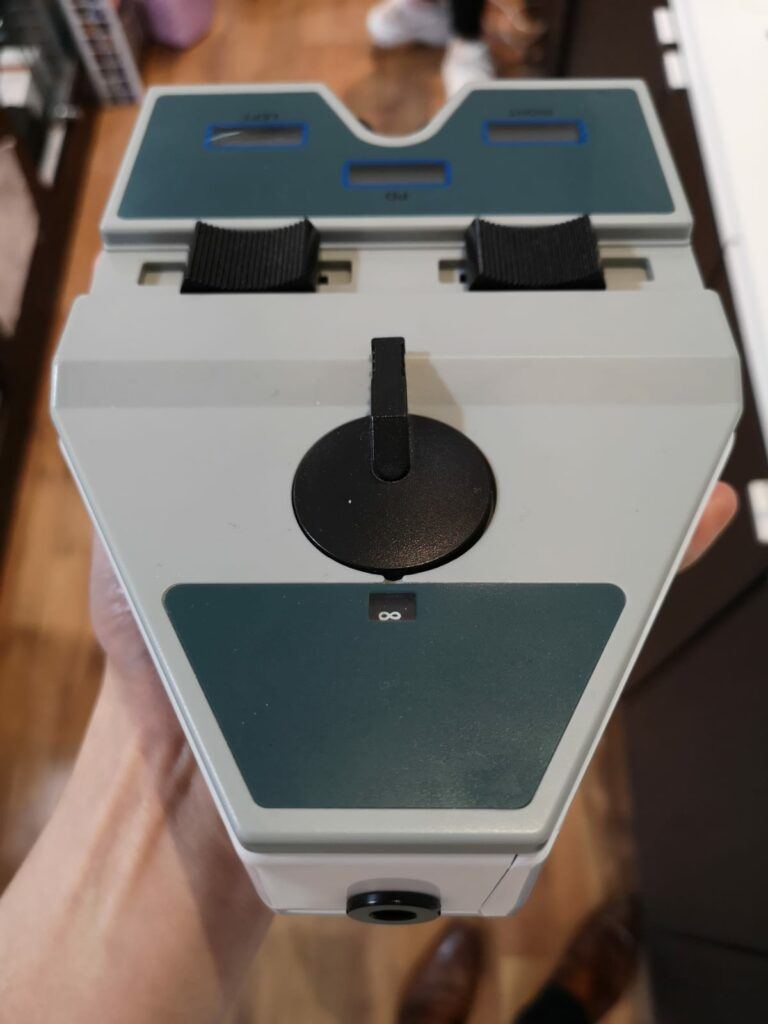
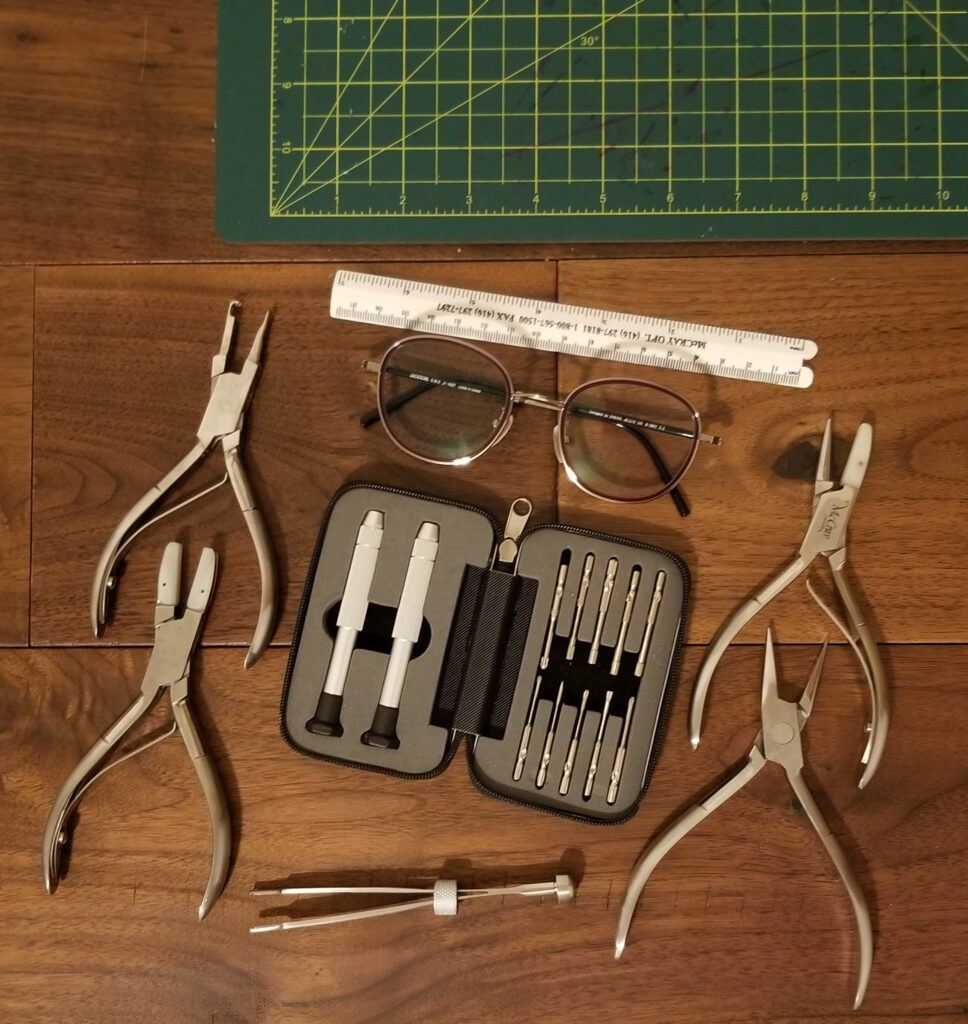
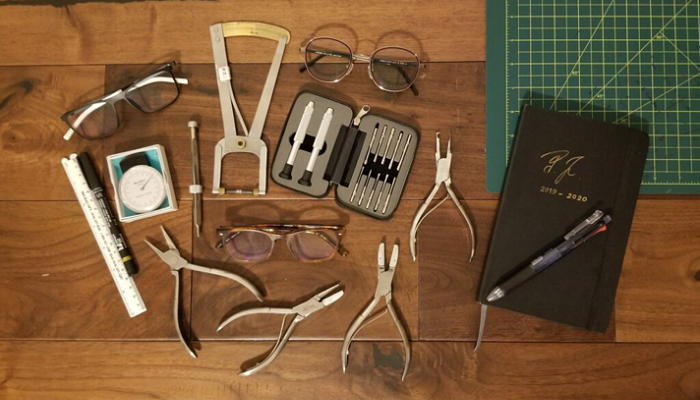
  • All tools and equipment, such as the PD meter, the PD ruler, trial frame, pliers, and screwdrivers have to be disinfected in between patients.
  • Common areas, such as the reception, the waiting area, and the dispensing table must be disinfected between patients, as well.

Scheduled Visits, Only!

Ask your optician about their visit schedule. The safest option would be to book an appointment in advance. Since most dispensaries have limited floor space, you want to make sure you can maintain the required physical distance with others.

Service Delays

Next, you should keep in mind service delays due to the COVID-19 pandemic. Ask your optician about the approximate length of consultation and the wait-time for service delivery. It is possible that you have to wait longer than usual for your optician to properly disinfect equipment for your use or to process and dispense your eyewear order.

Remote Dispensing

When the risk of contamination is high, avoid in-person visits. Instead, arrange for a virtual consultation with your optician.

What Your Optician Expects From You

Scheduled Visits

Ideally, during the pandemic, your optician would want you to call in advance and schedule an appointment. This way they can make sure no one’s safety is going to be compromised with a surprise walk-in visit.

Updates on Health Condition

Let your optician know if you had any changes in your health condition recently. If you suspect you might have contracted the Coronavirus take the online self-assessment, and cancel any non-essential visits.

Communication

Make sure to provide multiple communication methods, such as email address and alternate phone number. During these uncertain times, your optician might need to update you on crucial information. Examples would be delays in your orders or temporary closure of the dispensary due to contamination.

Summary

During the COVID-19 lockdown, access to many services has been limited. It is challenging, but it serves the best interest of all of us. If you are experiencing any eyewear-related issues, it is best to contact your optician for consultation. They can tell you if an in-person visit is necessary or not. There are safe practice guidelines for opticians to follow to be Coronavirus ready, even after the lockdown is over. However, before any in-person visits, you should communicate your concerns with your optician.

I hope this post finds you well!

As always, feel free to ask your questions or leave a comment about your recent visit to the optician. And remember to stay safe!

Opticianry Schools I - Featured Image

Opticianry Schools Part I

In the previous post, we covered what opticianry is and what opticians do. Today, we are going to learn about education and training options available for those of you interested in entering the field. I decided to write this post in two parts to keep things easy to navigate through. Now, let’s get started with the part I of Opticianry Schools!

Opticianry Schools in Ontario

Like most college programs, opticianry is a combination of theoretical and practical work and is usually offered as a two-year full-time program. In Ontario, there are two schools offering Ontario College Diploma in opticianry; Seneca College, located in Toronto, and Georgian College, located in Barrie. Both schools have facilities to teach practical courses, which gives students the opportunity to learn the procedures and work with the common tools & instruments. Although what both schools have to offer are fundamentally similar, you might prefer the curriculum design of one over the other. Ultimately, your decision comes down to your life situations. I prepared a comparison chart for you, with external links, to give you a glimpse of what you could expect from each school. Let’s take a look;

Seneca Vs. Georgian

 Seneca CollegeGeorgian College
Program NameOpticianryOpticianry
Program CodeOPTCOPTI
LocationNewnhamBarrie
Duration4 Semester (2 years)4 Semester (2 years)
Co-op OptionAvailable & MandatoryAvailable & Mandatory
Credentials AwardedOntario College DiplomaOntario College Diploma
SchoolSchool of Health SciencesSchool of Health, Wellness and Sciences
DeliveryFull-time & Part-timeFull-time
Start DateSeptemberSeptember & January
Admissions RequirementsOntario Secondary School Diploma (OSSD), or equivalentEnglish: Grade 12 C or U, or equivalent courseMathematics: Grade 12 C or U, or equivalent courseScience: Grade 12 C or U chemistry or physics, or Grade 11 C or U biology, or an equivalent courseMature ApplicantsOthersOntario Secondary School Diploma (OSSD), or equivalentEnglish: Grade 12 C or UMathematics: Grade 12 C or UGrade 11 or 12 Biology (C or U) OR Grade 11 (U) or Grade 12 (C or U) ChemistryOR Grade 11 or 12 (U), or Grade 12 (C) PhysicsMature Applicants & Others
Courses  Downloadable PDFDownloadable PDF
Tuition$7,247$3,057.26
Books & Supplies$1,485$1,023.07
Seneca VS. Georgian

Subjects Covered

I mentioned in this post, that opticianry is a mix of hard and soft sciences. So if you are thinking about studying opticianry, it would be really helpful to have some background knowledge in; biology, mathematics, physics (specifically optics), business and communications, and chemistry. However, don’t worry if that’s not the case for you! There are many resources available at both schools to help you succeed in your studies. In general, these are the subjects you can expect to study throughout your program (with each school having its variations of the titles);

Anatomy and Physiology of the Eye:

You will study the structures of the human eye and how they work in relation to each other and the nervous system to produce vision. Check out lesson 4 for a head start.

Geometric Optics:

In this course, you will learn the fundamental principals of optics, which is the study of what light is, how it helps us see and how it behaves. Check out lesson 1, to start learning.

Ophthalmic Optics:

This course builds on your Geometric Optics foundation, and focuses mainly on corrective eyeglass lenses and their properties. See lesson 2 & lesson 3 to learn the basic principals.

Eyeglass Dispensing Theory:

This course teaches you about the most common refractive errors, how to identify them by looking at a prescription for eyeglasses, how to correct them, how to take necessary measurements, what type of lens to use, and what type of frame to choose to meet your patient’s specific needs.

Eyeglass Dispensing Labs:

This course puts your theoretical knowledge to practice. You get to work in pairs or groups to practice dispensing procedures with or on your classmates. Get ready to get intimate! You will also, work individually and will learn how to fix or adjust a pair of glasses, and how to neutralize one.

Eyeglass Fabrication Labs:

In this lab you will learn how to shape a pair of lenses to fit into an eyeglass frame. You are going to apply your knowledge in dispensing to troubleshoot your work, and you will learn some new techniques.

Contact Lens Dispensing Theory:

This course will give you the fundamental knowledge on contact lenses including, but not limited to; types, applications, and dispensing procedures.

Contact Lens Dispensing Labs:

If you thought eyeglass dispensing lab was intimate, wait until you attend a contact lens dispensing lab! Here you will usually work in pairs, and get to practice contact lens dispensing procedures on your poor classmates. You will also work with a variety of instruments involved in contact lens fitting, and you will learn fitting procedures, assessment, and troubleshooting techniques.

Business courses:

You will study some introductory business courses to learn about economics, procedures involved in establishing your own business, and more.

Communications courses:

You will study introductory communications courses, which covers the following topics; communication in different settings, across cultures, within groups and organization, and more.

Pathology of the Eye:

Pathology is the study of disease, conditions, and abnormalities of a system, in this case, the human eye. You will learn to identify signs of various eye diseases and conditions.

Professional Education:

This subject covers the ethics and scope of practice regulated by the College of Opticians of Ontario. You will learn standards of practice in Ontario. Depending on the program’s demands, you might learn other useful information that will help you in practice such as product knowledge, customer service, and marketing basics.

Refraction:

In this course, you will learn the necessary procedures for determining a patient’s prescription. As of now, opticians in Ontario are not allowed to refract. However, knowledge of refraction will help you to communicate with other professionals (i.e optometrists) effectively and dispense eyewear with more confidence, plus you’d be able to provide better customer care.


Summary

Today, we learned about opticianry schools in Ontario. We briefly compared the two schools offering opticianry diploma and went over the subjects taught in those schools. In part II  I will introduce an alternative option to study opticianry. Meanwhile, go ahead and check out our courses and articles to start learning some basics, and join our newsletter to receive updates. Don’t forget to download the course lists available for you in the chart, it will give you a clearer picture of how the two curricula compare. And finally, feel free to ask your questions in the comments section below, and I’ll try my best to answer them. Cheers!

What is Opticianry - Featured Image

What is Opticianry?

Opticianry is an exciting field of study, as it touches on a variety of topics, from hard and soft sciences to design and art. However, if we define the word “Opticianry” in itself, it is the practical study of light and its properties (i.e. optics), as applied to correct problems associated with the human visual system.

  • What does that mean?

Well, it basically means opticianry is the practice of making or dispensing eyeglasses, contact lenses, and other visual aid devices.

Now that you have a rough idea of what opticianry is, let’s get technical and take a look at who opticians are and what they do, exactly!

Let’s get started!

Who Are Opticians?

Opticians are, in some sense, interpreters. They interpret prescriptions written by Ophthalmologists & Optometrists and dispense eyeglasses, contact lenses, and other visual aid devices, accordingly.

Like Ophthalmologists & Optometrists, Opticians are regulated healthcare professionals, too. According to WES;

“The government regulates occupations that affect a large number of people directly, such as those in healthcare, engineering, law, finance, and education. In a regulated profession, you need a license or certificate from the regulatory body that governs that occupation to be employed in that field.”

In Ontario, the College of Opticians of Ontario (COO) regulates Opticians. COO protects public safety by ensuring Opticians follow standards of practice of the profession.

What-is-opticianry-coo-logo

Besides the COO there are 9 other provincial regulatory bodies for opticians in Canada, including;

College of Opticians of British Columbia

Alberta College & Association of Opticians

Saskatchewan College of Opticians

The Opticians of Manitoba

Opticians Association of New Brunswick

Nova Scotia College of Dispensing Opticians

P.E.I. Board of Dispensing Opticians                  

The Dispensing Opticians Board of Newfoundland and Labrador

Each provincial regulatory body has its own set of regulations that could be slightly different from other provinces. But who regulates them?

Well, that would be NACOR’s job!


NACOR’s logo

NACOR is the National Association of Canadian Optician Regulators. In the future, I will tell you more about what NACOR does…stay tuned!

What Do Opticians Do?

Sometimes people confuse Opticians with Optometrists and vice versa. While there are some similarities between the two professions, they are, in fact, two different fields of study. To help distinguish between the two, imagine a lab setting. The optometrists would be the scientists, and the opticians would be the lab technicians. To learn about what optometrists do check out this page. For now, let’s have a look at what opticians do.

Refraction: In eye care settings, refraction is the procedure through which an eye care professional checks a patient’s visual acuity and determines his/her prescription for glasses. As of now only a small number of opticians in Ontario perform refraction.

Opticianry-Optician's tools-Consultation

Consultation: Opticians consult their client in choosing eyewear that is both compatible with the prescription and the client’s needs. They can also consult patients on eye care and eyewear care, and refer them to other health professionals when necessary.

Opticianry-Optican's-tools-Measurement-pd-meter

Measurements: This is a crucial part of opticians’ job. Whether fitting a pair of glasses, contact lenses or other visual aid devices accurate measurements are key to patients’ comfort and satisfaction.

Opticianry-Optician's tools-Adjustment

Adjustments: Adjustment is another crucial step! In fact, adjustments can make or break the accuracy of measurements. Adjustment and measurement usually happen simultaneously, based on the optician’s judgement.

Opticianry-Fabrication-auto-lens-groover

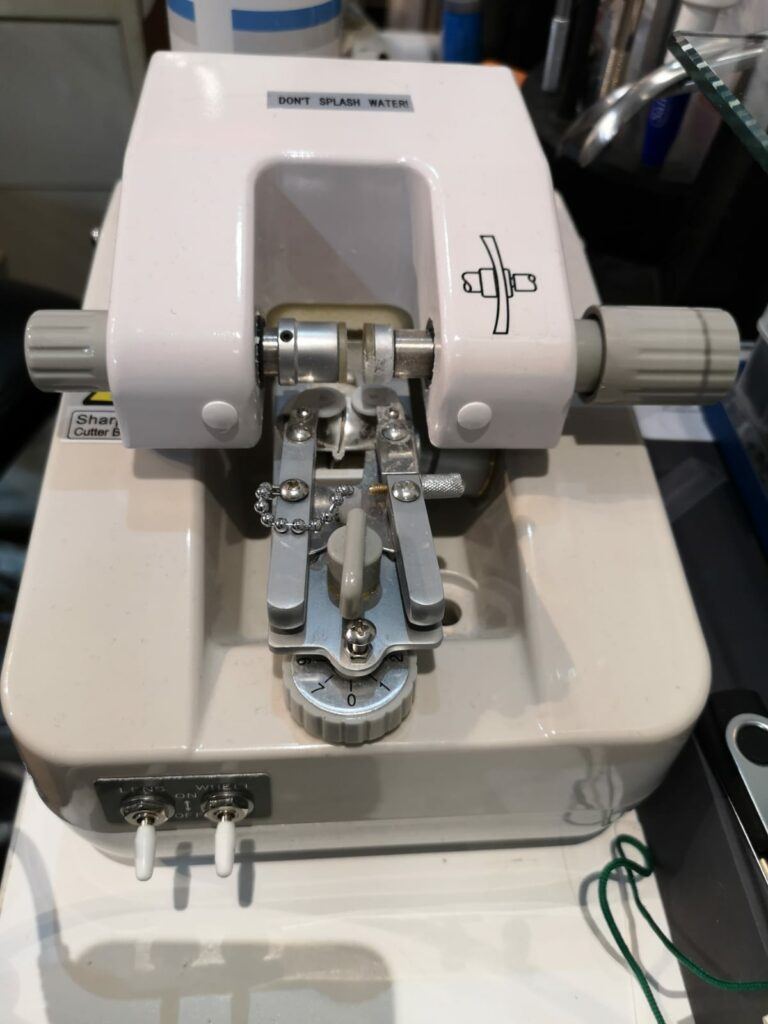
Fabrication: Fabrication is the process of making a pair of glasses based on an order form. Fabrication includes interpreting the data collected during consultation and measurement and edging (i.e. cutting) a pair of lenses to fit into an eyeglasses’ frame.

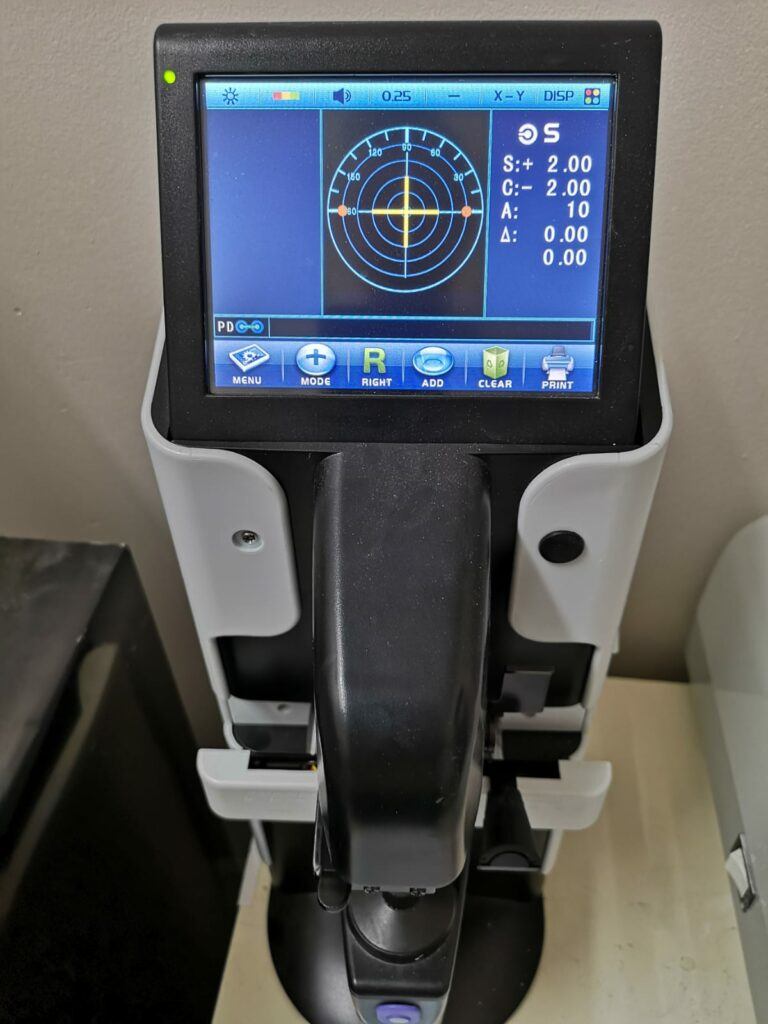
Opticianry-Neutralization-auto-lensometer

Neutralization: Is the process of verifying the prescription of a pair of glasses against an existing order, for accuracy.

Opticianry-Dispensing-woman-trying-on-eyeglasses

Dispensing: Is the final step in which the optician gives the ready-made eyewear to the client to physically try on. This is when both the optician and the client get a chance to see whether the eyewear is functioning the way it should be. So, it is an opportunity for both to address any issues.

Do you find Opticianry interesting? Do you like to know more about it? Then go ahead and check out my post on How to become an Optician.

There are many other aspects of an optician’s job that I will share with you in future posts. Meanwhile, feel free to ask your questions or leave a comment in the comments section below. Don’t forget to like, share, and subscribe to our newsletter, if you find this post helpful. 

Talk to you soon!