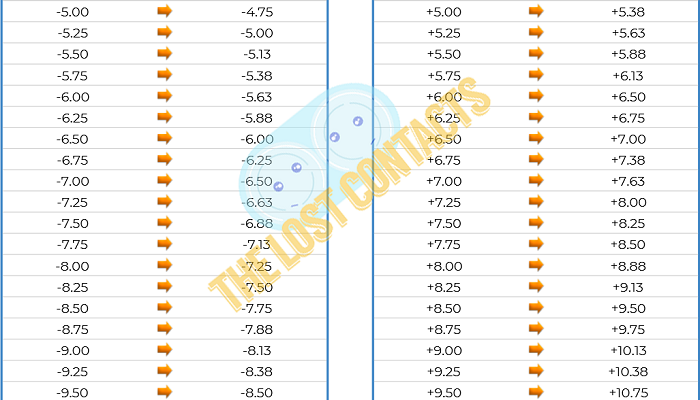
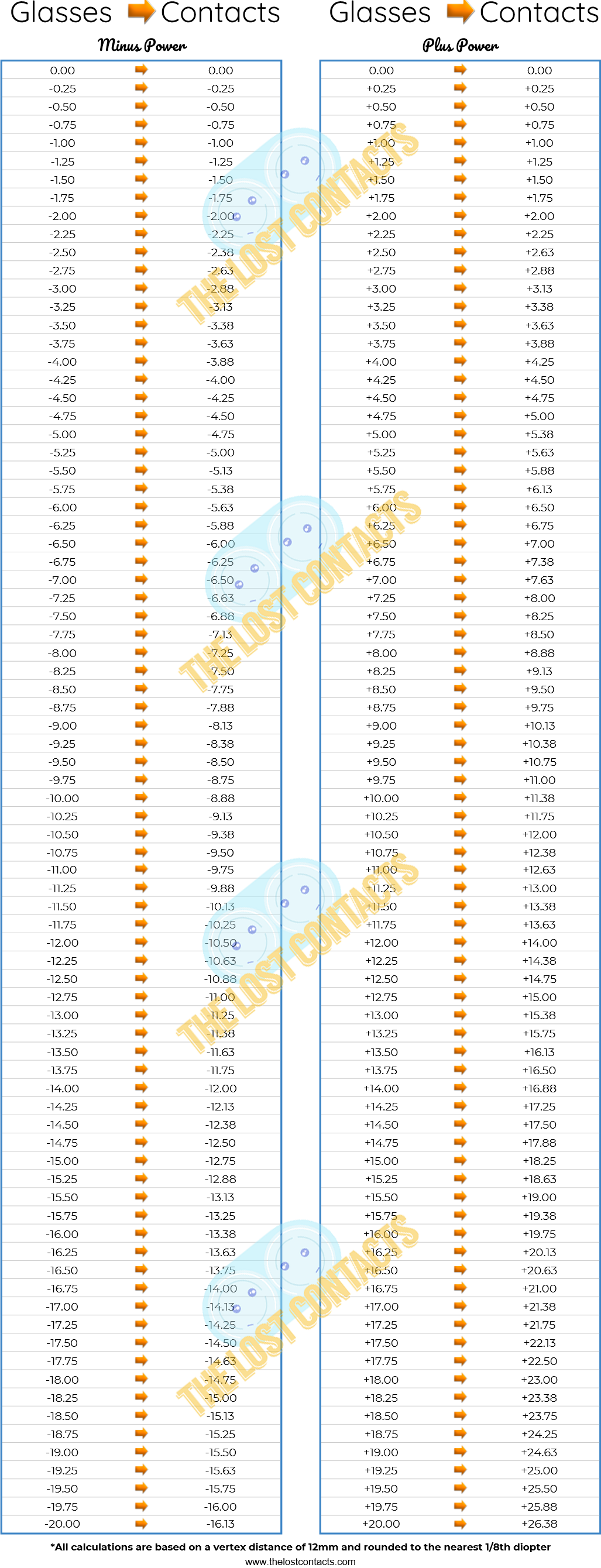
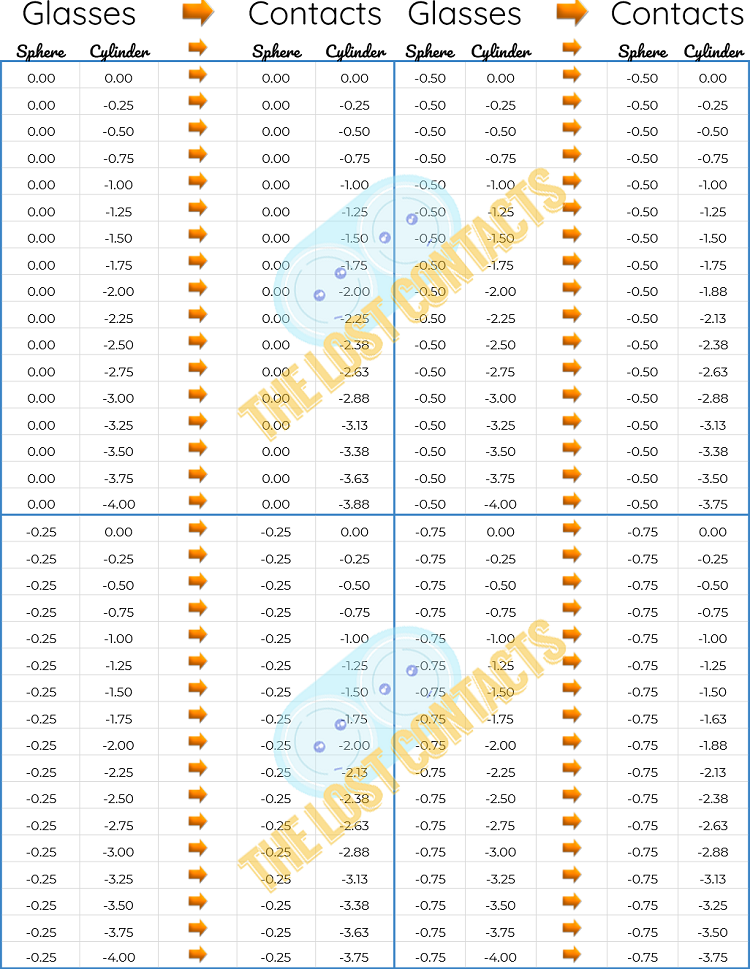
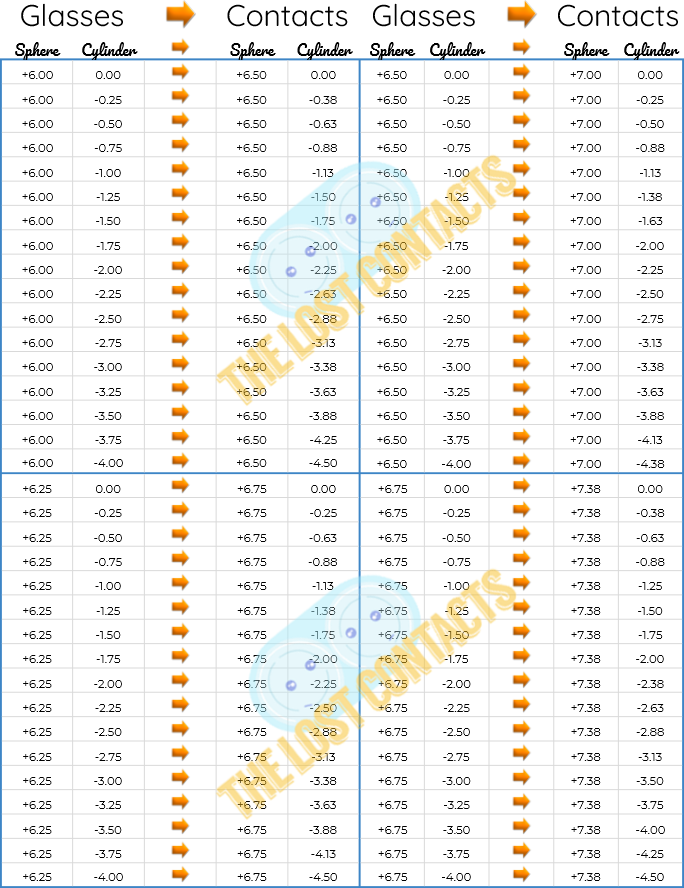
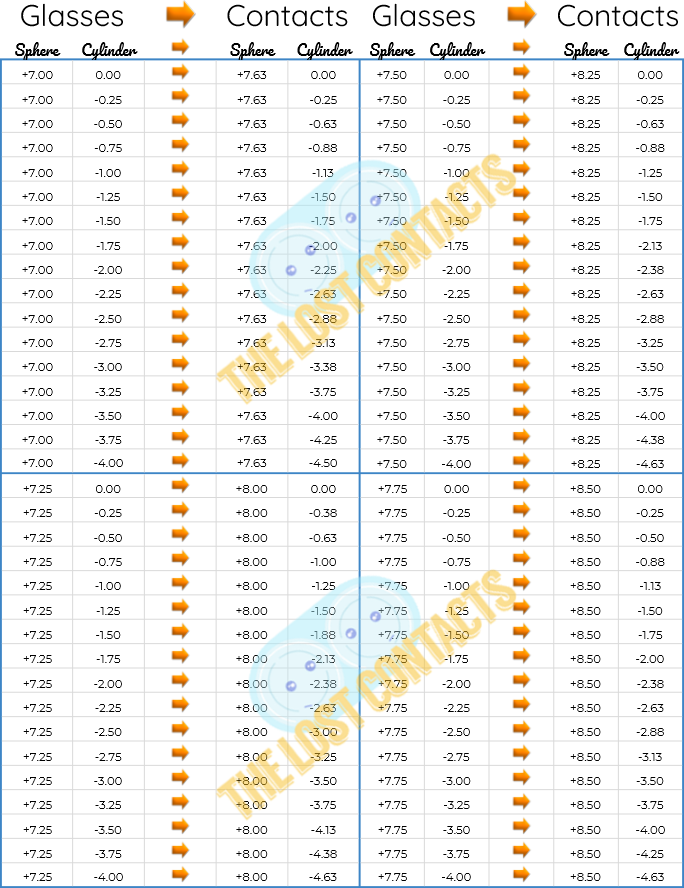
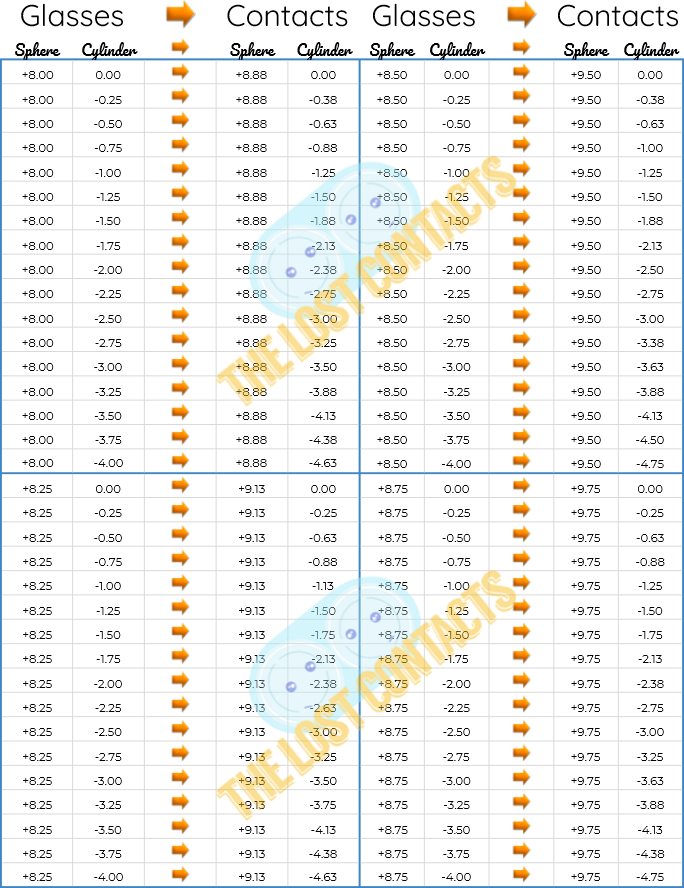
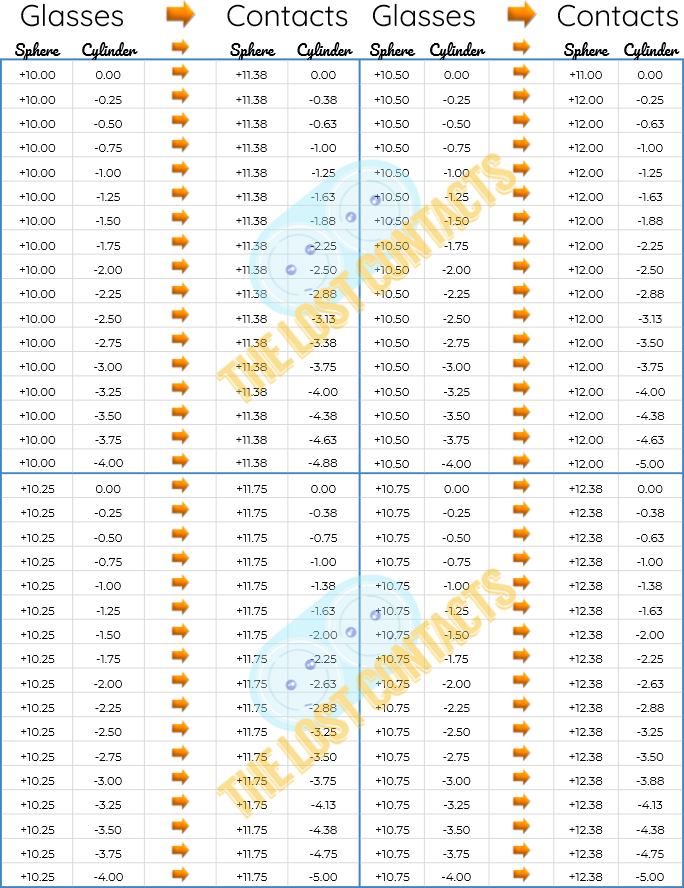
If you’re looking for a vertex distance conversion charts, you’ve found the motherload. Here you will find vertex distance conversion charts for single powers (i.e Sphere power only), as well as for astigmatism (Sphere + Cylinder combinations).
Lets start your typical Sphere Power Only Vertex Distance Conversion Chart.
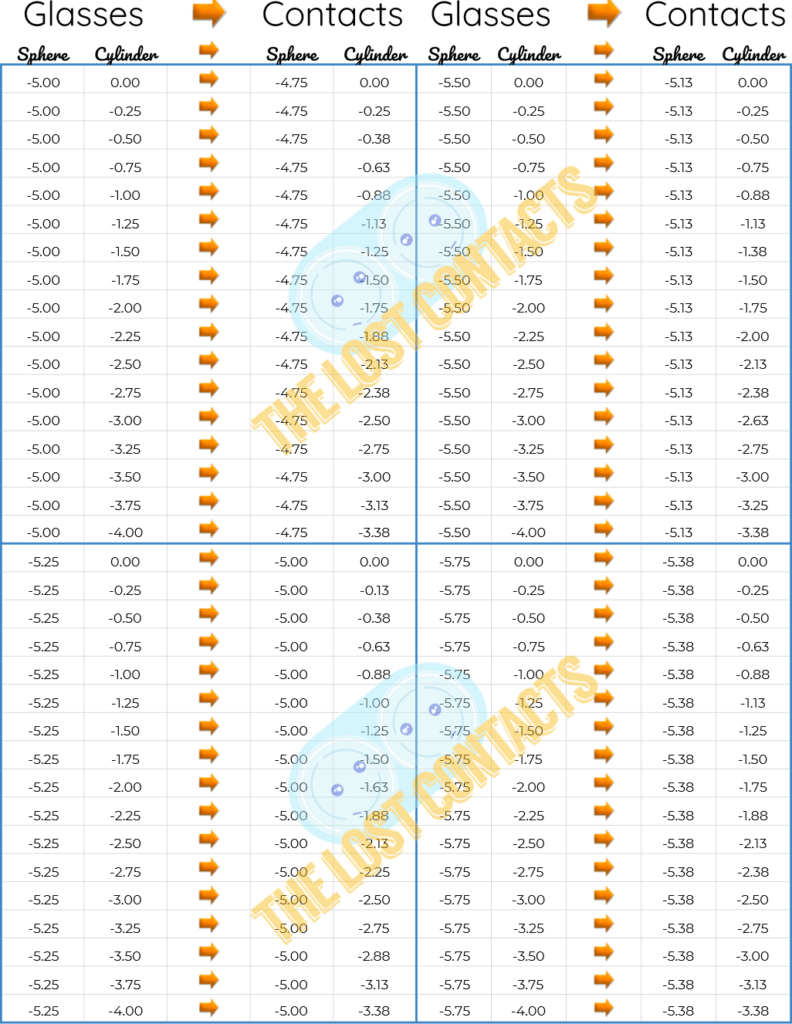
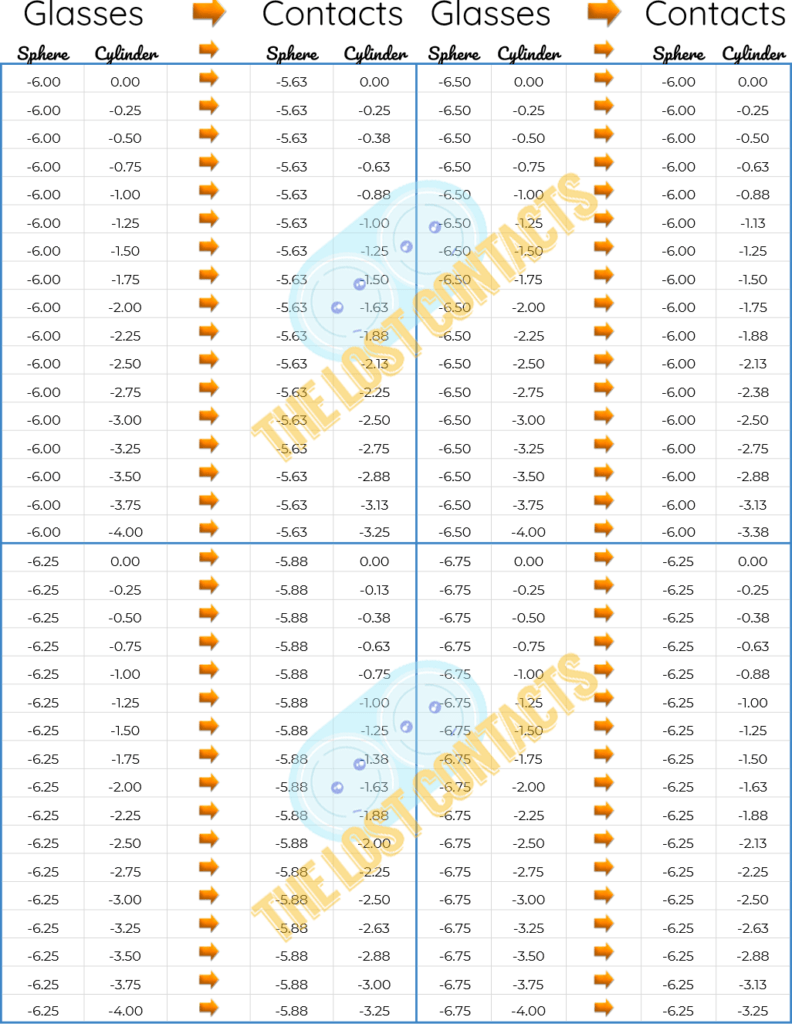
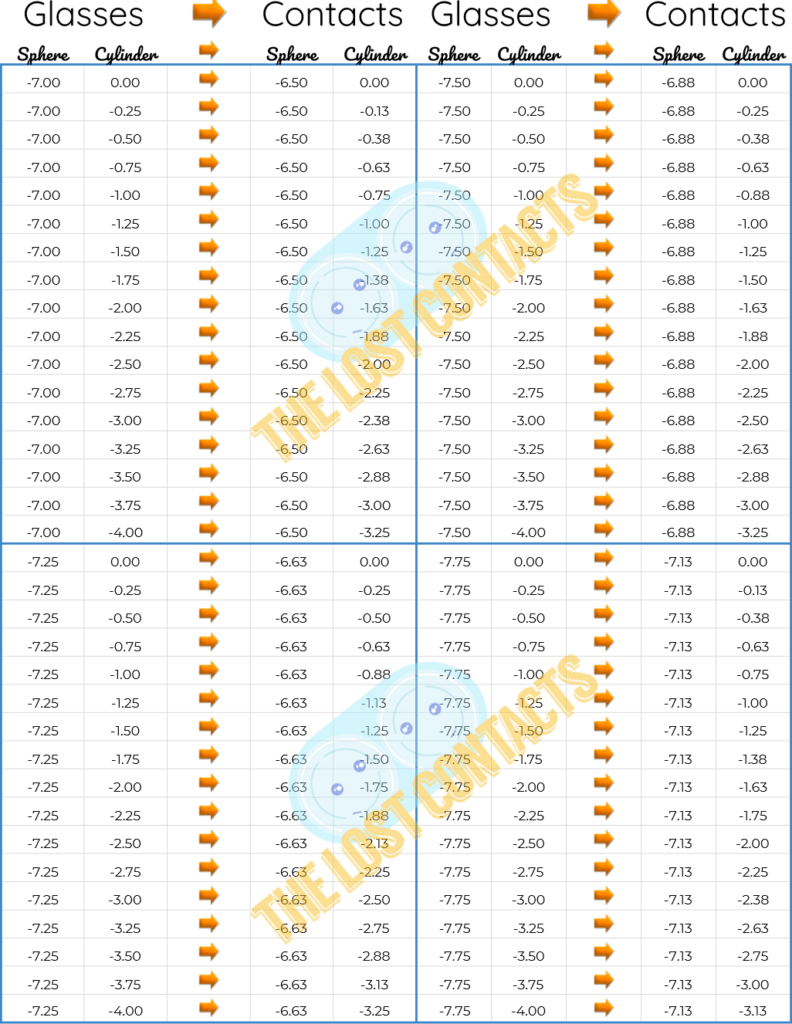
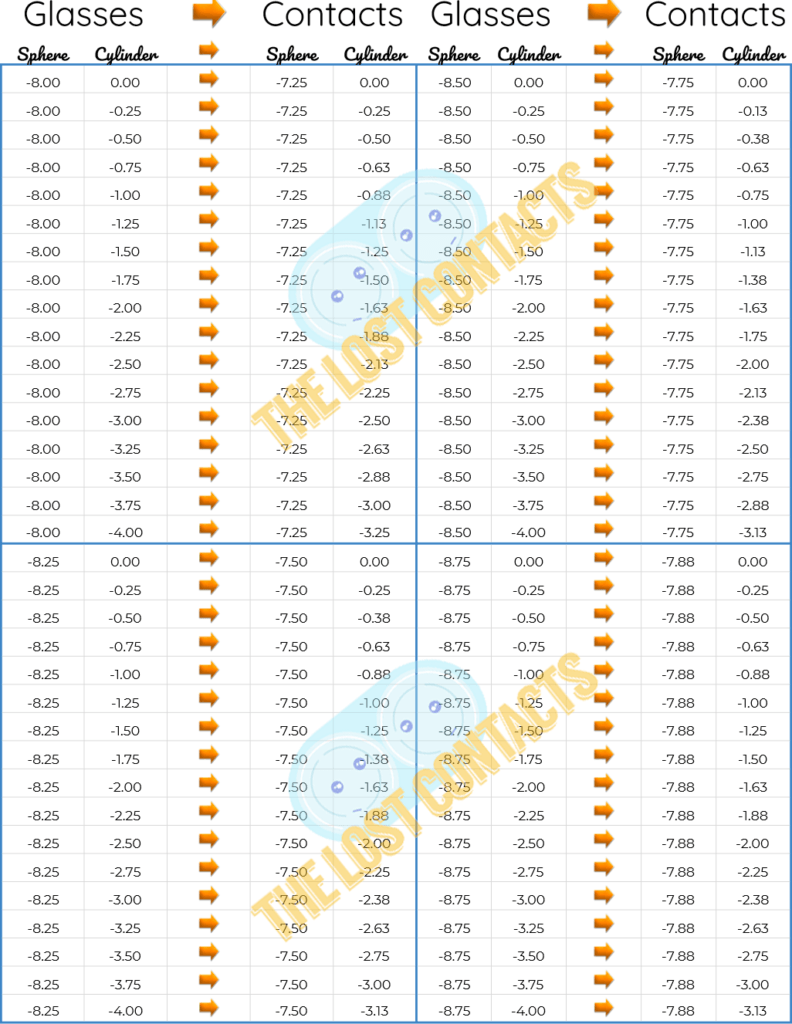
If you are looking you convert a combination of Sphere and Cylinder powers, you will need to reference the following Vertex Distance Conversion Chart for Astigmatism.
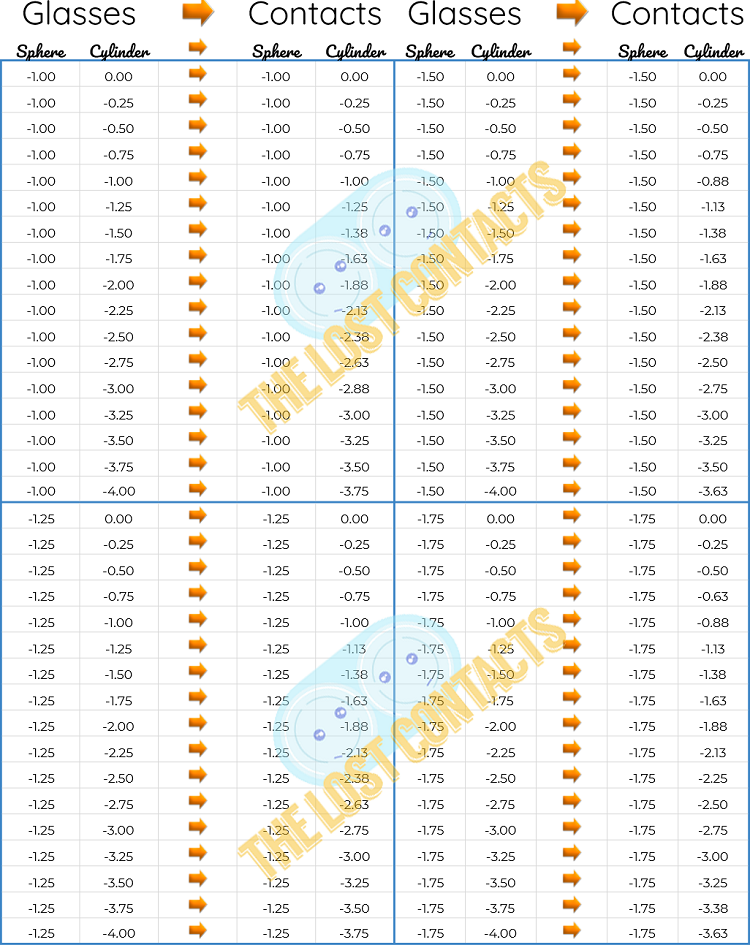
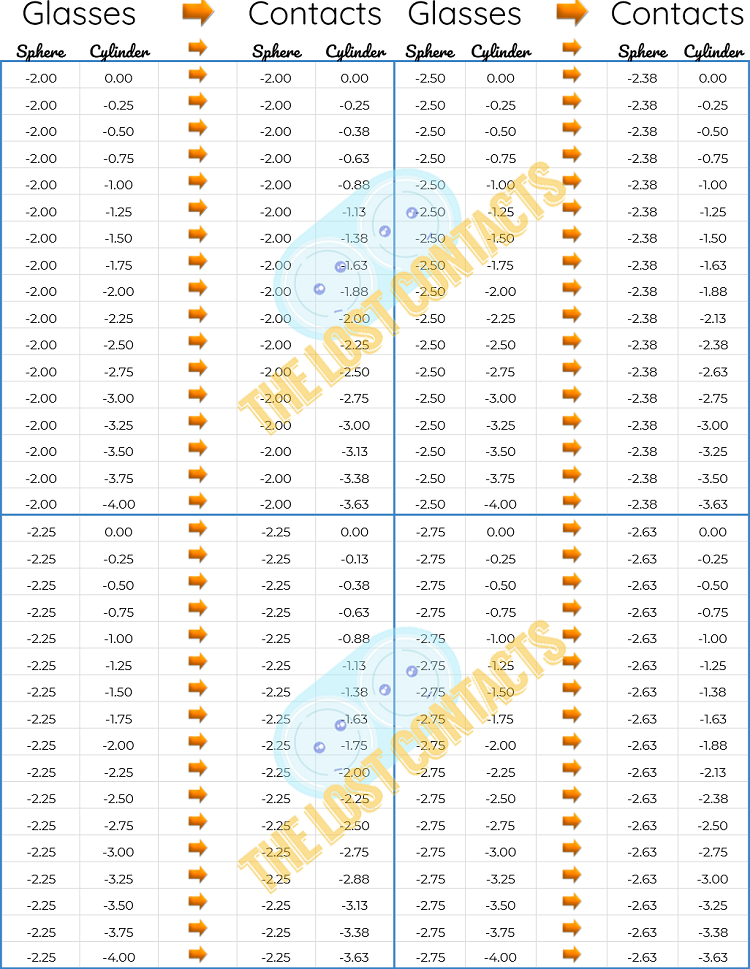
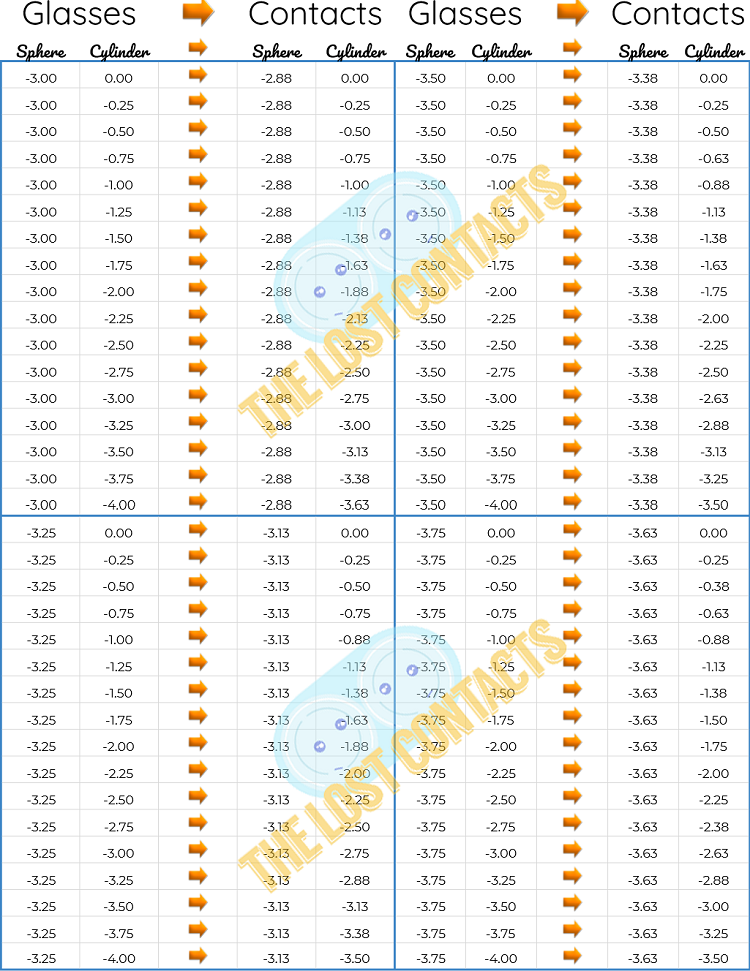
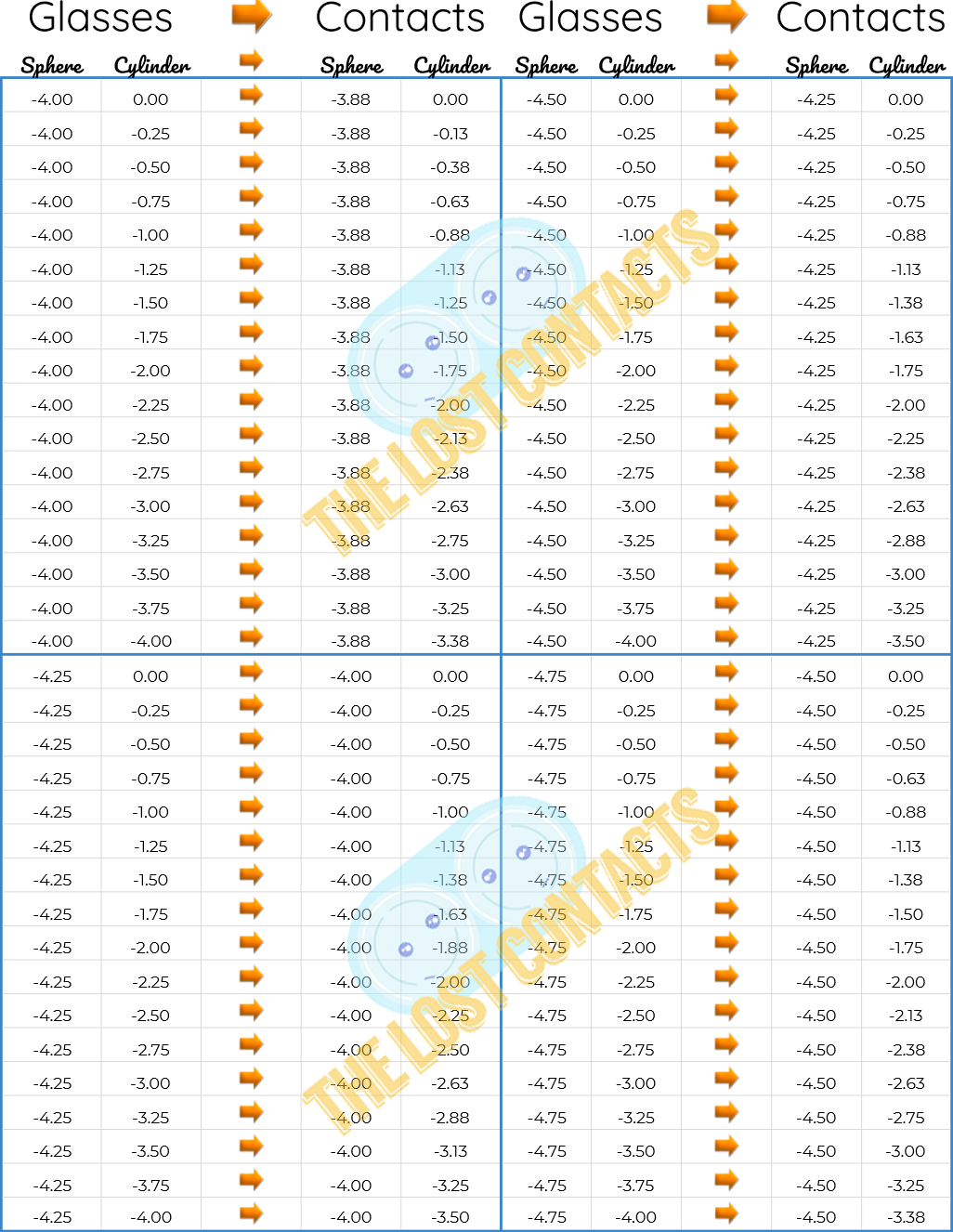
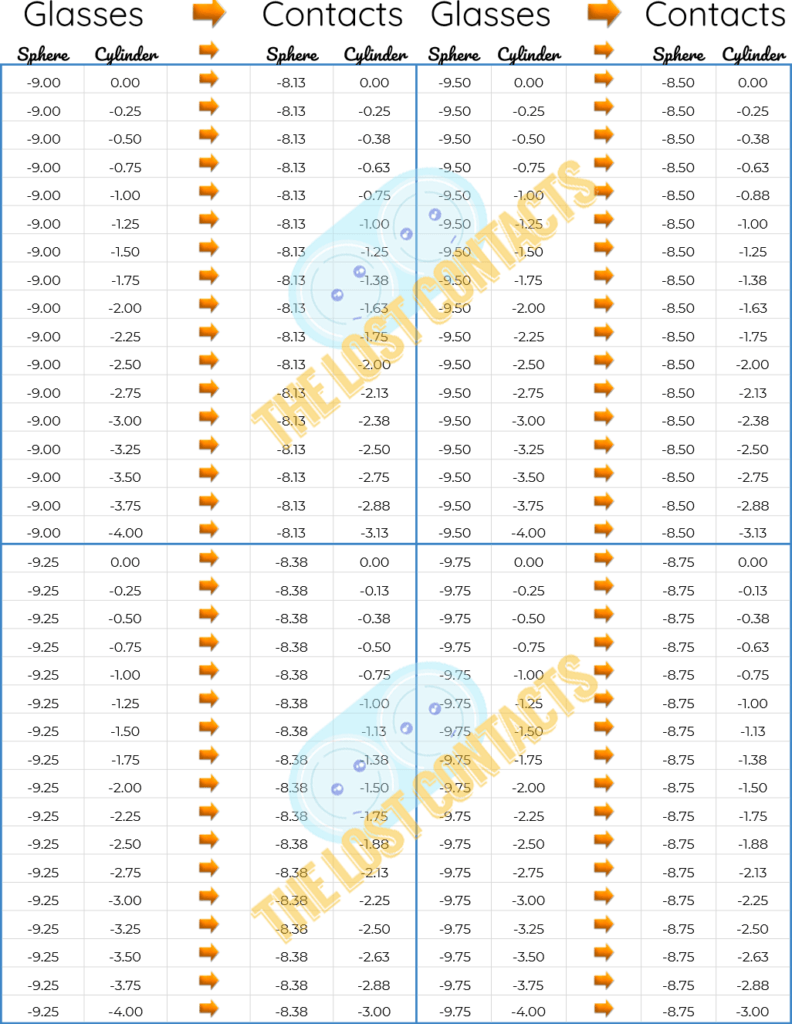
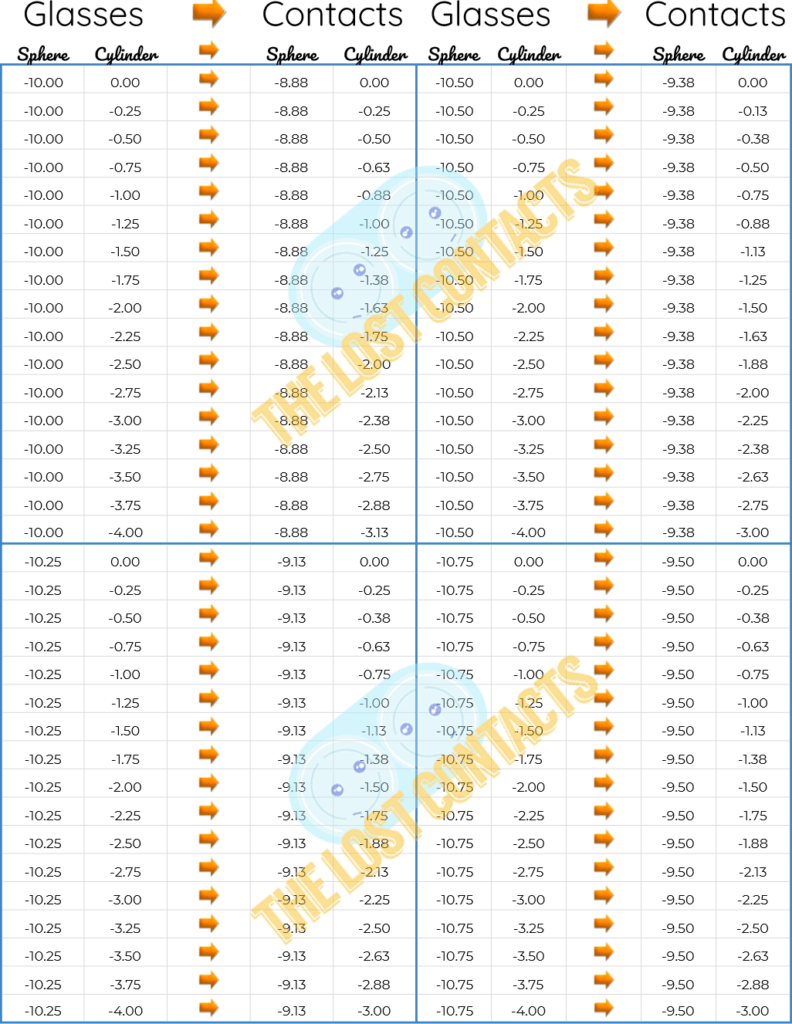
Astigmatism Charts For Minus Sphere Powers
This series of charts will cover all Sphere and Cylinder combinations ranging from Sphere Power 0 to -10.75 and Cylinder Power 0 to -4.00.
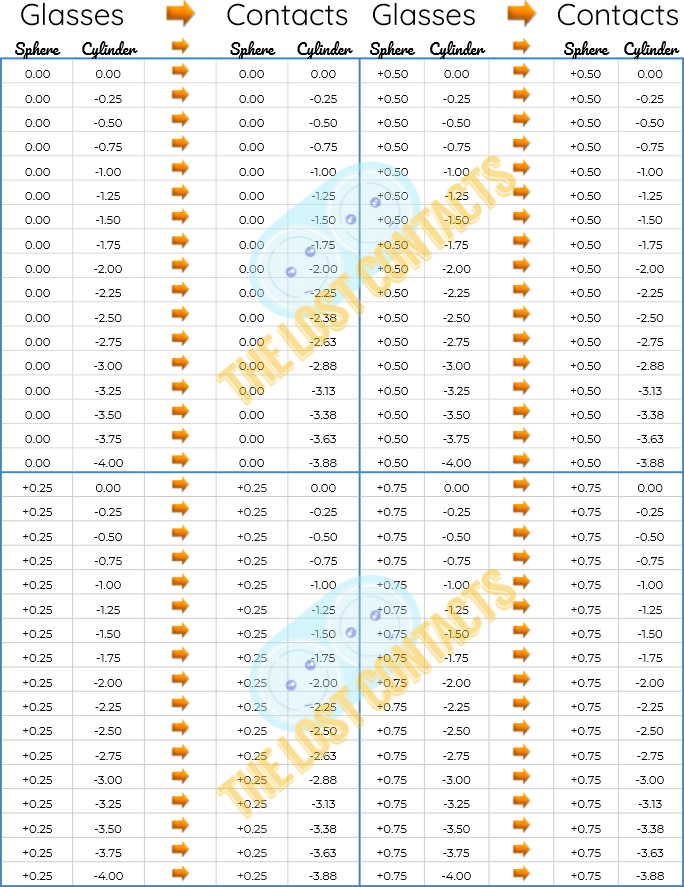
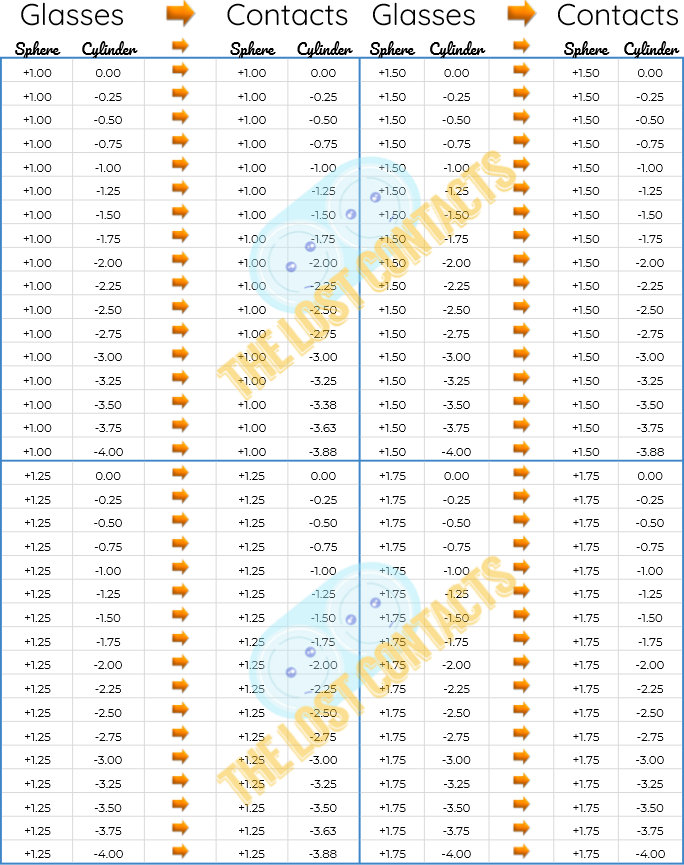
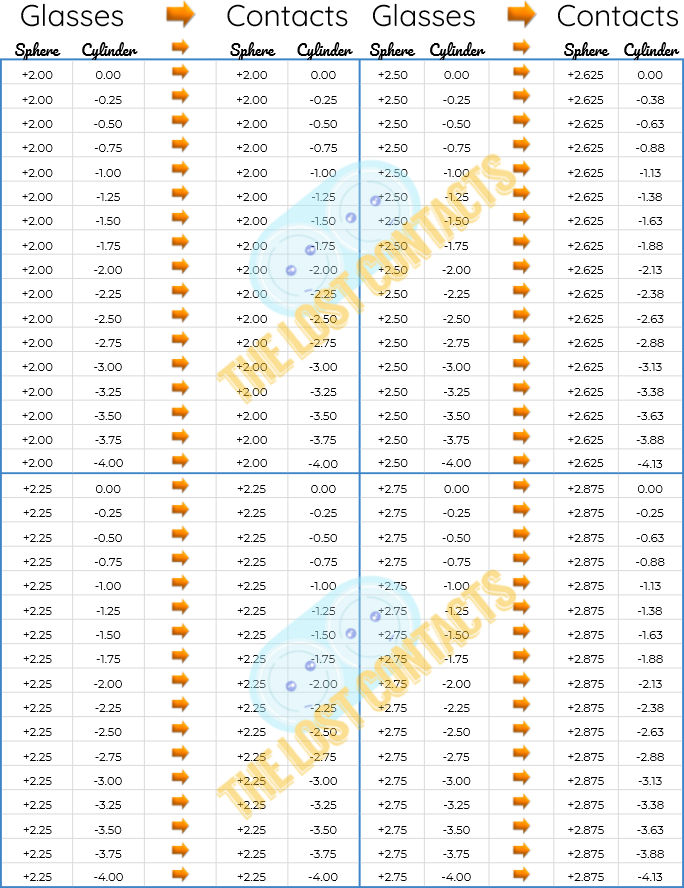
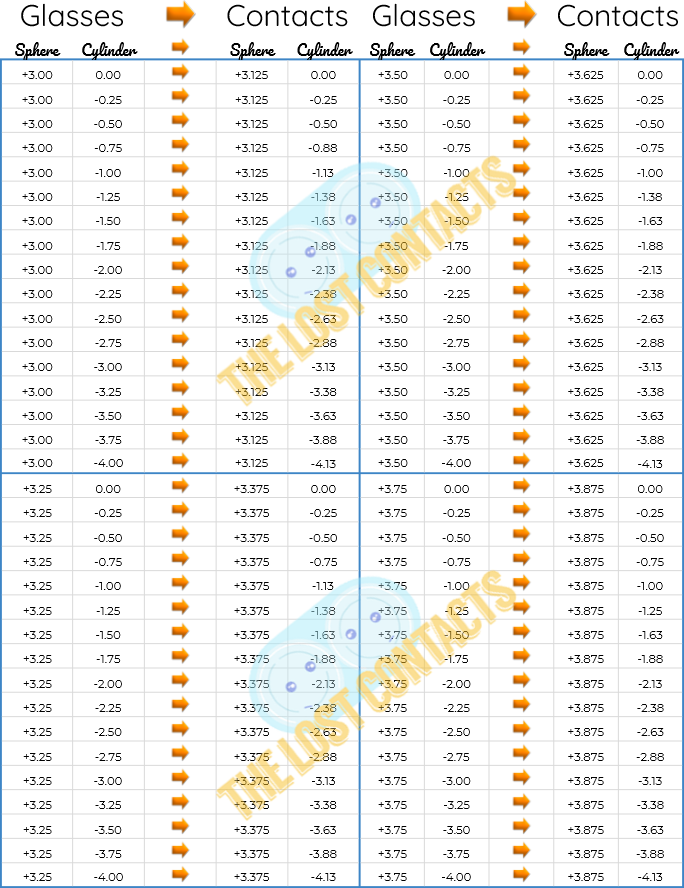
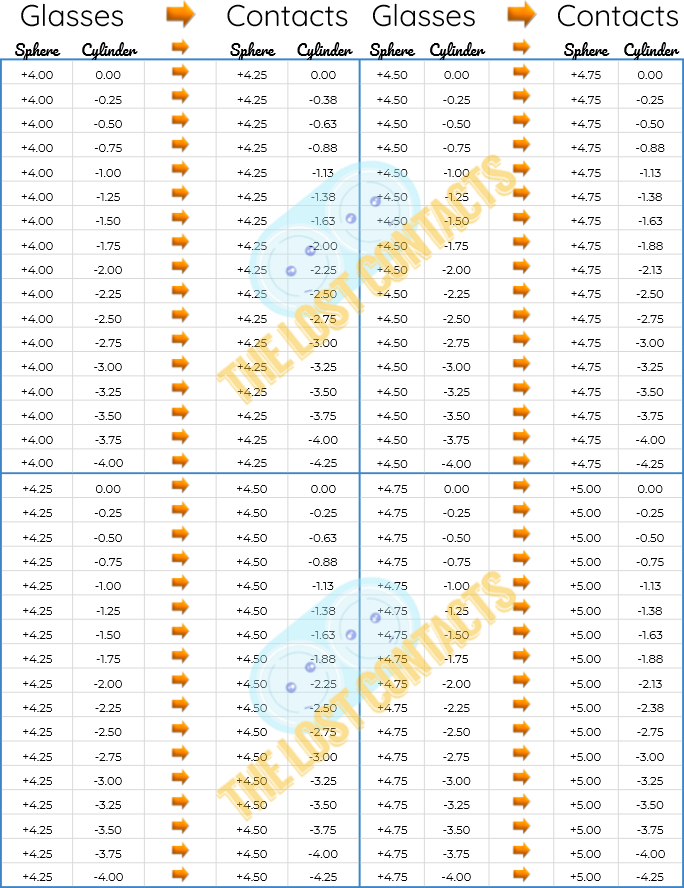
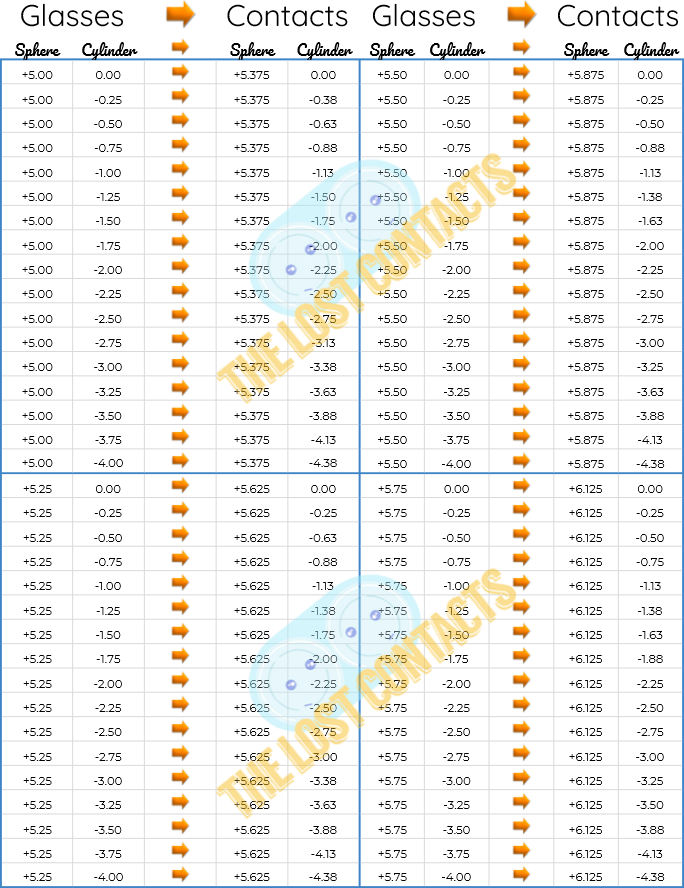
Astigmatism Charts For Plus Sphere Powers
The next series of charts will cover all Sphere and Cylinder combinations ranging from Sphere Power 0 to +10.75 and Cylinder Power 0 to -4.00.
How Were These Charts Calculated?
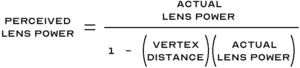
All the charts were populated using the following equation:
The vertex distance used in every calculation was 12mm.
Summary
I hope these charts provide value for you and save you time in your clinic. If you would like to download and print these charts, you can get the pdfs in The Lost Contacts downloads section.
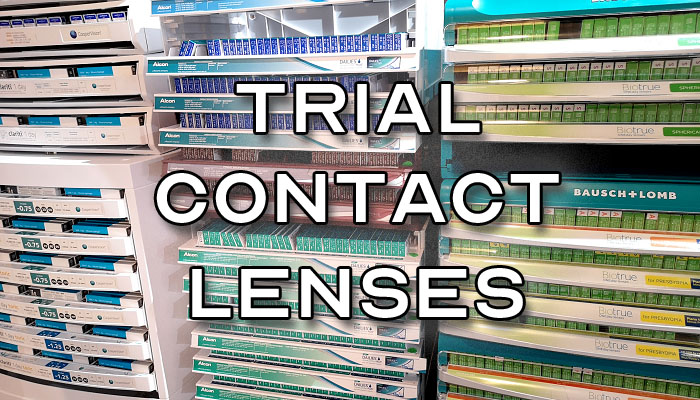
The next step is to get your patient a free trial contact lenses so that you can assess their fit and performance.
This lesson is going to be centered around ordering your patient/client’s first pair of free contact lens trials. I wrote it assuming your don’t have trial fitting sets in your office and have to order your trial lenses from the companies. If you do have the fitting sets, you can just get your trials from there (assuming they are well maintained).
Working With What’s Available
At this point, you’ve successfully converted your patient/client’s glasses prescription to contact lenses and you know what contact lens trial pair you want to order. However, the exact numbers that you calculated in your conversion is not always available for you to order. To avoid problems and unnecessary delays, it’s important to order contact lens trials that are actually available.
Limitations in Sphere Power
+6.00 to -6.00
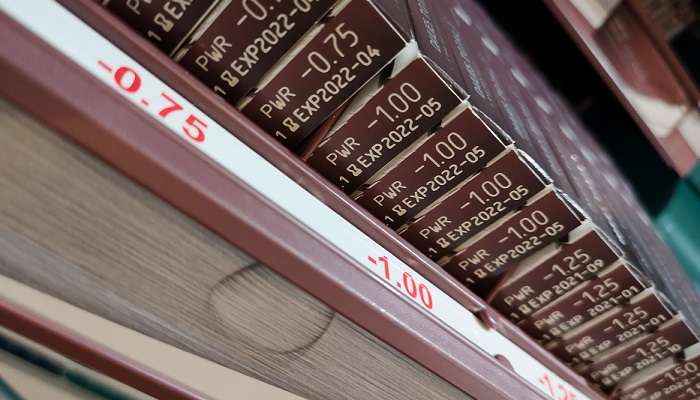
If the sphere number you want for your patient’s contact lens trails is between +6.00 and -6.00, you shouldn’t have any problems finding what you are looking for. Contact lenses generally come in 0.25 steps in that range.
A Dailies TOTAL1 fitting set showing sphere power increasing in 0.25D increments.
The problem you may come across in this range is when your glasses to contact lens conversion gives you a sphere power that ends in an eighth diopter step, i.e., .12, .37, .62 & .87. You will have no choice but to choose from one of the two nearest quarter diopter step, i.e., .00, .25, .50 & .75.
If this happens, you can use your professional judgement to choose the one you think would work best for you patient. However, if there’s some uncertainty you can always order and try them both.
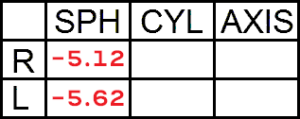
For example, if your glasses to contact lens conversion is:
Since neither of those sphere powers are available in contact lenses, a safe bet would be to order -5.00 and -5.25 for the right eye, and -5.50 and -5.75 for the left eye.
Over +/-6.00
If you need a contact lens trail with a power that is higher than +6.00 or -6.00, you will be more limited. Outside of the +/-6.00 range, most contact lens brands become available only in steps of 0.50, i.e., -6.00, -6.50, -7.00, -7.50, -8.00 etc.
So if you’re looking for trail contact lenses with a sphere power ending in .25 or .75, what do you do? Well, at this point you should be expecting to have to try 2 or 3 different combinations of powers before you find the one the works best for your patient. The best thing to do would be to order the contact lens trials in both powers that bracket what you calculated in your conversion.
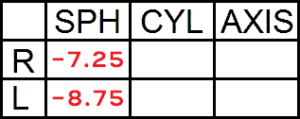
For example, if your glasses to contact lenses conversion is:
Since neither of the those sphere powers are available in typical (non-extended range) contact lens brands, a safe bet would be to order -7.00 and -7.50 for the right eye, and -8.50 and -9.00 for the left eye.
Start by having the patient try on the lower power and see if holding a -0.50 trial lens over the eye makes a significant difference in the vision. If it does, you’ll be happy that you ordered the stronger power.
It’s A Trial & Error Process
Keep in mind that it may still be possible that despite this, your patient will be need something that’s even lower or higher that what you have ordered. There are many factors that influence this such as specific contact lens designs, patient age, patient visual demands, etc.
Additionally, it is important to keep in mind that whatever sphere power ends up working best for any given brand does not necessarily translate to other brands. Every time you try a different brand, it is advisable to re-test the vision and perform a contact lens over-refraction to find the best sphere power for each brand you try.
Limitations in Cylinder Power
What’s Available
Cylinder power is perhaps the most limited parameter in contact lenses. There are 3 cylinder powers that every contact lens for astigmatism have. They are:
-0.75
-1.25
-1.75
Many brands also have:
-2.25
A few brands have:
-2.75
As you can see, the cylinder powers in contact lenses are quite limited and only appear in 0.50 diopter steps. This is due to manufacturing limitations as well as the fact that when the cylinder is only slightly off, it doesn’t affect the vision all that much.
A clariti-1day toric fitting set showing -0.75, -1.25 and -1.75 cylinder options.
To Round Up Or Down?
If you need a cylinder power that isn’t available, should you pick the closest lower one or the closest higher one? In this situation it’s typical to round down to the nearest available cylinder power. People who wear contact lenses for astigmatism do best when they have the lowest possible cylinder power that still allows them to see 20/20.
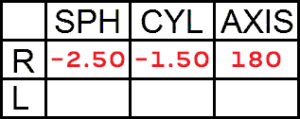
For example, if your glasses to contact lenses conversion is:
The right eye’s contact lens cylinder power should be -1.50 but due to restricted availability we have to pick between -1.25 and -1.75. It is quite possible that the patient would be able to see perfectly and equally well with either one. If that is the case, it would be best to opt for the lower cylinder of -1.25.
It’s also possible that when you convert a glasses prescription to contact lenses, the cylinder ends in a eighth diopter step. When this happens, simply choose the nearest available cylinder (a cylinder ending in an eighth diopter step never falls squarely between two available cylinders.
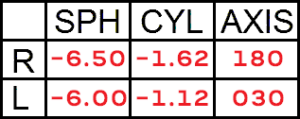
For example, if your glasses to contact lens conversion is:
For the right eye: -1.62 falls between -1.25 and -1.75 but it much close to -1.75.
For the left eye: -1.37 falls between -1.25 and -1.75 but it much close to -1.25.
Limitations in Axis
Excluding extended range and specialty contact lens brands, contact lenses for astigmatism are available in axes of steps of 10.
A Bausch + Lomb ULTRA for Astigmatism fitting set showing axis increments of 10 degrees.
When you convert a glasses prescription to contact lenses, the axis does not change. This means that you could end up with an axis that’s any number between from 1 – 180.
When picking the contact lens free trial for your patient, what you have to do is choose the axis that is the closest to the glasses axis.
Of course, you’re going to encounter many prescriptions where the axis ends in a 5. When this is the case, I tend to order both axes that straddle the glasses axis so that I don’t have to wait on another delivery if that one I ordered wasn’t the right one.
Assessing The Vision/Examining The Fit
Once you’ve ordered all the contact lens trials you think you’ll need for your patient, the next step is to have the patient try them on assess their performance. This is where you’ll make the decision as to whether what you’ve ordered is adequate, or if you have to make adjustments.
This is what I discuss in the next installment of my Fitting Contact Lenses Course.
In the previous lesson: “How To Convert A Glasses Prescription to Contact Lenses“, I covered only situations that did not involve any astigmatism correction. In this lesson, I will only be discussing how to convert a glasses prescription to contact lenses when there is astigmatism to deal with.
Before I get into it I just want to say that some of this may appear to be difficult. Sure, it does take a little longer, but it’s literally nothing more than a little bit of addition, subtraction, as well as looking up numbers on our vertex distance conversion chart.
Here it is again for you to reference throughout this lesson.
*Note that this chart is based on a 14mm vertex distance.
Now let’s get right into it. Everything is done one eye at a time so complete steps 1- 5 for the right eye and then again for the left eye.
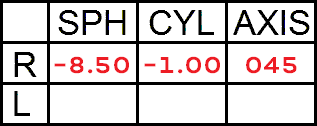
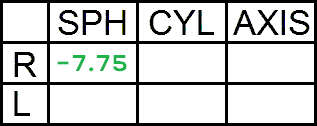
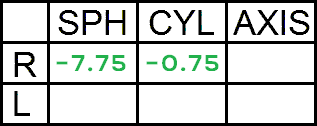
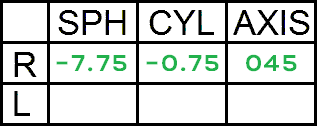
Here is the glasses prescription we will be working with:
Step 1: Draw 180° and 90° Reference Lines
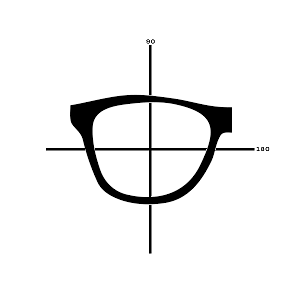
The power cross is the main tool used in visualizing and organizing the calculations involved in this conversion process.
Here we will draw two reference lines 180° and 90°.
Think of this cross as overlaying the lens of the glasses prescription you’re working with, like this:
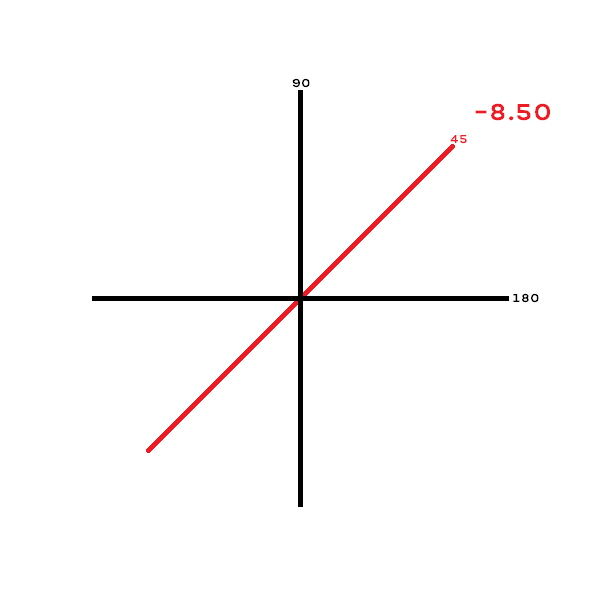
Step 2: Add The Sphere Power Line
Look at the glasses prescription that you’re working with and locate the ‘Axis’ number. This number represents a degree value and will be somewhere between 1 and 180. Now draw a line in the direction of the Axis .
In our example prescription, that’s 45. That means that a line at 45° must be drawn on the power cross. This is the Sphere Power Line. It represents the sphere power so write it down next to that line.
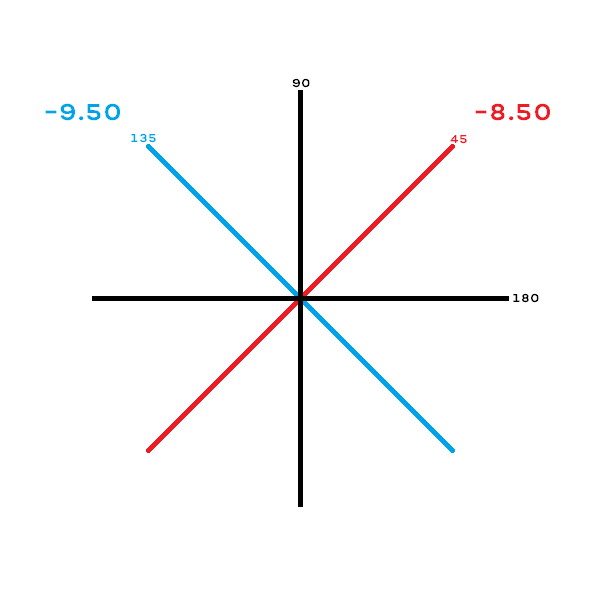
Step 3: Add The Sphere+Cylinder Power Line
Next add 90 to the axis number and draw another line in that direction. For the example prescription above that would be 90 + 45 = 135.
This new line is the Sphere+Cylinder Line.
Now, as the name implies, to find the power of this line we must add the sphere and cylinder together.
For the example prescription above that would be -8.50 + (-1.00) = -9.50.
This the completed power cross.
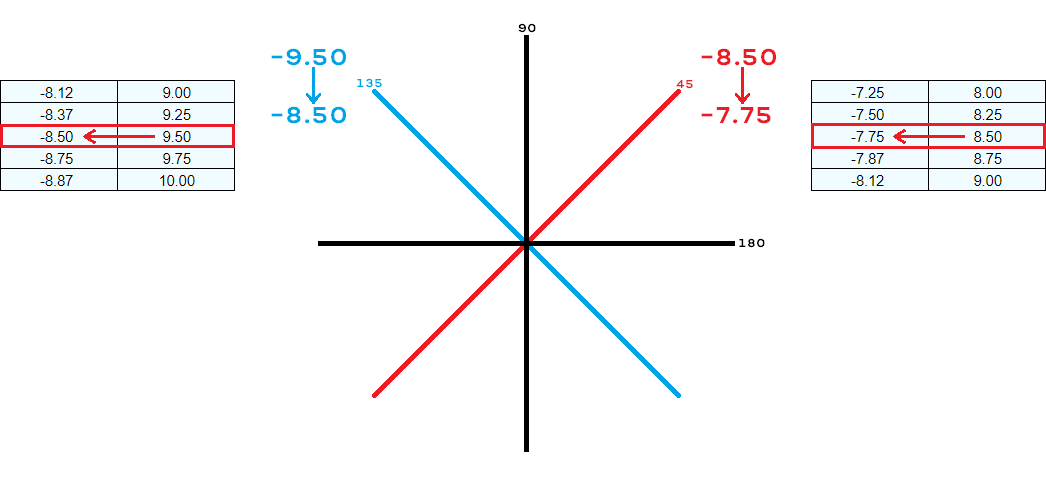
Step 4: Covert The Powers
This is the step where we actually convert the glasses prescription to contact lenses. Now that we’ve laid out both the sphere and the sphere+cylinder powers, use the vertex distance conversion chart above to convert them and write those down as well.
Step 5: Returning To Prescription Format
At this point, the glasses prescription is converted to contact lenses, but it’s not in the correct Sphere/Cylinder/Axis format. To return to the correct format, follow these 3 rules:
The converted sphere power becomes the contact lens sphere power.
The converted sphere+cylinder number minus the converted sphere number becomes the contact lens cylinder power.
-8.50 – (-7.75) = -0.75
The original glasses axis becomes the contact lens axis (it doesn’t change)
And that’s it!
You’ve done it! Not bad right?
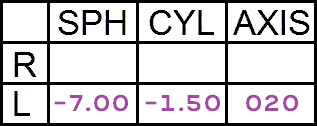
Let’s work through the left eye together.
Step 1: Draw 180° and 90° Reference Lines
Step 2: Add The Sphere Power Line
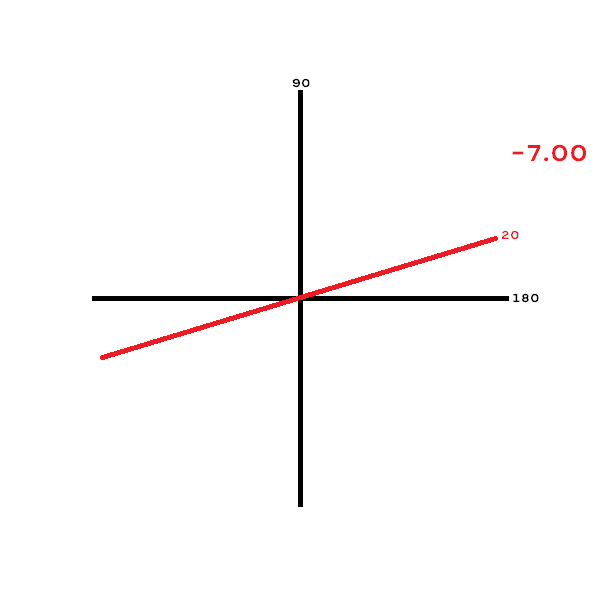
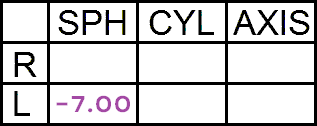
This time the axis is 020 so the sphere power line must be drawn at 20°. The sphere power is -7.00 so that will go next to the sphere power line.
Step 3: Add The Sphere+Cylinder Power Line
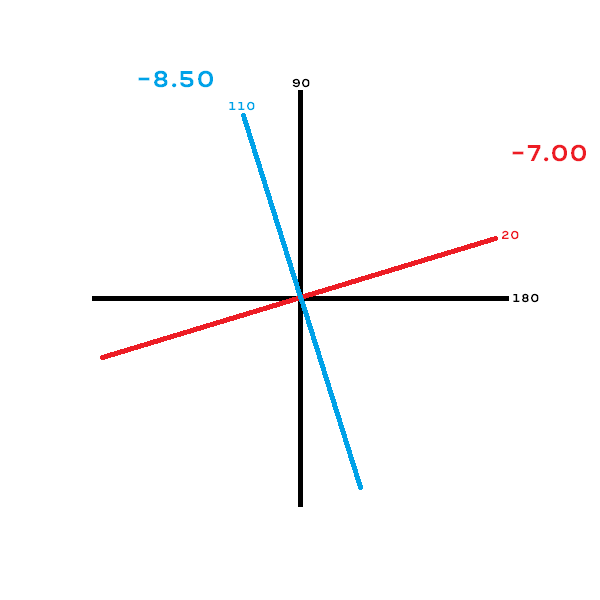
Next, add 90 to the axis on the prescription. In this case it’s 90 + 20 = 110, so the sphere+cylinder power line must be drawn at 110°.
The sphere+cylinder power for this prescription is -7.00 + (-1.50) = -8.50, so that will go next to the sphere+cylinder line.
Step 4: Covert The Powers
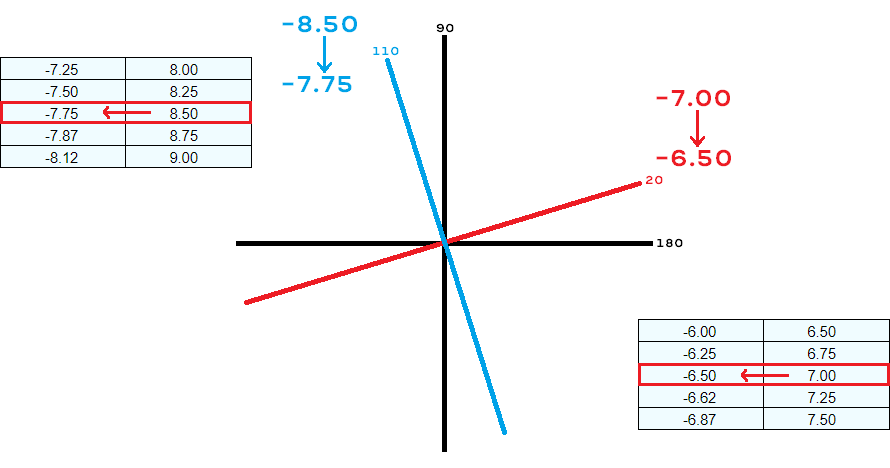
The vertex distance conversion chart is now used to convert both the sphere power and the sphere+cylinder power. The converted powers are written down to help with the next step.
Step 5: Returning To Prescription Format
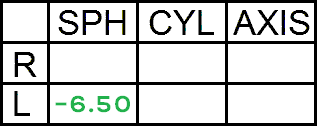
The converted sphere power becomes the contact lens sphere power.
The converted sphere power minus the converted sphere+cylinder power becomes the contact lens cylinder power.
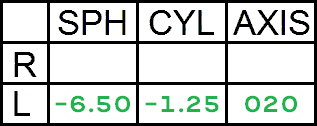
-7.75 – (-6.50) = -1.25
The original glasses axis becomes the contact lens axis (it doesn’t change).
And that’s how to convert a glasses prescription to contact lenses!
Important Shortcuts
Despite the simplicity of converting a glasses prescription with astigmatism to contact lenses using the 5 step process outlined above, it’s not always necessary. There are some shortcuts that can save a lot of time in a real-world practice setting.
When The Glasses Cylinder is -0.25
If the cylinder on the glasses prescription that is being converted to contact lenses is -0.25, there is no need to go through the 5-step power cross procedure. In fact, most of the time there is no need to do anything at all.
With a cylinder of -0.25, after the conversion process the cylinder will either stay -0.25 or become even less. Since there are absolutely no contact lens company that offer a contact lens for astigmatism with a cylinder correction of -0.25, it is a pointless exercise to convert.
Instead, the most common solution is to ignore it altogether. Simply, the cylinder and axis are removed from the contact lens prescription and only the glasses sphere is converted according to these guidelines.
When The Glasses Cylinder is -0.50
This is perhaps the trickiest situation. Contact lenses are not available in cylinder power of -0.50, yet, a cylinder power of -0.50 is significant enough that it can’t just be ignored. So what is the solution?
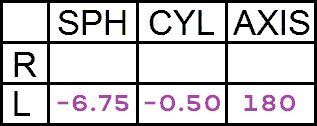
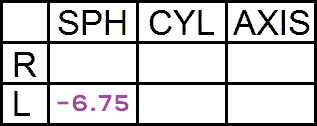
The -0.50 cylinder & axis are still dropped from the contact lens prescription, however, to compensate for it, and additional -0.25 is added to the glasses sphere. That is, you do not have to use the power cross method. Simply:
Remove the -0.50 cylinder & axis.
Add -0.25 to the glasses sphere.
Convert the new glasses sphere using a vertex distance conversion chart.
Convert the new glasses sphere using a vertex distance conversion chart.
And there you have it. You now have all the tools and knowledge necessary to convert any glasses prescription to contact lenses. But are you now ready to start prescribing contact lenses? Not quite yet! Actually, at this point we’re still in the very early stages of the contact lens fitting.
Next Steps
You know how to convert a glasses prescription to contact lenses, even if it has astigmatism, but what if contact lenses aren’t available in the numbers that you calculated?
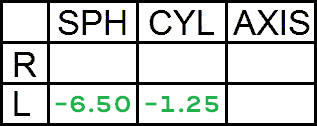
Have you noticed that many of the conversions on the vertex distance conversion chart end in weird numbers like 0.12, 0.37, 0.62, & 0.87? Have you noticed that only certain cylinder powers and axis are available for contact lenses?
If the conversion you calculated doesn’t match what is available in contact lenses, there will be additional adjustments needed in order for trials to be ordered for the patient/client. And that’s what we’re going to learn about next!
If you have any questions about the process laid out in this article, please let me know in the comments and I’ll help you through it.
Now that you know who can or can’t wear contact lenses, it’s time to get the contact lens fitting started. The first step is to determine the power of contact lenses needed for your patient. To do this so it is crucial to know how to convert a glasses prescription to contact lenses.
Is A Contact Lens Prescription The Same As Glasses?
NO!
Well… sometimes yes.
Ok, it depends! let me explain.
What’s The Difference?
Glasses hold lenses up in front of the eyes, whereas contact lenses sit directly on the eyes. By understanding this key difference between contact lenses and glasses, you will understand why contact lens and glasses prescriptions are not always the same.
Why Does Distance Between Lens And Eye Matter?
It matters because of this:
In a nutshell, this simple equation states that the perceived power of lenses changes as you change the distance between the lens and the eye.
“The perceived power of lenses changes as you change the distance between the lens and the eye.”
Now, as we know, the lenses in glasses are at a different distance from the eyes than contact lenses are. The distance between a corrective lens and they eye is called the vertex distance.
For glasses, the vertex distance is usually somewhere between 12-15mm
For contact lenses, the vertex distance is always zero
This equation tells us that, for example, a -6.00D lens held 13mm from the eye will not feel like a -6.00D lens if placed directly on the eye. That’s why we need this equation in order to convert a glasses prescription to contact lenses.
Do We Really Need An Equation Though?
I can already sense that you’re trying to find a way around doing calculations using this or any other equation. So don’t worry! I only brought up the equation in order to help explain the concept and the math behind doing these conversions.
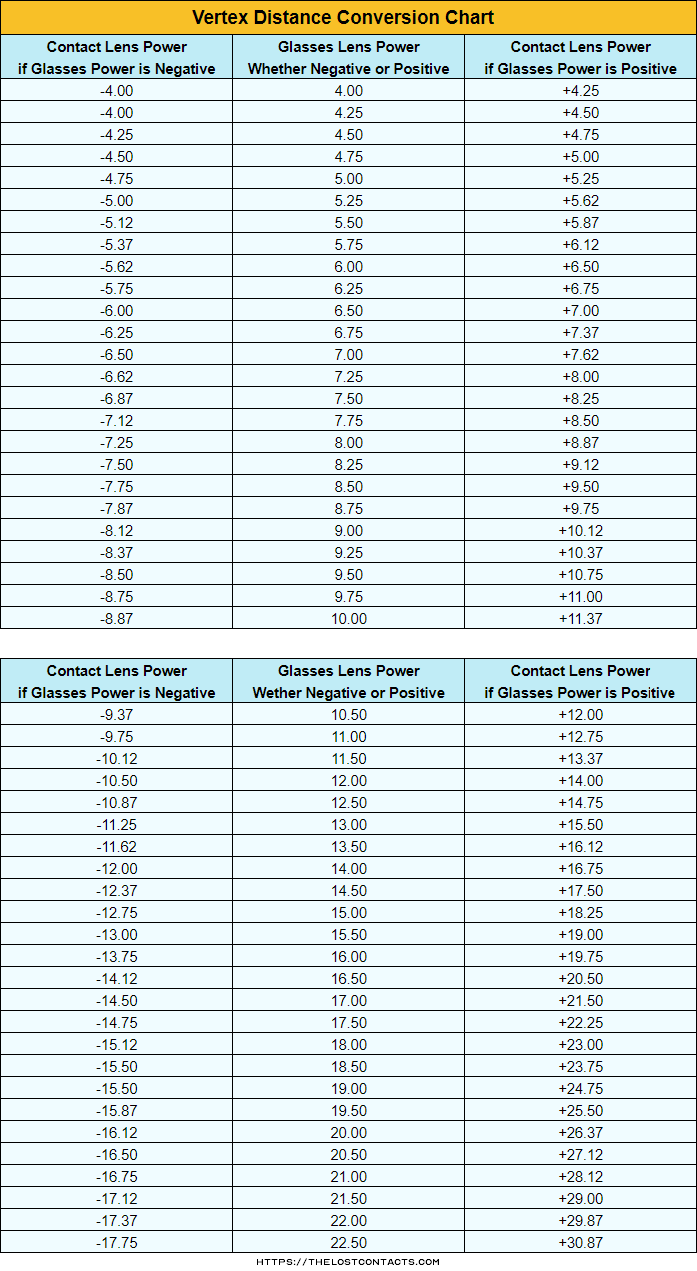
The much easier way is to refer to a chart which already has the results of the equation listed for every single possible lens power. These charts have several different names, but I tend to go with vertex conversion chart or vertex distance conversion chart.
Vertex distance conversion charts are easy to find online, but I’ve made my own just for you! If you find this chart useful you can download & print it for your office.
*Note that this chart is based on a vertex distance of 14mm
How To Use A Vertex Distance Conversion Chart
Using a vertex distance conversion chart is simple.
The ‘Glasses Lens Power’ column refers to the power on the glasses prescription.
If the power on the glasses prescription is negative, then the converted power is directly to the left.
If the power on the glasses prescription is positive, then the converted power is directly to the right.
Let’s do a quick example to demonstrate this.
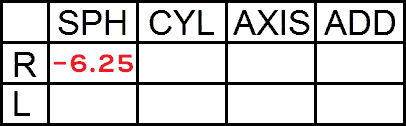
Say you have this glasses prescription and want to convert it to contact lenses:
Or, we can simply refer to the vertex distance conversion chart:
Find the number on the glasses prescription in the middle column. If that number is negative, the converted number is the one on the left as is the case in this example. If number on the glasses prescription was positive, the converted number would be on the right.
This is showing that a -6.25D lens placed at 14mm from the eye would only seem like a -5.75D if it was place directly on the eye’s surface. Recall that a prescription for glasses is measured with lenses at 14mm from the eye, not at the eye’s surface. So if -6.25D was given in contact lenses, it would actually feel like -6.75D at 14mm which would be too strong!
This may feel a little confusing but the minutia of the exact reason and mechanism by which this happens is not overly important to practitioners like yourselves.
What About Low Powers?
You probably noticed that the vertex distance conversion chart above only starts at glasses prescriptions of +/-4.00D. What about zero to +/-4.00D? Good observation!
The nature of the equation which populates vertex distance conversion charts is such that for small powers, the converted power is not significantly different than the original power. Remember that glasses and contact lenses are only available in steps of 0.25. So if the vertex distance conversion formula yields a difference of less than 0.25 than it is of no real significance.
So what happens to glasses prescriptions between zero and +/-4.00D? By and large, for these values the glasses and contact lens power will be the same.
For powers between 0 and +/- 4.00D, glasses and contact lens prescriptions are the same.
The Exception: ASTIGMATISM!
If the sphere and the cylinder numbers combined add up to more than -4.00, a conversion is necessary. To learn how to convert a glasses prescription to contact lenses that has astigmatism, click right here!
Using a vertex distance conversion chart to convert a glasses prescription to contact lenses is just the first of many steps involved in getting to the final contact lens prescription. Remember, it’s just a mathematical formula spitting out numbers. Every eye is different and every contact lens brand is different. Sometimes the vertex distance conversion chart will give the best result for your patient or client, and sometimes it will have to be modified. It’s the job of a good contact lens practitioner to verify and determine the best power for your patient or client.
How Can You Confirm The Results?
Once you’ve used a vertex distance conversion chart to convert a glasses prescription to contact lenses, the following things should be done to confirm the results.
Pull out some trial contact lenses in those powers and have your patient or client try them on.
Give the contact lenses a couple of minutes to settle in.
Measure the visual acuity of each eye individually.
Perform an over-refraction on eye each using loose trial lenses or a phoropter.
Use the results of the over-refraction to pull new trial contact lenses and repeat the process.
The process ends when the refraction over the contact lenses is zero for each eye.
Summary
So far we’ve covered how to convert a glasses prescription to contact lenses for a few different scenarios.
Briefy, they are:
For glasses power between zero and +/- 4.00D –> No conversion needed.
For glasses power over +/- 4.00D –> Use a vertex distance conversion chart.
When using a vertex distance conversion chart it’s important to confirm the results with an over-refraction.
But major element are what are we still missing? That’s right. Astigmatism.
What you’ve learned here will work just fine so long as there’re no astigmatism present in the glasses prescription. To learn how to deal with astigmatism when converting a glasses lens prescription to contact lenses, we’ll need a whole separate article.
Can everyone wear contact lenses? No. There are definitely some people who can’t wear contact lenses, but in this article, I will discuss the kinds of people who can wear contact lenses. Not only that, but there are some people for whom contact lenses are the best option for their vision, and I will go over those scenarios as well.
Who Can Wear Contact Lenses
This is by far and away, the biggest category. These days, contact lenses are available in a wide range of different parameters and have become quite remarkably comfortable. This means that most people should be able to find a contact lens that works at least reasonably well.
People Who Can Wear Contact Lenses And Can Expect Perfect Vision
People with any amount of nearsightedness or farsightedness and no astigmatism can expect to be able to wear contact lenses and see perfectly well.
Rough range: Sphere: +6.00D to -10.00D, Cylinder: 0, Axis: None
People Who Can Wear Contact Lenses And Can Expect Near Perfect Vision
People who are nearsighted or farsighted in combination with low to moderate amounts of astigmatism, or people who have low to moderate amounts of astigmatism on its own, will still do very well in contact lenses.
Rough range: Sphere: +6.00D to -10.00D, Cylinder: 0 to -1.25, Axis: 001 to 180
People Who Can Wear Contact Lenses And Should Expect Somewhat Reduced Vision
When the levels of astigmatism start to get moderately high to high, the vision can still be quite good but there will be a noticeable departure from a perfect vision.
Rough range: Sphere: +6.00D to -10.00D, Cylinder: -1.25 to -2.75, Axis: 001 to 180
There are several reasons why the vision could be reduced in this prescription range:
Unstable contact lenses. With a high cylinder power, it becomes very important for the contact lens to sit perfectly aligned on the eye and never move throughout the day. Due to all of the different ways in which our eyes move throughout the day in combination with all the different head positions and eyelid-contact-lens interactions, it is nearly impossible for contact lenses for astigmatism to remain still. When they move far enough out of their ideal position, the vision will become and remain blurry until the lenses return to their ideal fit. This could take anywhere from seconds to minutes.
Falling between available parameters. Most contact lenses for astigmatism will offer an axis between 10 and 180 and in 10-degree steps. I.e., 10, 20, 30, 40, 50, and so on. However, a person’s vision may require an axis of any number between 1 and 180. I.e., 003, 017, 134, 166, 175, etc. This forces the eye doctor to have to choose the closest axis possible to the prescription, but this may not necessarily be exactly what is needed in order to see perfectly.
Who Should Wear Contact Lenses
For most prescriptions, wearing glasses is the go-to solution. For most prescriptions, contact lenses can offer an alternative to glasses but are not necessarily better. However, there are certain people for whom contact lenses would actually correct the vision much better than glasses. I will discuss these situations now.
Anisometropia & Antimetropia
Anisometropia Definition
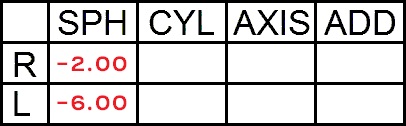
Anisometropia means that the prescriptions for the right and the left eye are considerably different. How different is considerable? It’s usually when the overall difference reaches around 1.50D or more.
For example: Right: -2.00D, Left: -6.00.
Glasses are not ideal when dealing with high levels of anisometropia. I will discuss why in just a second.
Antimetropia Definition
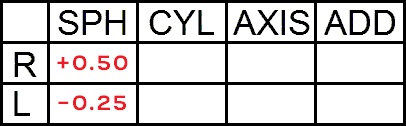
Antimetropia is the condition where one eye is nearsighted and the other eye is farsighted. This is sometimes called ‘mixed anisometropia’.
Antimetropia, if very low doesn’t cause too many problems.
For example: Right: +0.50D, Left -0.25D.
However, if antimetropia and anisometropia are present together, that’s when glasses can start causing problems.
Why Aren’t Glasses Ideal For Anisometropia & Antimetropia?
In a nutshell, glasses induce visual distortions. The magnitude of these distortions depends on the strength of the glasses. When both eyes experience roughly the same levels of distortions, the brain is still able to combine the information it receives from both eyes into one coherent image of the world. However, when the distortions are vastly different, the brain cannot combine the information it is receiving from each eye; they are just too different.
The result of wearing glasses for anisometropia can range from uncomfortable vision, to double vision, eyestrain, headaches, loss of depth perception, and more.
If you have a very savvy optician or optometrist, he/she can attempt to mitigate the symptoms of anisometropia by altering various properties of the glasses such as lens index, vertex distance, base curve, bevel position, etc.
Click here for more information on this type of solution.
However, a simpler solution would be to simply wear contact lenses!
Why Are Contact Lenses Ideal For Anisometropia & Anitmetropia?
Contact lenses do not produce any of the distortions in vision that glasses produce, no matter how different the prescription is between the two eyes. Why is that? Because not only do visual distortions depend on the strength of the lenses, but also the distance between the lens and the eye.
You can think of it this way:
Visual Distortions = [Strength of Lens] X [Distance Between Lens & Eye]
When using glasses for anisometropia, the strength of the lens will be different for each eye and the distance between the lens and the eye is usually about 12-14mm. This will lead to considerably different visual distortions for each and result in visual discomfort.
When using contact lenses for anisometropia, the strength of the lens doesn’t matter because the distance between the lens and the eye is always zero. That results in zero visual distortions for each eye every time.
Very High Sphere Power
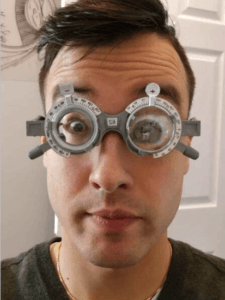
Me wearing a -20D lens on the right and +20D lens on the left. Note the way that each change the apparent size of my eyes.
When you have a very high prescription, glasses start to affect the apparent size of your eyes. Sometimes this can be distracting or unappealing.
If you have a very strong hyperopic prescription, it will make your eyes look unnaturally big.
If you have a very strong myopic prescription, it will make your eyes look unnaturally small.
Keratoconus
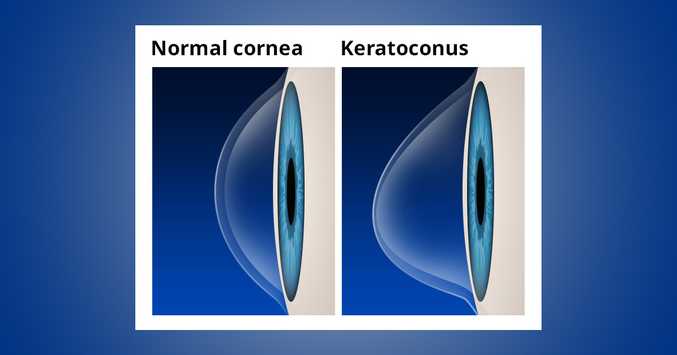
Keratoconus is a condition that causes the cornea to develop something known as irregular astigmatism. Glasses and regular soft contact lenses are not able to correct irregular astigmatism. In this case what is needed are hard contact lenses called RGPs (rigid gas permeable).
There are some people that can’t wear contact lenses but as you can see now, most people can and there are even many people for whom contact lenses are the best option.
Can you think of any scenarios that I’ve missed? If so, please share them in the comments below!
Once a suitable contact lens candidate has been found, it’s time to start analyzing what power of contact lenses they will need.
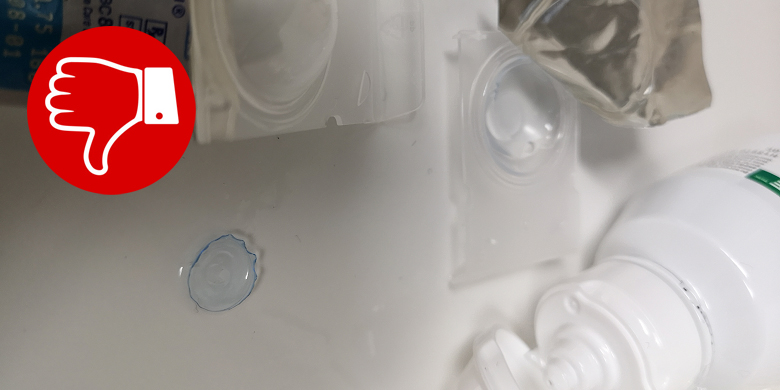
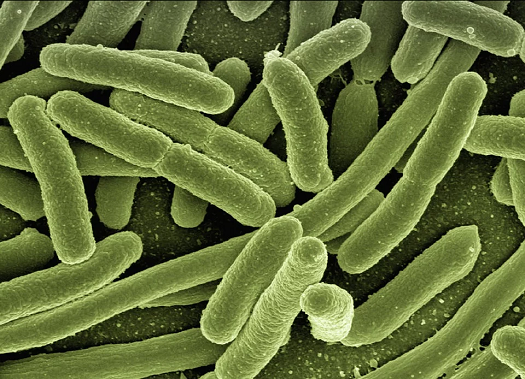
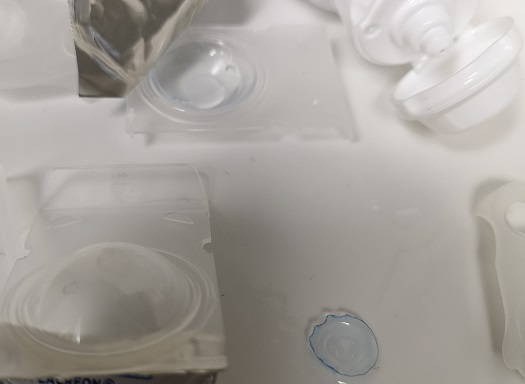
Wearing contact lenses comes with certain risks, the greatest of which is that of infection. That’s why it’s crucially important to make sure you know how to disinfect contact lenses properly, especially at the time of writing this article; the middle of the COVID-19 (coronavirus) pandemic.
First and Foremost
Wash Your Hands
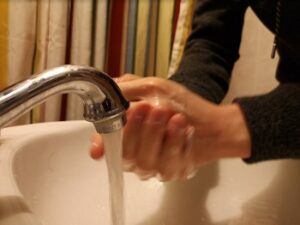
The most common way that contact lenses become infected is through dirty hands. The most important thing to do to prevent infected contact lenses is to properly and thoroughly wash your hands immediately prior to handling contact lenses. That means immediately before inserting and immediately before removing contact lenses.
Don’t Touch Your Eyes
Realistically, contact lenses don’t always act like they’re suppose to. Sometimes they twist or move out of position which can cause vision to fluctuate. This can be frustrating and can tempt contact lens wearers use their fingers to reposition their contact lenses. Needless to say, this is not a very hygienic habit.
If you absolutely have to readjust your contact lenses, try to find a washroom to wash your hands first. It’s always practical to have some contact lens solution on hand in situations like these where it may be necessary to remove and re-insert contact lenses throughout the day.
Use The Right Contact Lens Solution
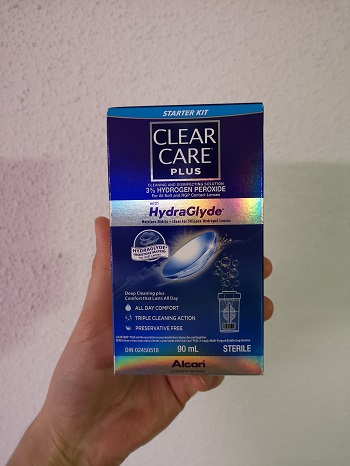
To disinfect soft contact lenses, nothing compares to a hydrogen peroxide contact lens solution.
Most contact lens wearers do not use hydrogen peroxide contact lens solutions so they may not know what they are. So for the sake of thoroughness, let’s review the different kinds of contact lens cleaning solutions.
Multi-Purpose Solutions
A multi-purpose contact lens solution is the typical, every-day contact lens cleaning solution. These solutions are used for cleaning and storing contact lenses overnight. Although it is safe for multi-purpose contact lens solutions to touch the eyes, it is not intended for direct application to the eyes.
Typically, these kinds of solutions require rubbing of the contact lenses with the solution to mechanically remove the debris and possible pathogens from the contact lenses. The ingredients also include compounds that can kill bacteria or stop them from multiplying.
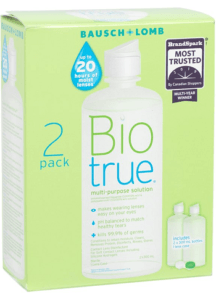
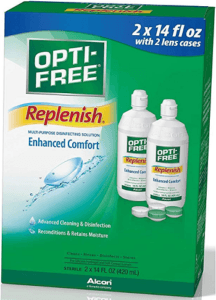
Very common and popular multi-purpose solutions are:
Here is a useful list of some (not all) commercially available products effective at killing coronavirus (COVID-19). You’ll notice that there are no multi-purpose contact lens cleaning solutions on that list.
Hydrogen Peroxide Contact Lens Solutions
On the other hand, the list does have 4 products that contain something called hydrogen peroxide. They are:
*Please note that the 4 products listed above or not for use on contact lenses!
Additionally, consumerreports.org lists hydrogen peroxide 3% (among other things) as a product that can destroy the coronavirus (COVID-19).
So are there any contact lens solutions that contain hydrogen peroxide 3%? As a matter of fact there are.
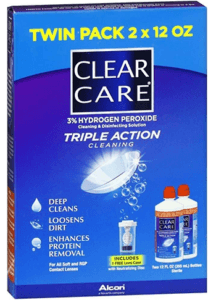
Clear Care
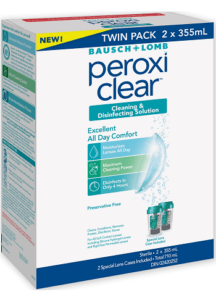
Peroxiclear
Although neither of these products are specifically mentioned in this list, both of them contain hydrogen peroxide 3% which is higher than all of the hydrogen peroxide based products on it.
——————-**Take Caution**——————-
Hydrogen peroxide contact lens solution are not the same as multi-purpose contact lens solutions! The solution can not under any circumstances touch the eyes directly or indirectly until it has been neutralized.
Failing to do so may cause chemical corneal burns.
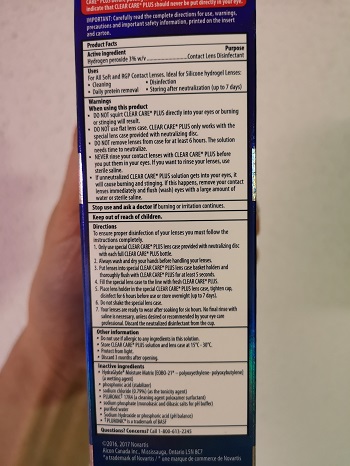
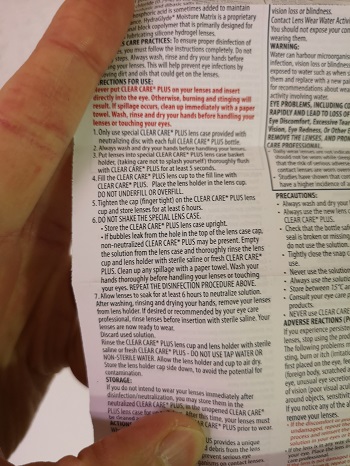
If you use these products, make sure to read the instructions on the box carefully.
——————-**Take Caution**——————-
How Hydrogen Peroxide Contact Lens Solutions Work
Let’s use Clear Care as an example.
Please do no rely on this brief overview alone. Make sure you read the instructions on the box and in the package insert.
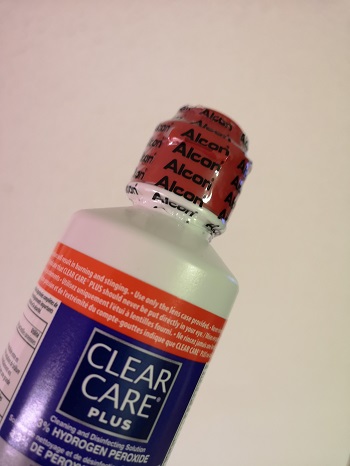
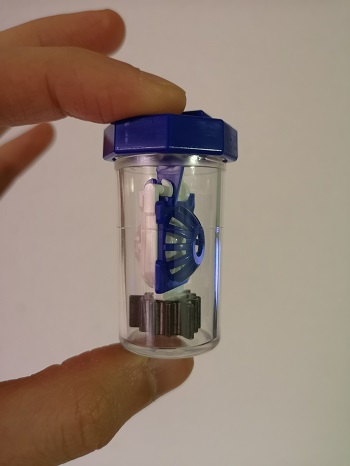
The bottle inside has a red cap and a red warning label warning on it. The warnings are not just for you, but for anybody in your household who may unintentionally use this as a normal multi-purpose contact lens solution. Remember, if a hydrogen peroxide contact lens solution touches the eyes before it is neutralized, it will burn the eyes.
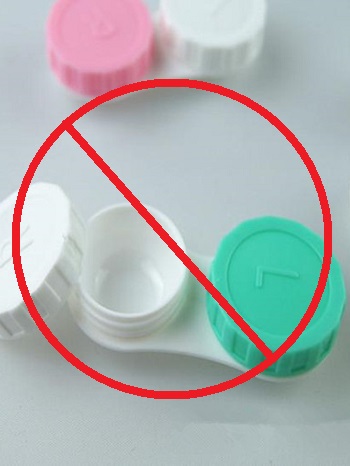
Hydrogen peroxide contact lens solutions work with a very different contact lens case. Only use the case that comes in the box and change it every time you start a new bottle. Do not use a multi-purpose solution case with a hydrogen peroxide contact lens solution.
Inside the case there is a mechanism that opens up on both sides. Pull down one of the sides, place the contact lens inside the basket and then close it up. Do the same for your other contact lens. The two sides are color coded so you can keep track of the right and left contact lenses throughout the process.
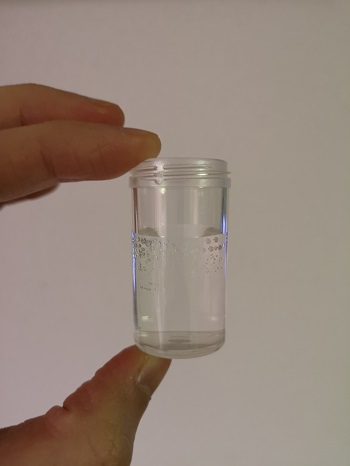
Next, fill the vial up to the indicator line with the hydrogen peroxide solution.
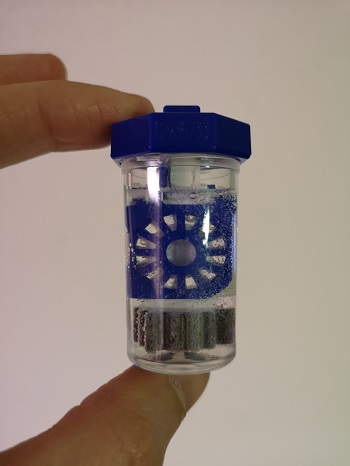
And finally, screw the inner portion back into the vial. You will notice bubbles forming inside. This is normal. It is due to a chemical reaction taking place which neutralizes the hydrogen peroxide. The process takes 6 hours to complete. Once the process starts you cannot wear your contact lenses again until it is complete.
When the neutralization process is complete, there is no hydrogen peroxide left inside the vial. It is then safe for the liquid to come into contact with your eyes. Simple remove the contact lenses from the holders and insert them as usual.
Summary
Properly disinfecting contact lenses is very imprtant for the long term health of the eyes as well as long term success with contact lenses. Knowing how to disinfect contact lenses has become even more important now in the face of the COVID-19 pandemic. Using a hydrogen peroxide 3% base contact lens solution is the best to disinfect contact lenses from the coronavirus, as well as all the other micro-intruders out there.
If you have any questions about hydrogen peroxide contact lens cleaners, let me know in the comments section below!
A contact lens fitting is a multi-step process that involves many important considerations, but perhaps the most important step is the one that precedes it all; determining if your patient can or can’t wear contact lenses.
In this article, I will walk you through the process of determining who can’t wear contact lenses & who shouldn’t wear contact lenses. In Part 2, I will discuss who can wear contact lenses and who should wear contact lenses.
*Note: This article will only deal with soft contact lenses. It’s possible that some of the things I say don’t apply to rigid gas permeable (RGP) contact lenses, hybrid contact lenses or scleral contact lenses.
Who Can’t Wear Contact Lenses
These are the people who you just have to turn down if they ask you to fit them with contact lenses.
Corneal Disease
If your patient or customer has a corneal disease which would be aggravated by the use of contact lenses, DO NOT put contact lenses in their eyes.
Active Corneal or Conjunctival Infections
Most of us have had some sort of eye infection at some point in our lives. While having experienced such as thing does not disqualify someone from wearing contact lenses, if someone is currently dealing with an eye infection – whether it be conjunctival or corneal – they DO NOT put contact lenses in their eyes.
This goes for any kind of eye infection. It doesn’t matter if it’s viral, bacterial, fungal, etc.
Very High Prescriptions
Contact lenses have limits as to what strength of prescriptions they can correct. This is mostly true for astigmatism correction. If the strength of a person’s astigmatism is -5.00 or higher, or if the strength of their near/farsightedness is higher than +/-10.00D in addition to any amount of astigmatism, there are no contact lenses that can correct these types of prescriptions.
Limited Dexterity/Fine Motor Skills
Wearing contact lenses requires people to perform several specialized tasks with their hands. If a person is afflicted with a condition that makes them unable to open a contact lens blister pack, pick up a fallen contact lens, manipulate a contact lens into position on their finger, hold their eyelids while approaching their finger to their eye, or pinch a contact lens off of the eye, then they will not be able to wear contact lenses.
Of course, I’m talking about people who are living independently here. If there is a caretaker who can do this for your patient or customer, then it is possible.
And then there’s Jessica Cox so… I stand corrected.
Unrealistic Expectations
Sometimes you just have to know when you’re outmatched by a patient or customer’s expectations. If you’re faced with someone who has moderate myopic astigmatism and advanced presbyopia, and they expect to be able to see perfectly well in contact lenses at all distances without any fluctuations in their vision, you just have to explain to them why it will not be possible.
Who Shouldn’t Wear Contact Lenses
These are the people who ideally shouldn’t be wearing contact lenses, but in certain situations, it could be permissible.
Chronic Dry Eyes
Having chronic dry eyes was once a death sentence for wearing contact lenses. For some, it will still be. The good news is that contact lens manufacturers have figured out how to make contact lenses feel really comfortable. For some, this will mean that despite their dry eyes, they may still be able to wear contact lenses from time to time.
Naturally, you may be curious about what the most comfortable contact lenses are. In my opinion, it is the DAILIES TOTAL1 brand by Alcon. No, Alcon did not pay me to write that. Some close seconds are ULTRA by Bausch + Lomb and Acuvue Oasys With HydraLuxe (not HydraClear Plus) by Johnson & Johnson.
Smokers
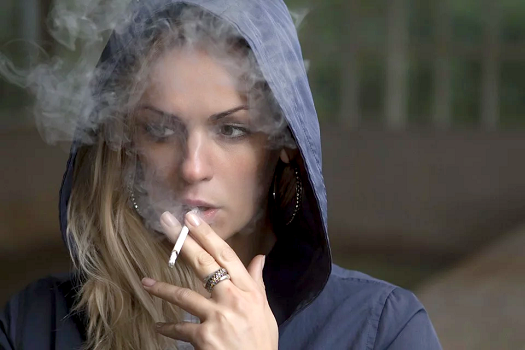
Smoking does not mean that you cannot wear contact lenses. However, many published studies (such as this one) show that smokers who wear contact lenses are at greater risk of getting corneal ulcers compared to non-smokers who wear contact lenses.
Allergies
If someone’s allergies affect their eyes and they do not have them under control, they are not going to do well with contact lenses. If you have an allergy suffering patient or customer asking for contact lenses, make sure you help them with their allergy symptoms before you even try contact lesnes.
Sometimes it is just best to stop wearing contact lenses during one’s specific allergy season.
People Who Are Immunocompromised
One of the considerations we always have to keep in mind for people wearing contact lenses is the risk of infection. Putting contact lenses in your eyes increases the risk of eye infections, end of the story. For the majority of people, the immune system can quickly quash any would-be bodily intruders. However, if the immune system is suppressed by medication or illness, the body’s defense is not as strong.
There are many ways one can become immunocompromised. I recommended this article to learn more about them.
Irresponsible People
This is a bit of a broad and vague category, but it’s a good one to be aware of. Success in wearing contact lenses depends heavily on knowing how to care for contact lenses. If you’re explaining the process of caring for contact lenses to your patient or customer and they seem wholly uninterested, that should be a red flag.
Scientific studies have shown that males encounter contact lens complications at higher rates than women, probably due to their propensity to disregard proper techniques on how to care for contact lenses.
People Asking For ‘Sleeping Contact Lenses’
If your patient or customer is asking you for contact lenses that they can sleep in (extended wear contact lenses), proceed with caution. Extended wear contact lenses exist and some people can sleep with them without problems but for most people, this type of contact lens wear is not suitable.
The contact lens brand Air Optix Aqua Night & Day was developed by Ciba Vision (now Alcon) as an extended wear contact lens brand when the idea of sleeping with contact lenses become somewhat of a craze. In that same era there were also a handful of other brands approved for overnight wear, but by and large, it didn’t work out and the industry has now given up on the idea (and so should you – probably).
Who Can and Should Wear Contact Lenses
Now that you know who cannot wear contact lenses, let’s explore the type of people who can.









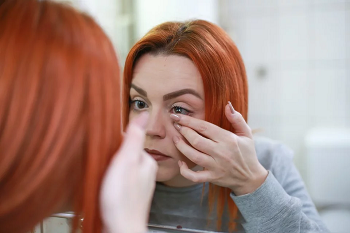 This is by far and away, the biggest category. These days, contact lenses are available in a wide range of different parameters and have become quite remarkably comfortable. This means that most people should be able to find a contact lens that works at least reasonably well.
 Unstable contact lenses. With a high cylinder power, it becomes very important for the contact lens to sit perfectly aligned on the eye and never move throughout the day. Due to all of the different ways in which our eyes move throughout the day in combination with all the different head positions and eyelid-contact-lens interactions, it is nearly impossible for contact lenses for astigmatism to remain still. When they move far enough out of their ideal position, the vision will become and remain blurry until the lenses return to their ideal fit. This could take anywhere from seconds to minutes.
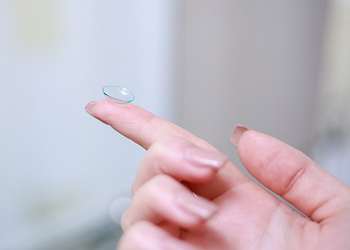 For most prescriptions, wearing glasses is the go-to solution. For most prescriptions, contact lenses can offer an alternative to glasses but are not necessarily better. However, there are certain people for whom contact lenses would actually correct the vision much better than glasses. I will discuss these situations now.
 Wash Your Hands