Is Your Optician Coronavirus Ready?

Since the Coronavirus lockdown started in Ontario, opticians and other healthcare professionals are required to avoid non-essential services. The Ministry of Health issued this directive to protect the public and healthcare providers. So for as long as the lockdown continues, we should expect this to be the new norm. The good news is all regulatory bodies, including the College of Opticians of Ontario (COO), have issued guidelines to help both healthcare providers and the patients to navigate through these challenging times. So if you are wondering how to know your optician is going to be Coronavirus ready, today’s post is going to be your guide.

What to Do During the Lockdown

The rule of thumb is only to visit your optician if it is necessary. But what is considered “necessary” during the pandemic? The College of Opticians of Ontario says “critical repairs or replacements of eyeglasses and refilling contact lenses that impact the health and daily functioning of the patient”. The best way to find out if your specific issue needs urgent care is to contact your optician and consult them. However, don’t fret if you don’t know an optician or if your optician is unavailable, the COO can help you find one. As of April 15/2020, the COO announced working on building an online directory on their website, where you can search for available opticians in your area.

Remote Dispensing

Opticians are encouraged to practice “remote dispensing” to protect the safety of their patients, themselves, and their families. Although it is not the standard or the ideal way to dispense eyewear, it eliminates the risk of contracting or spreading the Coronavirus in the community. Remote dispensing could be the solution to your specific problem, but only your optician can tell you that using their professional judgment. So don’t hesitate to call them!

Things to Consider if You Are a New Patient

If you are consulting an optician as a new patient,  be prepared to disclose;

Your contact information

Provide your full name, DOB, phone number, home address, and email address as alternative communication (you can ask not to receive promotional material)

Your medical history

Let the optician know whether you are suffering from any systemic diseases, taking medication, had any eye-related injuries or procedures done, and the date of your last eye exam. Also, make sure to provide a copy of your most recent eyewear prescription.

Your use of eyewear (i.e. glasses, contact lenses & other visual aid devices)

Let the optician know the type of eyewear you use, how long you have been using them, and how you use them (i.e. wearing contact lenses occasionally, or wearing protective eyewear due to an injury, and so on). The more information you provide, the better the optician could help you.

Things to Consider if You Are a Returning Patient

If you are a returning patient, your optician should have the information from your last visit on file. However, consider disclosing any updates or changes to your health, vision, and living conditions that could impact your use of eyewear.

When the Lockdown Is Over

You might have heard health officials warning about the risk of a resurgence. To prevent that, we should continue to take safety measures even after the lockdown is over. As the days go on the health regulatory bodies will continue to update their members on safe practice guidelines. Let’s have a look at the safety procedures your optician should take to be prepared.

What to Expect From Your Optician

To make sure your optician is Coronavirus ready, don’t hesitate to call in and ask questions. In “Is Your Optometrist Coronavirus Ready?” we covered necessary safety measures, that applies to opticians and other health professionals as well. So let’s review things you should ask your optician before visiting the dispensary.

Personal Protective Equipment (PPE)

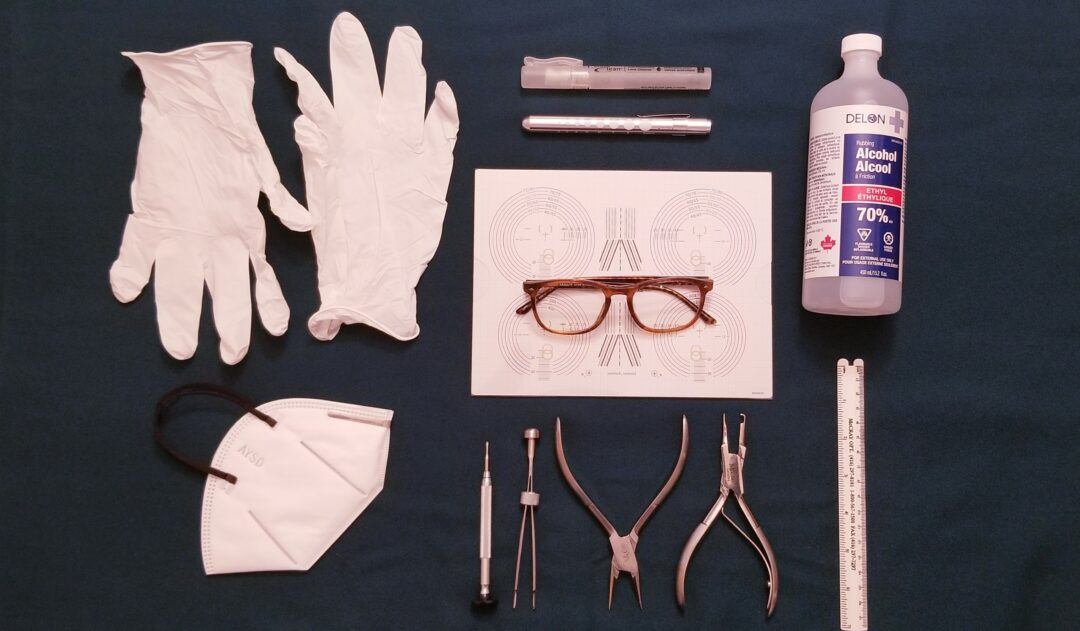
Naturally, when you visit a dispensary to get fitted with eyewear, the optician has to be close to you to assess the fit of the eyewear, make necessary adjustments, and take the required measurements. This violates the minimum standard for physical distancing, which is 2 m. So for safety reasons, both you and your optician should wear PPE to minimize the risk of COVID-19 spread. So when you call in, make sure to ask whether they have proper PPE, or know an optician who has.

Proper Cleaning & Disinfecting Procedures

The dispensary must be cleaned on a regular basis, and the optician has to make sure all common areas, equipment, and frames are properly disinfected in between patients;

  • Any frames that have been put on by patients must be disinfected before returning to frame boards.
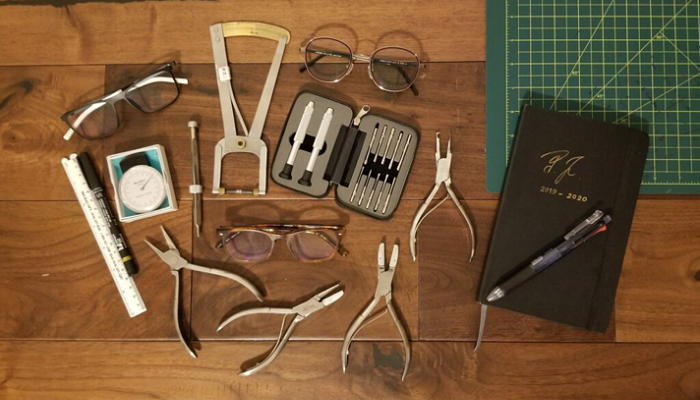
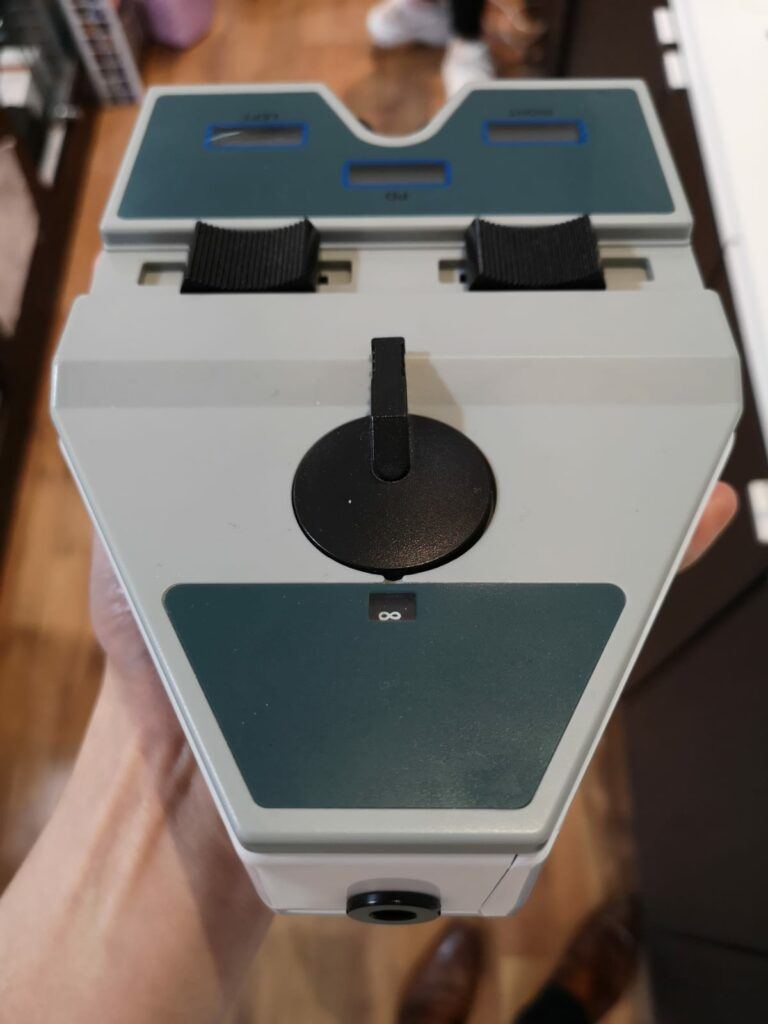
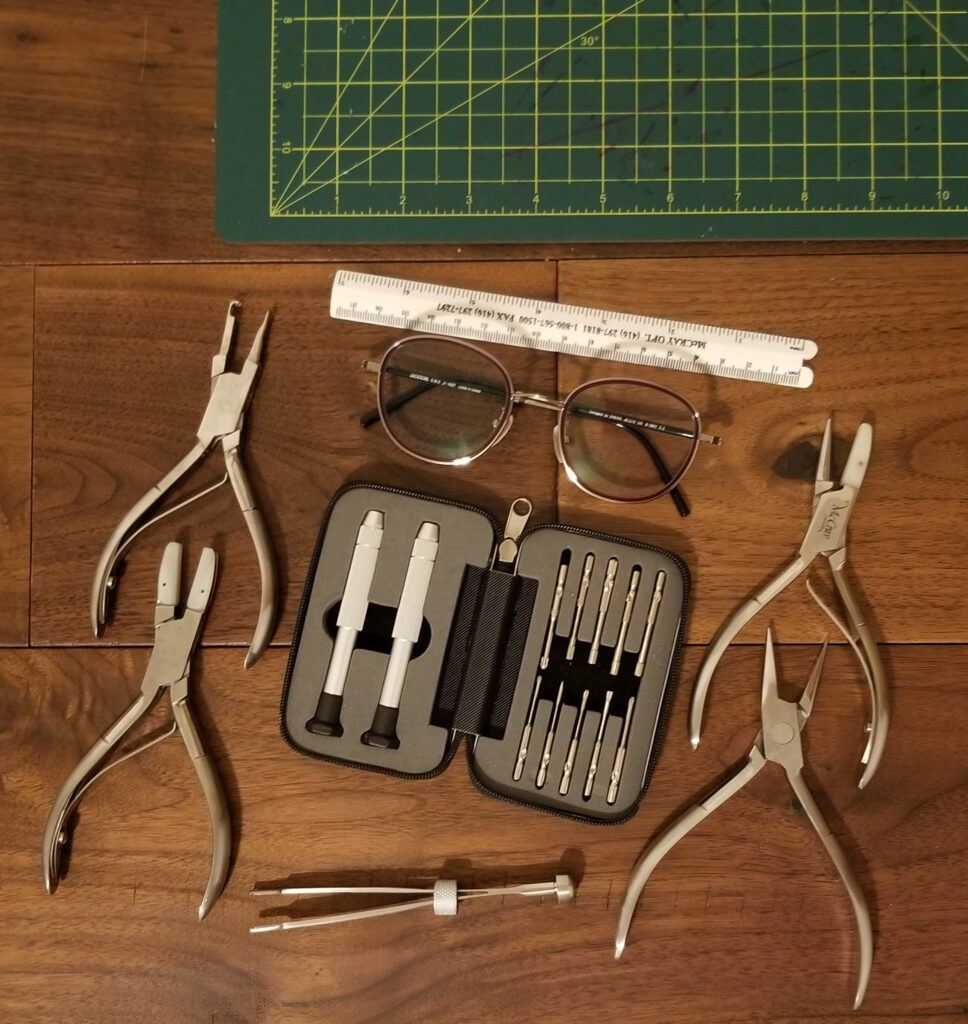
  • All tools and equipment, such as the PD meter, the PD ruler, trial frame, pliers, and screwdrivers have to be disinfected in between patients.
  • Common areas, such as the reception, the waiting area, and the dispensing table must be disinfected between patients, as well.

Scheduled Visits, Only!

Ask your optician about their visit schedule. The safest option would be to book an appointment in advance. Since most dispensaries have limited floor space, you want to make sure you can maintain the required physical distance with others.

Service Delays

Next, you should keep in mind service delays due to the COVID-19 pandemic. Ask your optician about the approximate length of consultation and the wait-time for service delivery. It is possible that you have to wait longer than usual for your optician to properly disinfect equipment for your use or to process and dispense your eyewear order.

Remote Dispensing

When the risk of contamination is high, avoid in-person visits. Instead, arrange for a virtual consultation with your optician.

What Your Optician Expects From You

Scheduled Visits

Ideally, during the pandemic, your optician would want you to call in advance and schedule an appointment. This way they can make sure no one’s safety is going to be compromised with a surprise walk-in visit.

Updates on Health Condition

Let your optician know if you had any changes in your health condition recently. If you suspect you might have contracted the Coronavirus take the online self-assessment, and cancel any non-essential visits.

Communication

Make sure to provide multiple communication methods, such as email address and alternate phone number. During these uncertain times, your optician might need to update you on crucial information. Examples would be delays in your orders or temporary closure of the dispensary due to contamination.

Summary

During the COVID-19 lockdown, access to many services has been limited. It is challenging, but it serves the best interest of all of us. If you are experiencing any eyewear-related issues, it is best to contact your optician for consultation. They can tell you if an in-person visit is necessary or not. There are safe practice guidelines for opticians to follow to be Coronavirus ready, even after the lockdown is over. However, before any in-person visits, you should communicate your concerns with your optician.

I hope this post finds you well!

As always, feel free to ask your questions or leave a comment about your recent visit to the optician. And remember to stay safe!
Who Can Wear Contact Lenses

Knowing Who Can Wear Contact Lenses

Can everyone wear contact lenses? No. There are definitely some people who can’t wear contact lenses, but in this article, I will discuss the kinds of people who can wear contact lenses. Not only that, but there are some people for whom contact lenses are the best option for their vision, and I will go over those scenarios as well.

Who Can Wear Contact Lenses

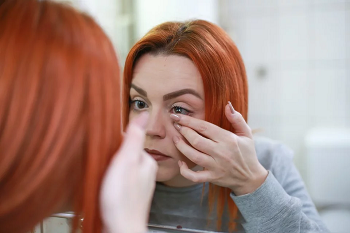
Woman inserting contact lensesThis is by far and away, the biggest category. These days, contact lenses are available in a wide range of different parameters and have become quite remarkably comfortable. This means that most people should be able to find a contact lens that works at least reasonably well.

People Who Can Wear Contact Lenses And Can Expect Perfect Vision

People with any amount of nearsightedness or farsightedness and no astigmatism can expect to be able to wear contact lenses and see perfectly well.

Rough range: Sphere: +6.00D to -10.00D, Cylinder: 0, Axis: None

People Who Can Wear Contact Lenses And Can Expect Near Perfect Vision

People who are nearsighted or farsighted in combination with low to moderate amounts of astigmatism, or people who have low to moderate amounts of astigmatism on its own, will still do very well in contact lenses.

Rough range: Sphere: +6.00D to -10.00D, Cylinder: 0 to -1.25, Axis: 001 to 180

People Who Can Wear Contact Lenses And Should Expect Somewhat Reduced Vision

When the levels of astigmatism start to get moderately high to high, the vision can still be quite good but there will be a noticeable departure from a perfect vision.

Rough range: Sphere: +6.00D to -10.00D, Cylinder: -1.25 to -2.75, Axis: 001 to 180

There are several reasons why the vision could be reduced in this prescription range:

  1. woman squinting her eyesUnstable contact lenses. With a high cylinder power, it becomes very important for the contact lens to sit perfectly aligned on the eye and never move throughout the day. Due to all of the different ways in which our eyes move throughout the day in combination with all the different head positions and eyelid-contact-lens interactions, it is nearly impossible for contact lenses for astigmatism to remain still. When they move far enough out of their ideal position, the vision will become and remain blurry until the lenses return to their ideal fit. This could take anywhere from seconds to minutes.
  2.  Falling between available parameters. Most contact lenses for astigmatism will offer an axis between 10 and 180 and in 10-degree steps. I.e., 10, 20, 30, 40, 50, and so on. However, a person’s vision may require an axis of any number between 1 and 180. I.e., 003, 017, 134, 166, 175, etc. This forces the eye doctor to have to choose the closest axis possible to the prescription, but this may not necessarily be exactly what is needed in order to see perfectly.

Who Should Wear Contact Lenses

woman holding up a contact lensFor most prescriptions, wearing glasses is the go-to solution. For most prescriptions, contact lenses can offer an alternative to glasses but are not necessarily better. However, there are certain people for whom contact lenses would actually correct the vision much better than glasses. I will discuss these situations now.
Anisometropia & Antimetropia

Anisometropia Definition

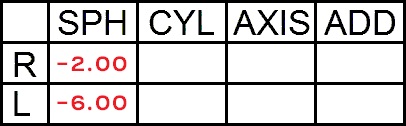
Anisometropia means that the prescriptions for the right and the left eye are considerably different. How different is considerable? It’s usually when the overall difference reaches around 1.50D or more.

For example: Right: -2.00D, Left: -6.00.

Anisometropic Prescription

Glasses are not ideal when dealing with high levels of anisometropia. I will discuss why in just a second.

Antimetropia Definition

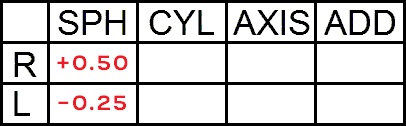
Antimetropia is the condition where one eye is nearsighted and the other eye is farsighted. This is sometimes called ‘mixed anisometropia’.

Antimetropia, if very low doesn’t cause too many problems.

For example: Right: +0.50D, Left -0.25D.

Antimetropic Prescription

However, if antimetropia and anisometropia are present together, that’s when glasses can start causing problems.

Why Aren’t Glasses Ideal For Anisometropia & Antimetropia?

In a nutshell, glasses induce visual distortions. The magnitude of these distortions depends on the strength of the glasses. When both eyes experience roughly the same levels of distortions, the brain is still able to combine the information it receives from both eyes into one coherent image of the world. However, when the distortions are vastly different, the brain cannot combine the information it is receiving from each eye; they are just too different.

The result of wearing glasses for anisometropia can range from uncomfortable vision, to double vision, eyestrain, headaches, loss of depth perception, and more.

Click here to learn more about anisometropia.

If you have a very savvy optician or optometrist, he/she can attempt to mitigate the symptoms of anisometropia by altering various properties of the glasses such as lens index, vertex distance, base curve, bevel position, etc.

Click here for more information on this type of solution.

However, a simpler solution would be to simply wear contact lenses!

Why Are Contact Lenses Ideal For Anisometropia & Anitmetropia?

Contact lenses do not produce any of the distortions in vision that glasses produce, no matter how different the prescription is between the two eyes. Why is that? Because not only do visual distortions depend on the strength of the lenses, but also the distance between the lens and the eye.

You can think of it this way:

Visual Distortions = [Strength of Lens] X [Distance Between Lens & Eye]

When using glasses for anisometropia, the strength of the lens will be different for each eye and the distance between the lens and the eye is usually about 12-14mm. This will lead to considerably different visual distortions for each and result in visual discomfort.

When using contact lenses for anisometropia, the strength of the lens doesn’t matter because the distance between the lens and the eye is always zero. That results in zero visual distortions for each eye every time.

Very High Sphere Power

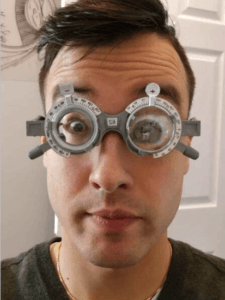
Size of Eyes through very storng myopic and hyperopic glasses
Me wearing a -20D lens on the right and +20D lens on the left. Note the way that each change the apparent size of my eyes.

When you have a very high prescription, glasses start to affect the apparent size of your eyes. Sometimes this can be distracting or unappealing.

If you have a very strong hyperopic prescription, it will make your eyes look unnaturally big.

If you have a very strong myopic prescription, it will make your eyes look unnaturally small.

Keratoconus

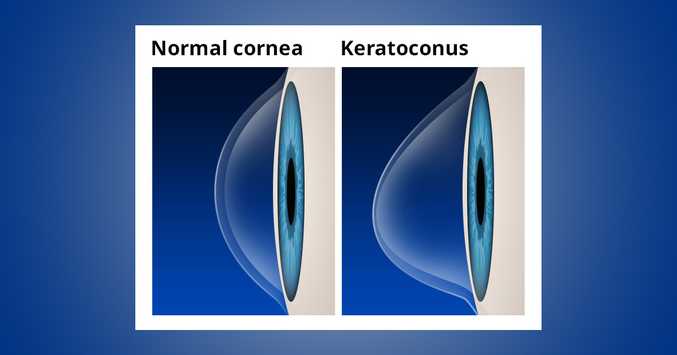
Keratoconus is a condition that causes the cornea to develop something known as irregular astigmatism. Glasses and regular soft contact lenses are not able to correct irregular astigmatism. In this case what is needed are hard contact lenses called RGPs (rigid gas permeable).

Normal Cornea VS Keratoconus

Click here to learn more about keratoconus.

Summary

There are some people that can’t wear contact lenses but as you can see now, most people can and there are even many people for whom contact lenses are the best option.

Can you think of any scenarios that I’ve missed? If so, please share them in the comments below!

Once a suitable contact lens candidate has been found, it’s time to start analyzing what power of contact lenses they will need.

==>Click here to learn how to convert a glasses prescription to contact lenses<==

Opticianry Schools II- NAIT

Opticianry Schools Part II

Welcome to part II of Opticianry Schools! In Part I, we reviewed opticianry schools in Ontario offering the program in traditional-classroom-style delivery. We also did a comparison of the two schools and briefly went over what to expect from your studies.

Here we are going to learn about a third option to become a licensed optician in Ontario, and that is through NAIT – the Northern Alberta Institute of Technology.

I know, sounds a little weird. Alberta and Ontario are some 2000 km apart, and they each have their own rules and regulations for opticians, so how is that you can become a licensed optician in Ontario by studying a program in Alberta?

Well, that’s exactly what I’m going to do in this post; telling you how!

How is NAIT different from Seneca and Georgian college?

In comparison to Seneca and Georgian College, NAIT has a different delivery mode, program structure, and licensing. NAIT offers multiple disciplines under the Optical Sciences field, including accredited and non-accredited programs. We are going to focus on accredited education today.

As discussed in Part I, in Ontario your studies encompass both eyeglasses and contact lenses. You can choose to specialize in one category when you are applying for your license, but you must complete the school’s curriculum nonetheless. At NAIT, however, the accredited education designed for opticians is primarily focused on eyeglasses dispensing. After receiving your diploma, if you wish to expand your scope of practice, you can study a 1-year post-diploma certificate program focused on contact lenses.

Now, let’s take a closer look at things.

NAIT Optical Sciences-Eyeglasses

Delivery Mode & Program Structure

If you are currently working in the eye care field and wish to pursue it professionally, then this program could be a great fit for you. Why? Because, NAIT’s Optical Sciences-Eyeglasses program is an online optician training program, and entry to the program is conditional upon having secured employment with a licensed supervisor, such as a licensed optician, optometrist or ophthalmologist. This is especially important, as your dispensing hours and the practical portion of your studies must be verified by a licensed practitioner for you to be able to graduate.

That means you can get your license without disrupting your work schedule, and build upon your skills in the field you love. It’s a luxury to be able to study and work in the same field; I mean doing one while doing the other!

As an applicant outside of Alberta, you can apply through the Opticians Association of Canada. Once you send your inquiry you will receive an application package, which guides you through the registration process.

NAIT’s online optician training program is 2 years long and made up of 4 terms, each with its own practicum portion.

In year one you will start by learning about frames, basic mathematics and optics, instruments and measurement techniques. Then in 2nd term, you delve deeper by studying communication, prescription interpretation, and design of single vision lenses.

In the 2nd year, you will continue building upon your knowledge by studying eye health (which covers basic principles in anatomy, physiology, and pathology of the eye). You also further your knowledge of dispensing by learning about multi-focal prescription interpretation and lens design. Finally, in term 4, you will learn about patient /practice management, work ethics, and standards of practice. In each term, you are required to complete a Clinical portion, before levelling up.

Licensing

After successfully finishing your online optician training program you will receive your diploma from NAIT. However, you are not entitled to practice independently as an optician yet! First, you have to write the national examination for opticians called NACOR (National Association of Canadian Optician Regulators). Once you passed your NACOR exam, then you can apply to register with the College of Opticians of Ontario. Throughout this process, you have to continue to work under the supervision of a licensed eyecare professional. When you receive your registration number and license from COO, you can officially call yourself an optician!

This was just a brief overview of the optician training programs in Canada, specifically Ontario. If you’re not sure which one is the best fit for you or you have any questions about the different schools, let me know in the comments below!

Choosing Your Field of Study

Choosing Your Field of Study

Choosing your field of study, or more specifically, choosing what to take on as your career, can be one of the hardest decisions anyone has to make in life. No matter what stage of life you are in, it is worth taking some time to get to know yourself better. This is called self-awareness, and if you commit to it before making any life-changing decisions, in a few years when you look back, you will see how much physical, mental, and emotional energy you have saved, not to mention money!

Now, some of you might say that’s not the case for you! And you decided on a career at a young age! If that’s you, well…kudos to you! However, I bet there are some of you who don’t know what to pursue. At least not as of yet! In that case, don’t worry…you are not alone! 

Today, I’m sharing with you a few tips that helped me in making a decision.

Make a list of your strengths & weaknesses

When choosing a field of study it’s a good idea to take inventory of your strengths and weaknesses before committing to anything. All of us have some sort of idea of what we do well and what we don’t. However, having a tangible representation, such as a list, can help in reinforcing the good qualities and developing a plan of action for areas of improvement. I suggest taking your time when preparing this list, maybe over a few days. Try to find a time and place where you cannot be distracted and can gather your thoughts. To start identifying your areas of strength and weakness think of the things you have done and your experiences until this point in time, and look at them objectively.

For instance, think of any subject you have studied at school, hobbies or activities that you do, compliments or criticism you’ve received from someone regarding your character or skills, something you have done or accomplished that made you feel proud or disappointed. If you are still in high school, looking at the rubrics from your assignments and the mark you received can be very helpful to gain more insight into things. Remember to give yourself a break after spending some time thinking and writing. 

You can also, talk to your trusted acquaintances – friends, family, colleagues, etc. – to learn more about yourself. Usually, people see us differently than we see ourselves. It can be interesting to hear their point of view, as well. When you are done, keep your list as a reference to go back to every once in a while to see where you stand with your improvements, and to remind yourself of the good things about you.

Consider Volunteering

How to choose your field of study

Volunteering is a great opportunity to meet new people and learn new things. The experience you gain through volunteer work can impact what you choose to study in the future. 

Try to find a position in a field you are interested in or are curious about. If you are a student try to take on different roles in different industries to expand your views. You might end up hating a field or falling in love with one. Whatever the outcome, you will have a better understanding of your likes and dislikes. If you are interested in giving it a try, check out the links below to get started;

  1. Volunteer Canada
  2. Volunteer Match
  3. Ontario Nature
  4. Canadian Red Cross
  5. Volunteer Ontario
  6. Toronto Charities
  7. City of Toronto
  8. Volunteer Toronto
  9. The CNIB Foundation

Take Personality Tests

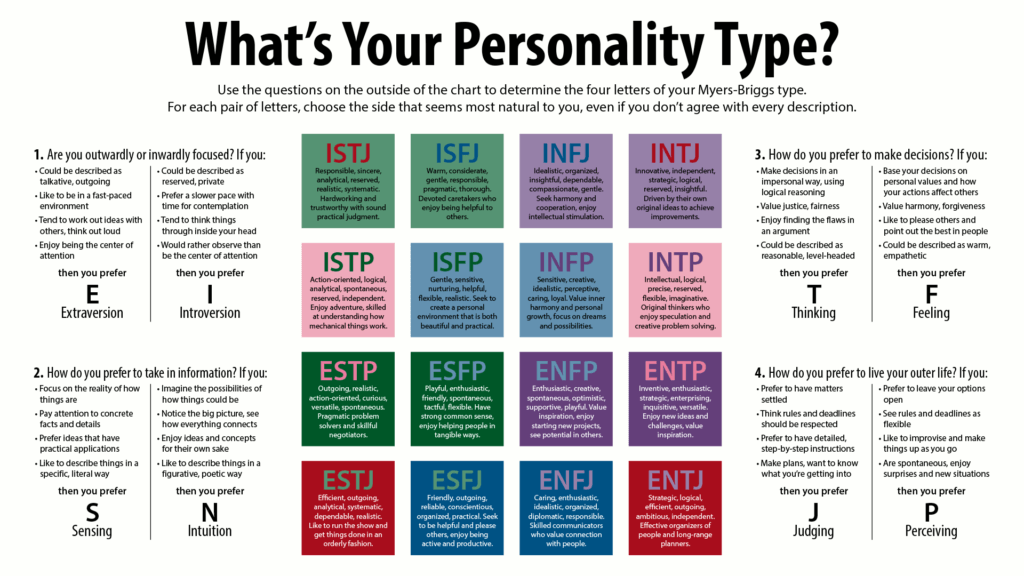
Chart of Myers Briggs Types

Another way to learn more about yourself is by taking standardized personality tests. Standardized Personality tests are tools developed by scientists and scholars, especially in the field of psychology. The purpose of these tests is to identify and categorize different aspects of human behaviour. The insight that these tests give us, can have many practical applications, one of which is finding a suitable field of study or career.

 One of the most popular personality tests out there is the Myer-Briggs Type Indicator or MBTI. Some of you might already be familiar with this test. For those of you who might not be, here’s a little background;

MBTI or Myer-Briggs Type Indicator is named after its developers, Isabel Briggs Myers and Katharine Cook Briggs, a mother-daughter duo, who developed this tool over 30 years of careful study, research, and analysis of similarities and differences between humans. The test identifies 16 personality types each made of 4 major indicators of human behavioural tendencies. Each of these 4 indicators has 2 contrasting qualities. Based on MBTI our personalities are made up of how we view the world, how we perceive information, how we process that information to make decisions, and how we structure our values. Take a look at the chart below, for a summary of these 16 personality types, and their characteristics.

If you can’t wait to find out what your personality type is, and you love to learn and have fun, then you’re going to love these;

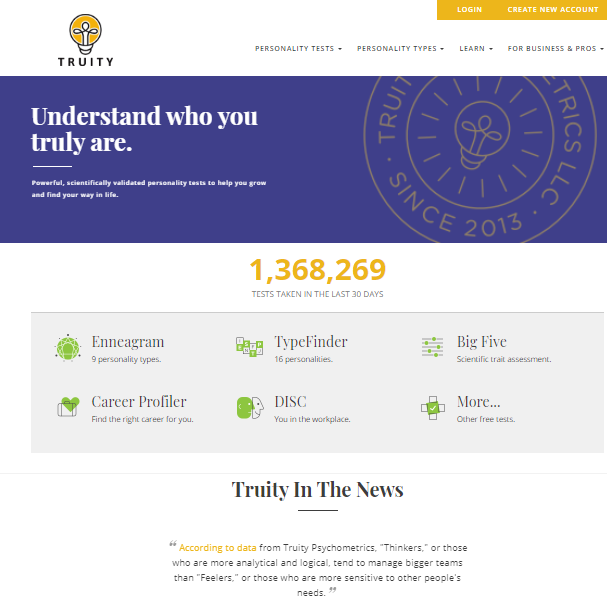
Truity

Take Personality Tests

Truity is a website dedicated to psychometric tests, and it offers both free and paid tests. An account is not needed to take the tests and view your results. However, you might want to consider one if you want to save your results & review them later on. What I like about Truity is that the test results include potential career options. And if you find yourself interested in a field you can go ahead and read on job-specific requirements, or take their career aptitude test to narrow down your options. You can take the MBTI test here, for free!

16 Personalities

Take Personality Test

As you might have guessed, 16 Personalities offers only the MBTI test. What makes it interesting is that you can join their community and find like-minded people to connect with, or read on interesting blog posts to learn more about your type and maybe those of your friends!

Frank James

And my personal favourite, Frank James, a Youtuber who specializes in MBTI comedy sketches! So, if you are tired after all the test-taking, check out his channel and refresh with a good laugh. You might also learn a thing or two about other personalities in your life! 😉

Visit Job Bank Canada

Last but not least is a useful resource, great for gaining insight not only into your qualities but also into different fields of study and work. Job Bank Canada provides local, and current data and trends on occupations and fields of study. You can use the career planning tool to;

  • learn about a field of study,
  • take career quizzes or in other words, personality and aptitude tests,
  • discover job profiles,
  • and use the skills and knowledge checklist to take inventory of your abilities.  

I hope this post helps you to have a better understanding of what your desires are. Also, I hope you find these ideas helpful in choosing your field of study. If you are interested to know about my field of study, check out this post. I  also recommend reading this post on optometry, to learn more about careers in the eye care industry.  As always feel free to ask any questions, or leave a comment. I would love to hear about what helped you choose a career!

What is Opticianry - Featured Image

What is Opticianry?

Opticianry is an exciting field of study, as it touches on a variety of topics, from hard and soft sciences to design and art. However, if we define the word “Opticianry” in itself, it is the practical study of light and its properties (i.e. optics), as applied to correct problems associated with the human visual system.

  • What does that mean?

Well, it basically means opticianry is the practice of making or dispensing eyeglasses, contact lenses, and other visual aid devices.

Now that you have a rough idea of what opticianry is, let’s get technical and take a look at who opticians are and what they do, exactly!

Let’s get started!

Who Are Opticians?

Opticians are, in some sense, interpreters. They interpret prescriptions written by Ophthalmologists & Optometrists and dispense eyeglasses, contact lenses, and other visual aid devices, accordingly.

Like Ophthalmologists & Optometrists, Opticians are regulated healthcare professionals, too. According to WES;

“The government regulates occupations that affect a large number of people directly, such as those in healthcare, engineering, law, finance, and education. In a regulated profession, you need a license or certificate from the regulatory body that governs that occupation to be employed in that field.”

In Ontario, the College of Opticians of Ontario (COO) regulates Opticians. COO protects public safety by ensuring Opticians follow standards of practice of the profession.

What-is-opticianry-coo-logo

Besides the COO there are 9 other provincial regulatory bodies for opticians in Canada, including;

College of Opticians of British Columbia

Alberta College & Association of Opticians

Saskatchewan College of Opticians

The Opticians of Manitoba

Opticians Association of New Brunswick

Nova Scotia College of Dispensing Opticians

P.E.I. Board of Dispensing Opticians                  

The Dispensing Opticians Board of Newfoundland and Labrador

Each provincial regulatory body has its own set of regulations that could be slightly different from other provinces. But who regulates them?

Well, that would be NACOR’s job!


NACOR’s logo

NACOR is the National Association of Canadian Optician Regulators. In the future, I will tell you more about what NACOR does…stay tuned!

What Do Opticians Do?

Sometimes people confuse Opticians with Optometrists and vice versa. While there are some similarities between the two professions, they are, in fact, two different fields of study. To help distinguish between the two, imagine a lab setting. The optometrists would be the scientists, and the opticians would be the lab technicians. To learn about what optometrists do check out this page. For now, let’s have a look at what opticians do.

Refraction: In eye care settings, refraction is the procedure through which an eye care professional checks a patient’s visual acuity and determines his/her prescription for glasses. As of now only a small number of opticians in Ontario perform refraction.

Opticianry-Optician's tools-Consultation

Consultation: Opticians consult their client in choosing eyewear that is both compatible with the prescription and the client’s needs. They can also consult patients on eye care and eyewear care, and refer them to other health professionals when necessary.

Opticianry-Optican's-tools-Measurement-pd-meter

Measurements: This is a crucial part of opticians’ job. Whether fitting a pair of glasses, contact lenses or other visual aid devices accurate measurements are key to patients’ comfort and satisfaction.

Opticianry-Optician's tools-Adjustment

Adjustments: Adjustment is another crucial step! In fact, adjustments can make or break the accuracy of measurements. Adjustment and measurement usually happen simultaneously, based on the optician’s judgement.

Opticianry-Fabrication-auto-lens-groover

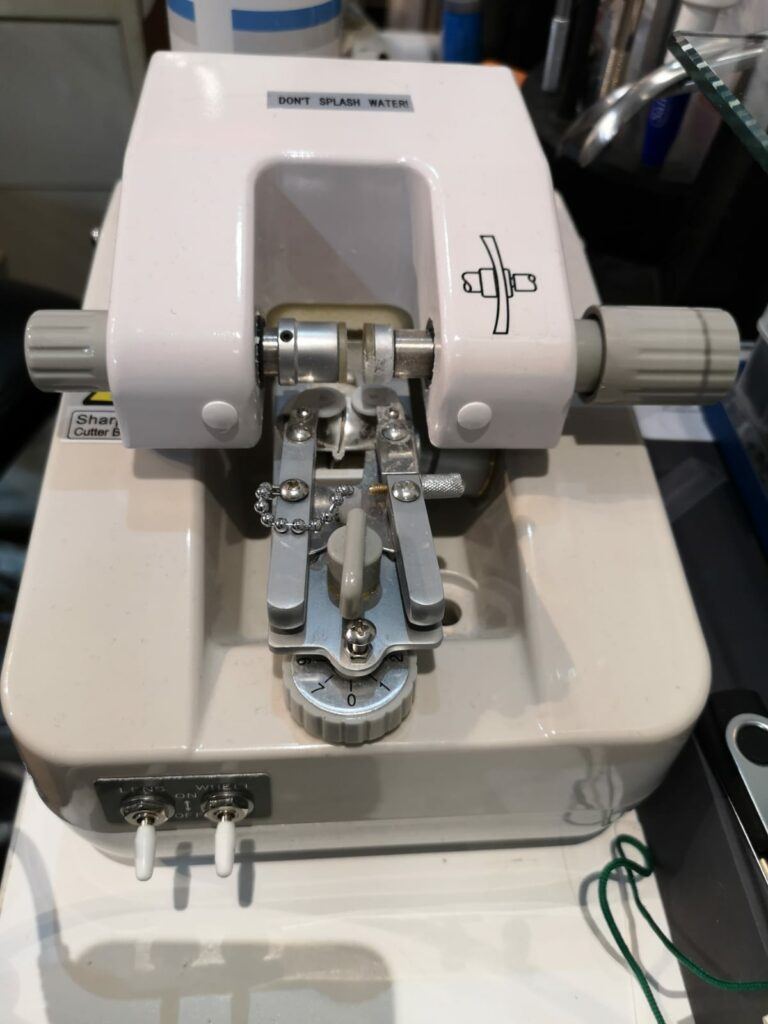
Fabrication: Fabrication is the process of making a pair of glasses based on an order form. Fabrication includes interpreting the data collected during consultation and measurement and edging (i.e. cutting) a pair of lenses to fit into an eyeglasses’ frame.

Opticianry-Neutralization-auto-lensometer

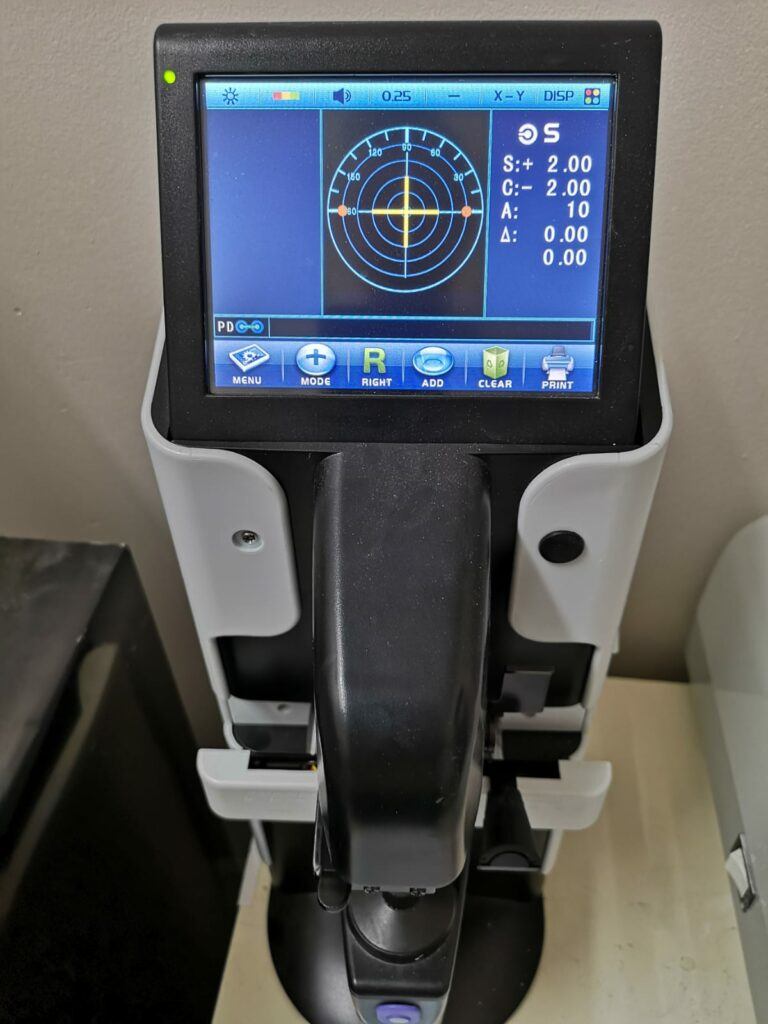
Neutralization: Is the process of verifying the prescription of a pair of glasses against an existing order, for accuracy.

Opticianry-Dispensing-woman-trying-on-eyeglasses

Dispensing: Is the final step in which the optician gives the ready-made eyewear to the client to physically try on. This is when both the optician and the client get a chance to see whether the eyewear is functioning the way it should be. So, it is an opportunity for both to address any issues.

Do you find Opticianry interesting? Do you like to know more about it? Then go ahead and check out my post on How to become an Optician.

There are many other aspects of an optician’s job that I will share with you in future posts. Meanwhile, feel free to ask your questions or leave a comment in the comments section below. Don’t forget to like, share, and subscribe to our newsletter, if you find this post helpful. 

Talk to you soon!