Is Your Optician Coronavirus Ready?

Since the Coronavirus lockdown started in Ontario, opticians and other healthcare professionals are required to avoid non-essential services. The Ministry of Health issued this directive to protect the public and healthcare providers. So for as long as the lockdown continues, we should expect this to be the new norm. The good news is all regulatory bodies, including the College of Opticians of Ontario (COO), have issued guidelines to help both healthcare providers and the patients to navigate through these challenging times. So if you are wondering how to know your optician is going to be Coronavirus ready, today’s post is going to be your guide.

What to Do During the Lockdown

The rule of thumb is only to visit your optician if it is necessary. But what is considered “necessary” during the pandemic? The College of Opticians of Ontario says “critical repairs or replacements of eyeglasses and refilling contact lenses that impact the health and daily functioning of the patient”. The best way to find out if your specific issue needs urgent care is to contact your optician and consult them. However, don’t fret if you don’t know an optician or if your optician is unavailable, the COO can help you find one. As of April 15/2020, the COO announced working on building an online directory on their website, where you can search for available opticians in your area.

Remote Dispensing

Opticians are encouraged to practice “remote dispensing” to protect the safety of their patients, themselves, and their families. Although it is not the standard or the ideal way to dispense eyewear, it eliminates the risk of contracting or spreading the Coronavirus in the community. Remote dispensing could be the solution to your specific problem, but only your optician can tell you that using their professional judgment. So don’t hesitate to call them!

Things to Consider if You Are a New Patient

If you are consulting an optician as a new patient,  be prepared to disclose;

Your contact information

Provide your full name, DOB, phone number, home address, and email address as alternative communication (you can ask not to receive promotional material)

Your medical history

Let the optician know whether you are suffering from any systemic diseases, taking medication, had any eye-related injuries or procedures done, and the date of your last eye exam. Also, make sure to provide a copy of your most recent eyewear prescription.

Your use of eyewear (i.e. glasses, contact lenses & other visual aid devices)

Let the optician know the type of eyewear you use, how long you have been using them, and how you use them (i.e. wearing contact lenses occasionally, or wearing protective eyewear due to an injury, and so on). The more information you provide, the better the optician could help you.

Things to Consider if You Are a Returning Patient

If you are a returning patient, your optician should have the information from your last visit on file. However, consider disclosing any updates or changes to your health, vision, and living conditions that could impact your use of eyewear.

When the Lockdown Is Over

You might have heard health officials warning about the risk of a resurgence. To prevent that, we should continue to take safety measures even after the lockdown is over. As the days go on the health regulatory bodies will continue to update their members on safe practice guidelines. Let’s have a look at the safety procedures your optician should take to be prepared.

What to Expect From Your Optician

To make sure your optician is Coronavirus ready, don’t hesitate to call in and ask questions. In “Is Your Optometrist Coronavirus Ready?” we covered necessary safety measures, that applies to opticians and other health professionals as well. So let’s review things you should ask your optician before visiting the dispensary.

Personal Protective Equipment (PPE)

Naturally, when you visit a dispensary to get fitted with eyewear, the optician has to be close to you to assess the fit of the eyewear, make necessary adjustments, and take the required measurements. This violates the minimum standard for physical distancing, which is 2 m. So for safety reasons, both you and your optician should wear PPE to minimize the risk of COVID-19 spread. So when you call in, make sure to ask whether they have proper PPE, or know an optician who has.

Proper Cleaning & Disinfecting Procedures

The dispensary must be cleaned on a regular basis, and the optician has to make sure all common areas, equipment, and frames are properly disinfected in between patients;

  • Any frames that have been put on by patients must be disinfected before returning to frame boards.
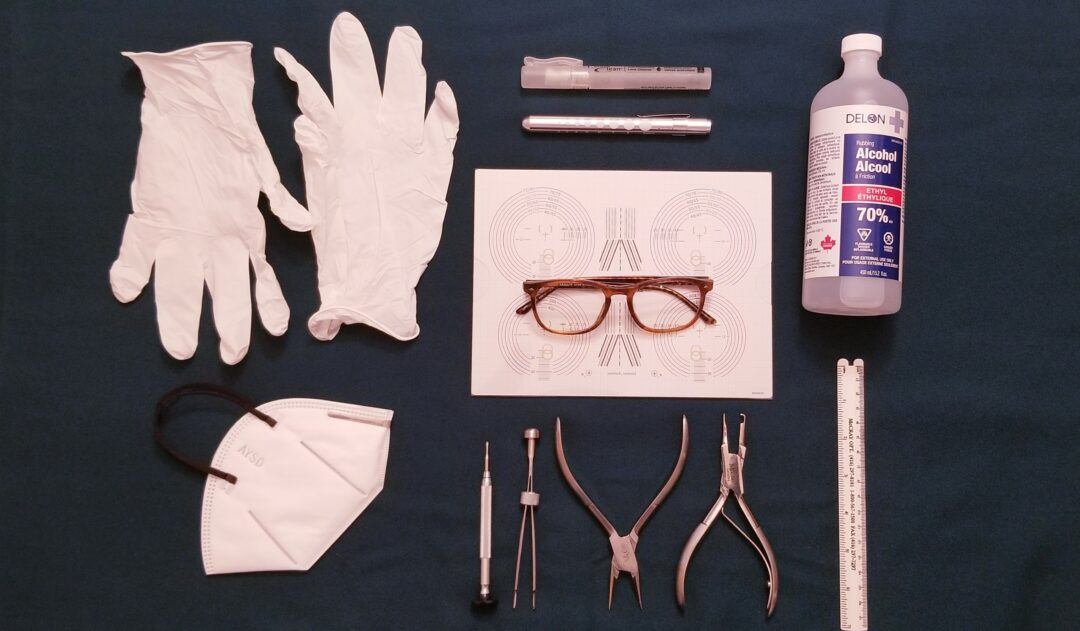
  • All tools and equipment, such as the PD meter, the PD ruler, trial frame, pliers, and screwdrivers have to be disinfected in between patients.
  • Common areas, such as the reception, the waiting area, and the dispensing table must be disinfected between patients, as well.

Scheduled Visits, Only!

Ask your optician about their visit schedule. The safest option would be to book an appointment in advance. Since most dispensaries have limited floor space, you want to make sure you can maintain the required physical distance with others.

Service Delays

Next, you should keep in mind service delays due to the COVID-19 pandemic. Ask your optician about the approximate length of consultation and the wait-time for service delivery. It is possible that you have to wait longer than usual for your optician to properly disinfect equipment for your use or to process and dispense your eyewear order.

Remote Dispensing

When the risk of contamination is high, avoid in-person visits. Instead, arrange for a virtual consultation with your optician.

What Your Optician Expects From You

Scheduled Visits

Ideally, during the pandemic, your optician would want you to call in advance and schedule an appointment. This way they can make sure no one’s safety is going to be compromised with a surprise walk-in visit.

Updates on Health Condition

Let your optician know if you had any changes in your health condition recently. If you suspect you might have contracted the Coronavirus take the online self-assessment, and cancel any non-essential visits.

Communication

Make sure to provide multiple communication methods, such as email address and alternate phone number. During these uncertain times, your optician might need to update you on crucial information. Examples would be delays in your orders or temporary closure of the dispensary due to contamination.

Summary

During the COVID-19 lockdown, access to many services has been limited. It is challenging, but it serves the best interest of all of us. If you are experiencing any eyewear-related issues, it is best to contact your optician for consultation. They can tell you if an in-person visit is necessary or not. There are safe practice guidelines for opticians to follow to be Coronavirus ready, even after the lockdown is over. However, before any in-person visits, you should communicate your concerns with your optician.

I hope this post finds you well!

As always, feel free to ask your questions or leave a comment about your recent visit to the optician. And remember to stay safe!
Is Your Optometrist Coronavirus Ready - featured

Is Your Optometrist Coronavirus Ready?

The Coronavirus has caused all non-essential services to shut down temporarily, and optometry clinics offering routine eye exams are included in that shut-down. Eventually, however, the ban will be lifted and optometrists will be able to re-open their clinics. Unfortunately, that does not mean it’ll be back to business as usual. The coronavirus will still be circulating at some level, so before going in for your next eye exam, you should be asking – is my optometrist Coronavirus ready?

I am an optometrist living and working in Ontario, Canada, so I will be writing from the perspective of the laws and regulations here. However, most of what I will share applies to all of Canada and the United States.

What To Do About Eye Care During The Lock-Down

Notice From The College of Optometrists of Ontario
How the College of Optometrists of Ontario communicates with its members

The lock-down has created a lot of confusion about what type of cases optometrists are allowed to see. On March 16th, 2020, the College of Optometrists of Ontario instructed optometrists to restrict in-person care to urgent cases only – provided that they have access to proper personal protective equipment (PPE).

This means that during the shut-down it may be extremely difficult to find an optometrist willing to see you in-person. Many offices are funnelling all patients to 1 or 2 optometrists in the area that have the necessary PPE. Your best bet is to call around to different offices in your area. If the office you’re talking to doesn’t provide urgent care, ask them if they know an office that does.

Keep in mind that your sense of an urgent situation will be quite different than that of any optometrist you speak to on the phone. If your reading glasses don’t seem strong enough, or if your eyes are getting tired at the computer, the likelihood of anyone accepting you at this time is very low.

When The Shut-Down Is Over

Eventually, the shut-down will be lifted and optometrist will begin providing routine eye care again. However, this will be long before the coronavirus has completely disappeared from our communities. Meaning, every optometrist will have to take extra measures in order to protect themselves and others from contracting and spreading coronavirus.

Before heading in to get an exam, it may be wise to ask some questions in order to find out if your optometrist is coronavirus ready.

Controlling Patient FlowWoman in empty waiting room

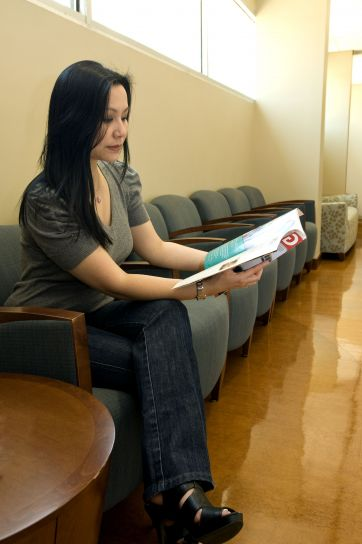
Even after the shut-down is over, physical distancing rules will still be in effect. In order to comply with physical distancing there cannot be waiting rooms filled with patients all sitting knee to knee.

Your optometrist will have to create at least 6 feet (2 meters) of space between waiting room chairs and disinfect each chair after every use. Ideally, the optometrist would adjust his/her schedule so that there is never more than 1 person in the waiting room at a time.

Personal Protective Equipment

Nobody knows exactly how long the pandemic will last and how many waves there will be. In order to prevent the coronavirus from resurging, when we begin to re-open the economy, it’ll be important to continue to dawn personal protective equipment when knowingly coming into prolonged close contact with others.

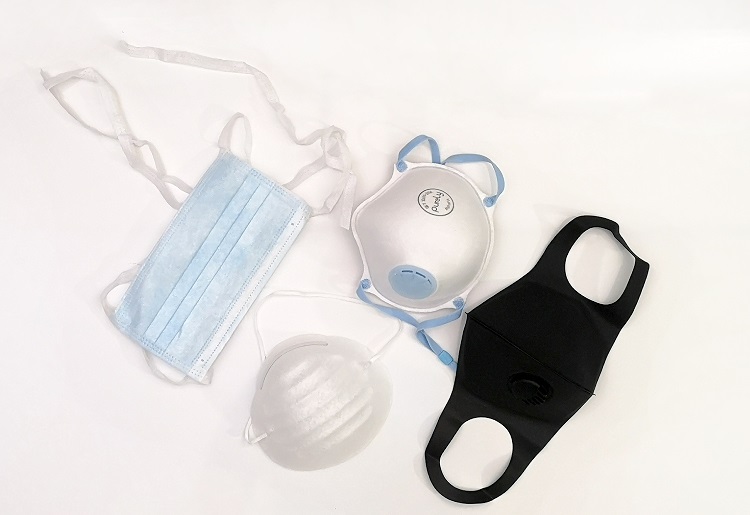
Ideally, your optometrist’s coronavirus battle chest should include face masks, glasses or safety glasses, disposable gloves & slit lamp breath shields.

Masks

Personal Protective Equipment - Masks

According to the College of Optometrists of Ontario, it is preferable for the optometrist to wear an N95 mask. However, since they may be in very short supply and in critical demand in hospitals, surgical masks or face coverings would also help.

When you call to make your appointment, ask if they give out masks for patients to wear during the eye exam. If not, it would be advisable for you to bring your own as well. Your risk is at a minimum when both you and your optometrist are wearing masks or face coverings.

If you do not see your optometrist change his/her mask after every patient, that is fine. The same mask can be worn all day – or until lunch and then a new one after lunch.

Gloves

Disposable Latex Gloves

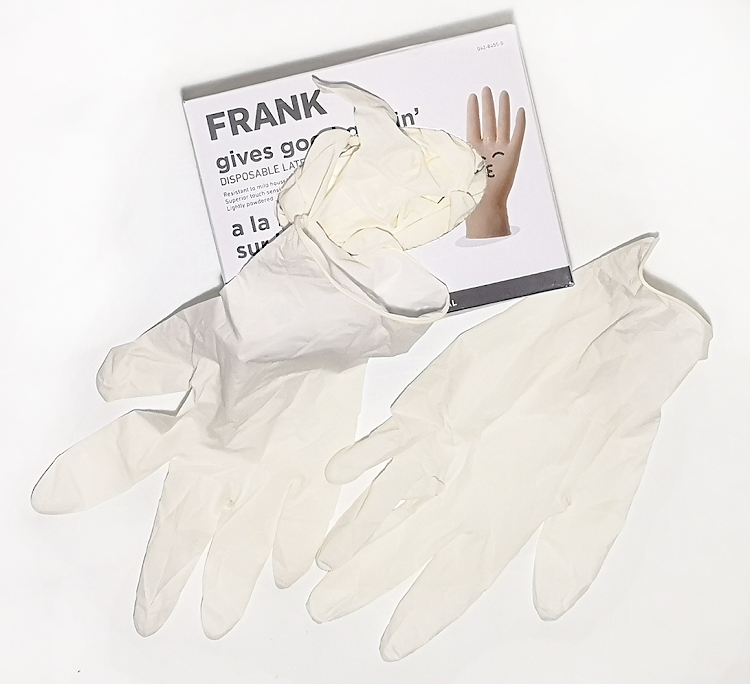
Your optometrist should be wearing disposable gloves and changing them between every patient. You may also request a pair or bring your own, as eye exams tend to require you to hold certain objects like an occluder, a reading card, trial frame, etc.

You should be able to see your optometrist wash his/her hands and put on a fresh pair of gloves as these need to be changed after each patient.

Slit Lamp Breath Shield

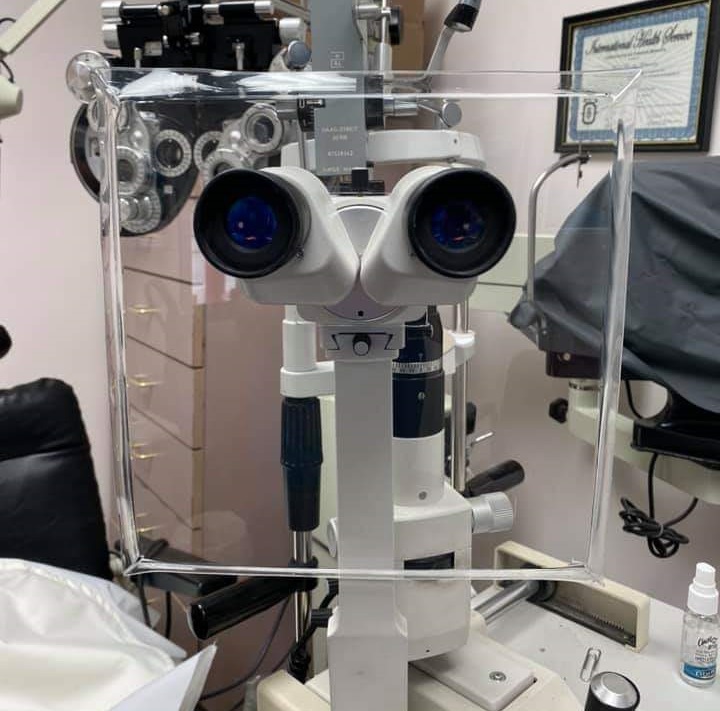
A slit lamp is a piece of equipment that optometrists use to examine the health of your eyes. During the slit lamp examination, both you and the optometrists are sitting very close and facing each other. One’s breath can easily reach the other during slit-lamp examination

A slit lamp breath shield is a physical barrier between the optometrist and the patient that can be very helpful in preventing the transmission of viruses from one to the other.

Slit Lamp Breath Shield
An example of a slit lamp breath shield

Stringent Use of Alcohol Disinfectant Wipes

The eye exam room can see anywhere from a hand-full to 30 or more patients per day. Each one of those patients touches and uses the same equipment. During an eye exam, equipment touches the patient’s forehead, cheeks, nose, chin, hands, and of course, eyeballs.

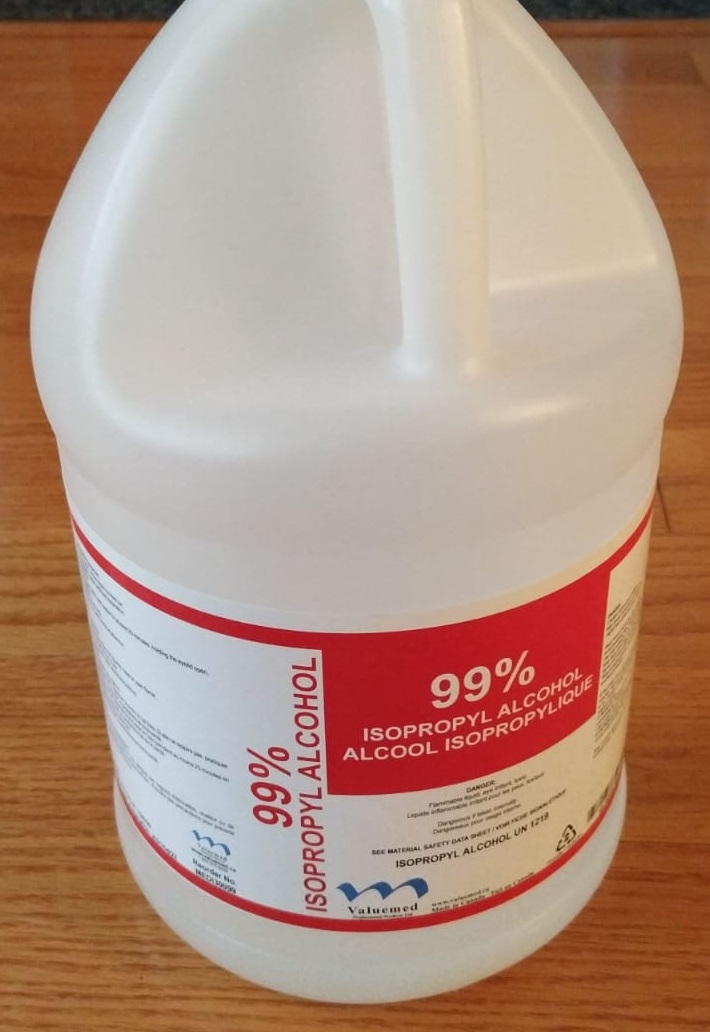
It is crucial that all surfaces that touch a patient’s skin be disinfected before the next patient comes. Optometrists usually use isopropyl alcohol 70% (or higher) for this. Personally, I think it’s good practice to disinfect surfaces with the patient present in order to put everyone’s mind at ease.

Isopropyl Alcohol 99 percent 4L

Disinfecting The Room After Each Patient

It is not enough to only disinfect every item after every patient. The room itself must be disinfected as well. As we know, COVID-19 and other viruses travel by droplets that settle on things like counters, tables, chairs, pens, keyboards, phones, door handles, etc. These virus-containing droplets can be on any surface in the room, so when a patient leaves, the room must be wiped down.  This is typically done using disinfectant wipes such as Lysol.

Stacks of Lysol Disinfecting Wipes

Constant disinfection of the entire exam room will increase the amount of time needed by the optometrist for every patient. On a typical day, it’s not unusual for your optometrist to be late for your appointment. With all of these extra coronavirus safety measures in place, it may be wise to budget a little more time for your eye exam this time around.

Safety Procedures In The Optical Dispensary

This article has only discussed your optometrist’s coronavirus readiness in the exam room, but what about in the optical dispensary? There’s a whole slew of things to keep an eye out for there as well. You can read about these measures here.

Summary

Before your next eye exam, you should be asking – is my optometrist coronavirus ready? Give your eye doctor’s office a call or email to ask about things like masks, disposable gloves, slit lamp breath shields and proper room disinfecting procedures. If you’re waiting for your exam in the waiting room and notice that the optometrist is not wearing a mask or gloves, and taking patients one directly after the other with no time in between to disinfect surfaces, you may want to reconsider being in that exam room.

Have you had an eye exam recently? Was your optometrist coronavirus ready? What precautions did he/she take or not take? Let me know in the comments below!

How to disinfect contact lenses from coronavirus

How To Disinfect Contact Lenses From COVID-19 (coronavirus)

Wearing contact lenses comes with certain risks, the greatest of which is that of infection. That’s why it’s crucially important to make sure you know how to disinfect contact lenses properly, especially at the time of writing this article; the middle of the COVID-19 (coronavirus) pandemic.

First and Foremost

whasing your handsWash Your Hands

The most common way that contact lenses become infected is through dirty hands. The most important thing to do to prevent infected contact lenses is to properly and thoroughly wash your hands immediately prior to handling contact lenses. That means immediately before inserting and immediately before removing contact lenses.

Don’t Touch Your Eyes

Realistically, contact lenses don’t always act like they’re suppose to. Sometimes they twist or move out of position which can cause vision to fluctuate. This can be frustrating and can tempt contact lens wearers use their fingers to reposition their contact lenses. Needless to say, this is not a very hygienic habit.

If you absolutely have to readjust your contact lenses, try to find a washroom to wash your hands first. It’s always practical to have some contact lens solution on hand in situations like these where it may be necessary to remove and re-insert contact lenses throughout the day.

Use The Right Contact Lens Solution

To disinfect soft contact lenses, nothing compares to a hydrogen peroxide contact lens solution.

Most contact lens wearers do not use hydrogen peroxide contact lens solutions so they may not know what they are. So for the sake of thoroughness, let’s review the different kinds of contact lens cleaning solutions.

Multi-Purpose Solutions

A multi-purpose contact lens solution is the typical, every-day contact lens cleaning solution. These solutions are used for cleaning and storing contact lenses overnight. Although it is safe for multi-purpose contact lens solutions to touch the eyes, it is not intended for direct application to the eyes.

Typically, these kinds of solutions require rubbing of the contact lenses with the solution to mechanically remove the debris and possible pathogens from the contact lenses. The ingredients also include compounds that can kill bacteria or stop them from multiplying.

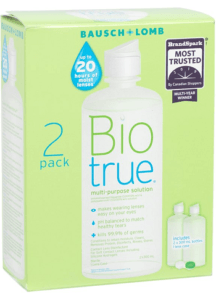
Very common and popular multi-purpose solutions are:

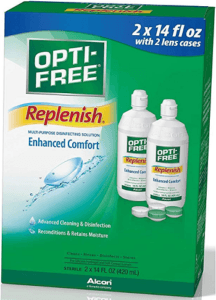
Biotrue Contact Lens Solution Optifree Replenish Box
Biotrue Optifree Replenish

These solution are pretty effective at killing bacteria (Biotrue is actually much better than Optifree Replenish), they do not kill viruses like the coronavirus.

Here is a useful list of some (not all) commercially available products effective at killing coronavirus (COVID-19). You’ll notice that there are no multi-purpose contact lens cleaning solutions on that list.

Hydrogen Peroxide Contact Lens Solutions

On the other hand, the list does have 4 products that contain something called hydrogen peroxide. They are:

*Please note that the 4 products listed above or not for use on contact lenses!

Additionally, consumerreports.org lists hydrogen peroxide 3% (among other things) as a product that can destroy the coronavirus (COVID-19).

So are there any contact lens solutions that contain hydrogen peroxide 3%? As a matter of fact there are.

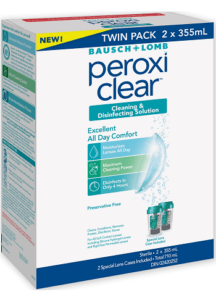
Clear Care Box Bausch Lomb peroxiclear
Clear Care Peroxiclear


Although neither of these products are specifically mentioned in this list, both of them contain hydrogen peroxide 3% which is higher than all of the hydrogen peroxide based products on it.

——————-**Take Caution**——————-

Hydrogen peroxide contact lens solution are not the same as multi-purpose contact lens solutions! The solution can not under any circumstances touch the eyes directly or indirectly until it has been neutralized.

Failing to do so may cause chemical corneal burns.

If you use these products, make sure to read the instructions on the box carefully.

——————-**Take Caution**——————-

How Hydrogen Peroxide Contact Lens Solutions Work

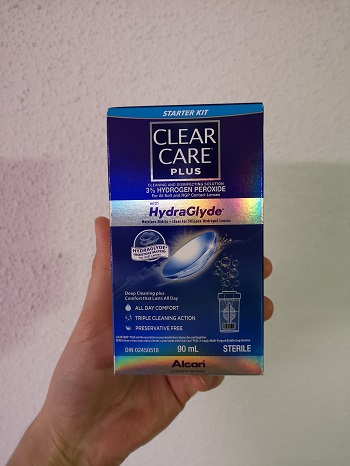
Let’s use Clear Care as an example.

Clear Care with HydraGlyde Box

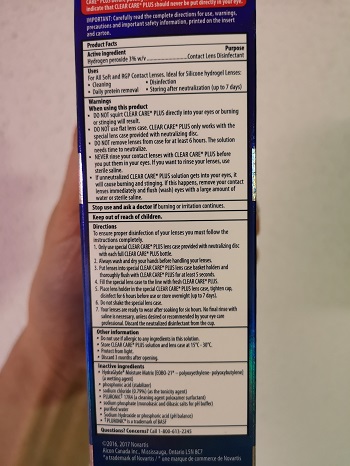
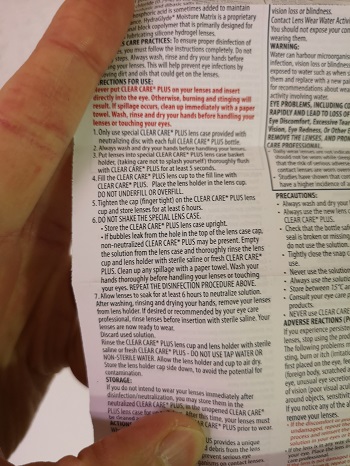
Please do no rely on this brief overview alone. Make sure you read the instructions on the box and in the package insert.

Clear Care with HydraGlyde Box Instructions Clear Care with HydraGlyde Insert

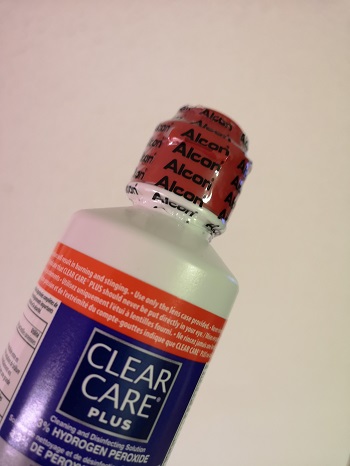
The bottle inside has a red cap and a red warning label warning on it. The warnings are not just for you, but for anybody in your household who may unintentionally use this as a normal multi-purpose contact lens solution. Remember, if a hydrogen peroxide contact lens solution touches the eyes before it is neutralized, it will burn the eyes. 

Clear Care with Plus Bottle

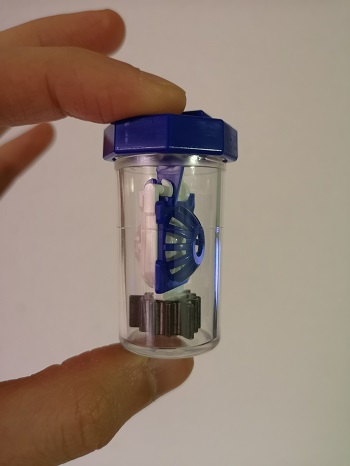
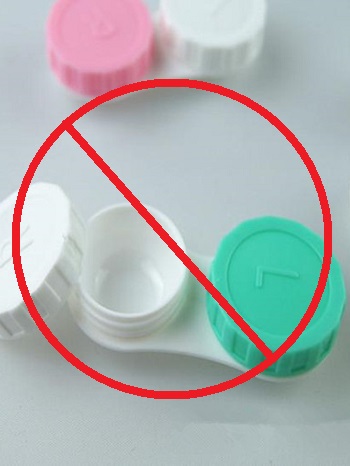
Hydrogen peroxide contact lens solutions work with a very different contact lens case. Only use the case that comes in the box and change it every time you start a new bottle. Do not use a multi-purpose solution case with a hydrogen peroxide contact lens solution.

Clear Care Contact Lens Case Multi Purpose Solution Contact Lens Case

Inside the case there is a mechanism that opens up on both sides. Pull down one of the sides, place the contact lens inside the basket and then close it up. Do the same for your other contact lens. The two sides are color coded so you can keep track of the right and left contact lenses throughout the process.

Clear Care Contact Lens Case Inside

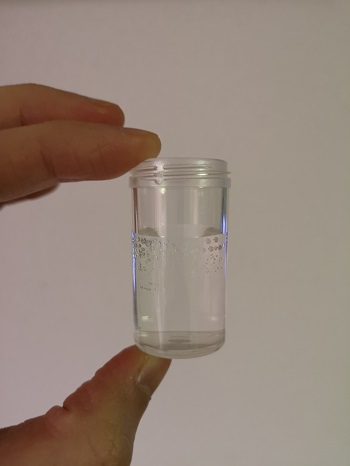
Next, fill the vial up to the indicator line with the hydrogen peroxide solution.

Clear Care Contact Lens Case Filled

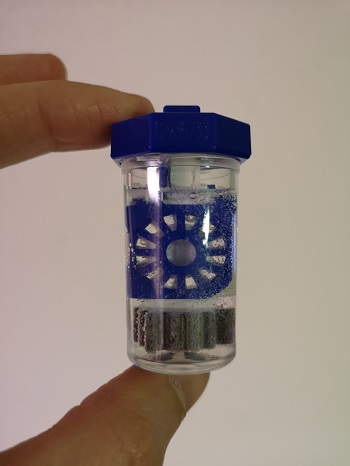
And finally, screw the inner portion back into the vial. You will notice bubbles forming inside. This is normal. It is due to a chemical reaction taking place which neutralizes the hydrogen peroxide. The process takes 6 hours to complete. Once the process starts you cannot wear your contact lenses again until it is complete. 

Clear Care Contact Lens Case Neutralizing

When the neutralization process is complete, there is no hydrogen peroxide left inside the vial. It is then safe for the liquid to come into contact with your eyes. Simple remove the contact lenses from the holders and insert them as usual.

Summary

Properly disinfecting contact lenses is very imprtant for the long term health of the eyes as well as long term success with contact lenses. Knowing how to disinfect contact lenses has become even more important now in the face of the COVID-19 pandemic. Using a hydrogen peroxide 3% base contact lens solution is the best to disinfect contact lenses from the coronavirus, as well as all the other micro-intruders out there.

If you have any questions about hydrogen peroxide contact lens cleaners, let me know in the comments section below!


Cross-Section View of the Eye With Ant Seg Labels

The Optics of Vision – Lesson 4: Basic Eye Anatomy

The eye is a complicated organ. It has highly specialized cells, muscles, tissues, fluids, etc. Every part of the eye plays a crucial role in producing the vision we all rely on so much in our daily lives.

Luckily for you, unless you’re an eye doctor, you don’t have to know about the vast majority of it to understand how vision works.

In this lesson, I will introduce you to the main parts of the eye that are responsible for producing vision. It is important to have some basic understanding of the anatomy discussed in this lesson in order to understand why some people need glasses, and what the glasses are actually doing to fix the problem.

Basic Eye Anatomy

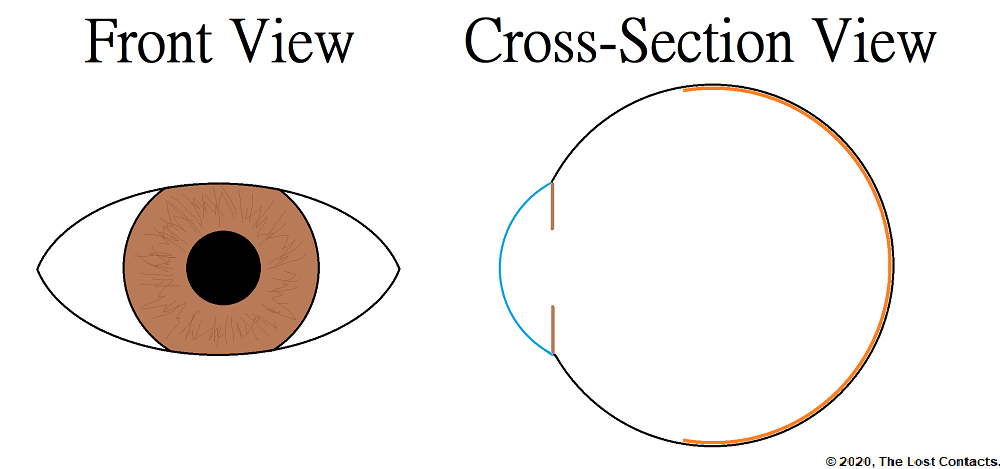
All of the parts of the eye necessary to understand vision are contained in the following diagram.

Front and Cross-Section View of the Eye


Take a moment to examine the picture and try to make sense of what you’re looking at.

The ‘Front View’ should be easily recognizable. It is the view of the eyes that we see when we are face to face with someone and looking at their eyes.

The cross-section view, on the other hand, could be a little confusing at first. We are not used to viewing the eyes from this perspective, so let’s break it down a little.

Cross-Section View

A cross-section view of an object is very helpful when wanting to see what’s inside an object. We can obtain a cross-section view of things by cutting them right down the middle, taking one of the halves, and then turning it sideways to see what’s inside.

You are in fact already a low-key expert at doing cross-sections if you’ve ever cut up some fruits or vegetables. Let’s look at some food cross-sections that you’ve undoubtedly already created at some point in time.

Cross-section of a melon Cross-section of a kiwi Cross-section of a red pepper

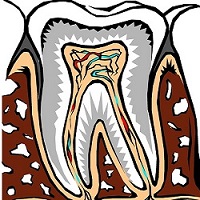
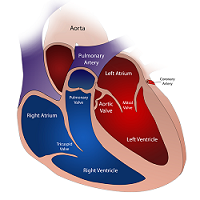
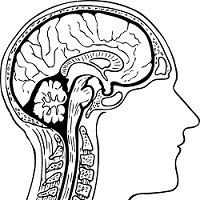
Can you see how looking at a cross-section of the fruit/vegetable gives us an understand of what’s inside? We can do the exact same thing – schematically – with body parts to get a better understand of what is inside them.  Here are some examples:

Cross-section of a tooth Cross-section of a heart Cross-section of a head
Cross-section of a tooth Cross-section of a heart Cross-section of a brain

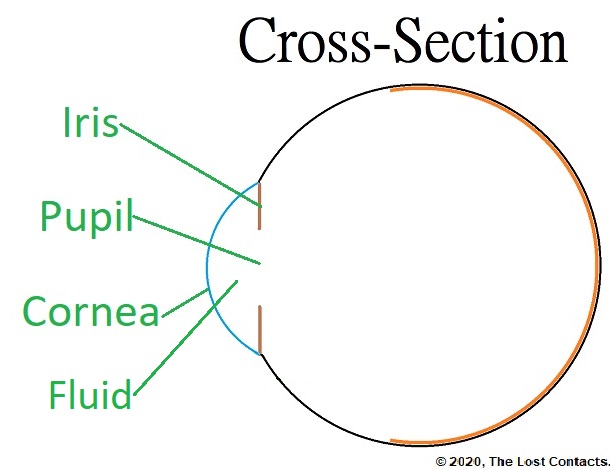
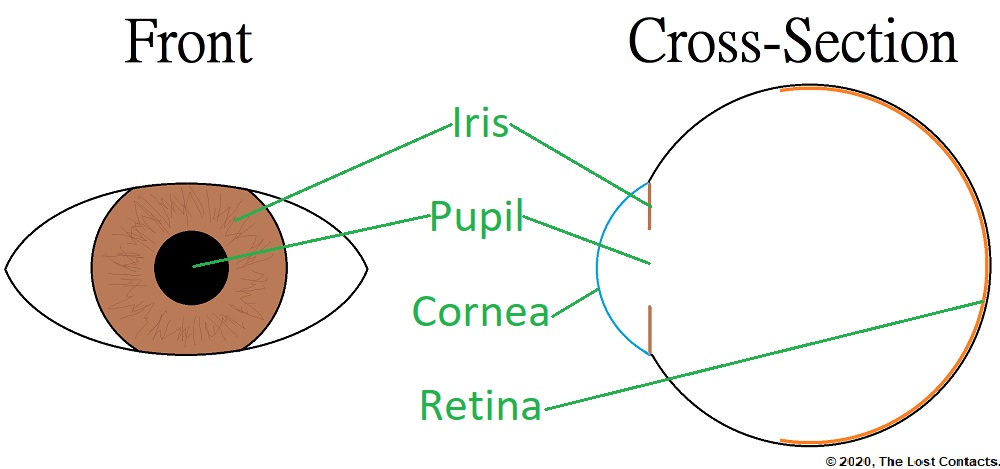
Now you should have a pretty good understanding of the cross-section view of the eye I showed above. Let’s look at it again with a few parts labeled.

Front and Cross-Section View of the Eye With Labels

Let’s go through each part one at a time.

Iris & Pupil

The iris is a colorful, ring-like circular structure that sits in the front of the eye. The circular gap in the center of the iris is called the pupil.

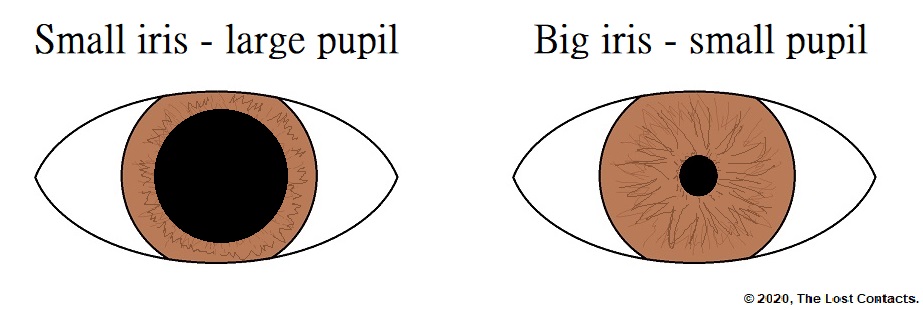
Through contraction and relaxation of the muscles of the iris, it can become bigger or smaller. In doing so, it affects the size of the pupil.

As the iris gets smaller, the pupil grows bigger. As the iris gets bigger, the pupil gets smaller. Here is an illustration of this.

Diagram of large vs small pupil

Controls Light

The iris is opaque, meaning that light does not through it. For light to reach the inside of the eyes, it has to pass through the pupil.

When the pupil is large (the eye on the left) a lot more light will be able to enter the eye. When the pupil is small (the eye on the right) a lot less light will be able to get into the eye.

It is by constantly adjusting the size of the pupil (by constantly adjusting the muscle tone of the iris) that the eye is able to control the amount of light reaching its light-sensitive interior.

via GIPHY

Too much light getting into our eyes would be very uncomfortable for us so the pupils will get really small to block out a lot of that light. Not enough light getting into our eyes would make it very difficult for us to see, so the pupils will get very big in order to allow as much light to enter the eyes as possible.

Gives You Color!

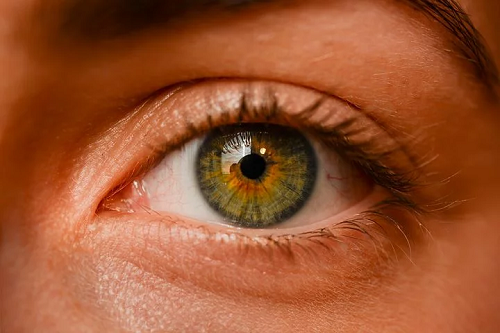
Aside from controlling the light levels entering the eyes, the iris also gives us our eye color. Most people worldwide have brown eyes (~79%), but they can also be blue (~16%), grey (~3%), or green (~2%), depending on what kind of pigment, or lack of pigment our eyes produce.

A greenish brown iris
Here is an example of a greenish/brown iris

Cornea

The cornea is a little more difficult to see on a front view of the eye because it is transparent.

It is a very thin, curved structure that ‘vaults’ or ‘domes’ over the iris and pupil.

Recall from Lesson 2 that objects that are transparent and curved meet the definition of a lens. Indeed, the cornea of the eye acts very much like a lens! We’ll learn more about this in Lesson 5.

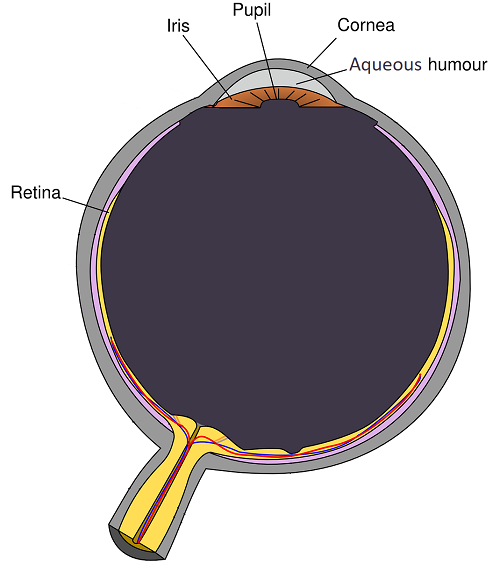
The cornea is much easier to see in a cross-sectional view of the eye. It is the part at the very front of the eye that covers the entire iris, pupil, as well as all the fluid (called the aqueous humor) found in the front of the eye.

Cross-Section View of the Eye With Ant Seg Labels

In order to visualize what the cornea looks like on its own, think of a contact lens. Contact lenses are designed to act as extensions of the cornea. They completely drape over the cornea and just add little more thickness in certain places in order to alter the overall power of the cornea.

Retina

The retina is a part of the eye that most people will never see. It is tucked away in the very back of the inside of the eye.

Think of the retina as a very thin (even thinner than the cornea) lining of the inside of the eye. It is physically attached to the walls of the eye. Keep that in mind as it will be extremely relevant in our future discussions of nearsightedness and farsightedness.

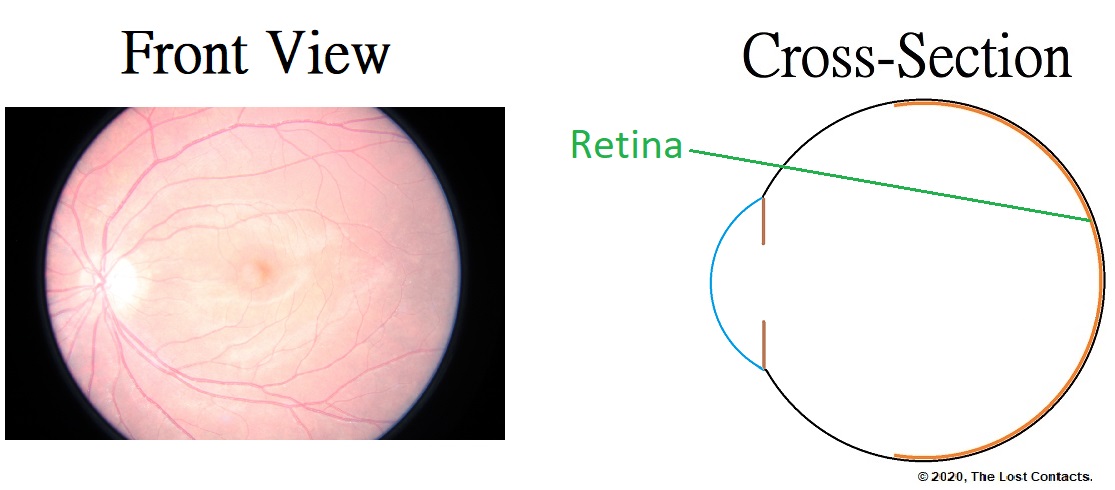
The function of the retina is to detect and absorb light. It is made of specialized cells that are very sensitive to light called rods and cones. As a result, the retina is said to be light-sensitive.

Here we will see the front view of a real retina, and schematic representation of the cross section of a retina.

Front and Cross Section View of the Retina
Keep in mind that very specialized equipment is needed to see the retina as it appears in this above picture. You cannot see it by simply looking with the naked eye.

It would not be wrong to think of the retina as the place where ‘vision’ begins. As light enters the eyes and eventually touches down on the retina, the retina generates signals that are sent to the brain, which are then interpreted as what we see.

An analogy that is often made for the retina is the film, or nowadays, the sensor in cameras. These are the parts of a camera which capture the image, just like the retina is the part of the eyes that ‘captures’ our vision.

Recap

  • The iris and pupil are interconnected. The larger the iris is the smaller the pupil is, and the smaller the iris is the larger the pupil is. Together they control the amount of light that reaches the inside of the eyes.
  • The cornea is located at the very front of the eye. It is curved and transparent, thus it acts as a lens and focuses light.
  • The retina is a thin layer that lines the inside of the eye. It is light-sensitive and when exposed to light it sends vision-signals to the brain.

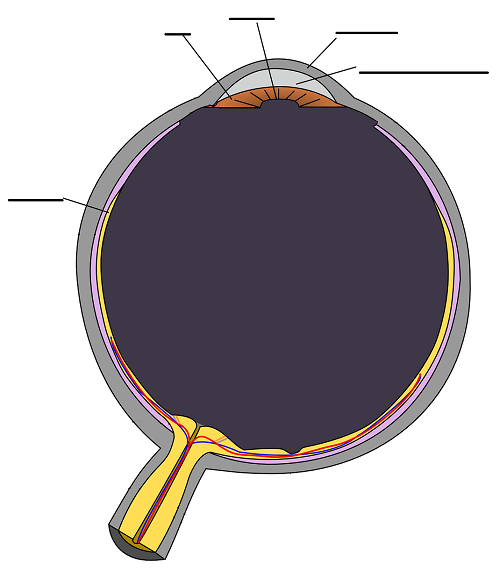
Here is a differently stylized graphic of a cross-section of an eye. See if you can find and identified the parts of the eye discussed in this lesson.

Cross section of the eye - simplified without labels

And here are the answers:

Cross section of the eye - simplified with labels

Summary

That’s it for now! With the eye anatomy that you now know, you are set to understand how vision works as well as how the different refractive conditions (conditions that cause you to need glasses) work.

Of course, there are more parts to the eyes than what was covered in this lesson.  In later lessons when we start covering more complicated eye conditions, I will introduce more eye anatomy to you.

In the next lesson, we will use the knowledge we gained from Lessons 1-4 to understand how vision works.

==> The Optics of Vision – Lesson 5: Basic Eye Optics <==

What is Optometry - Featured Image

What is Optometry?

Optometry Definition

In a neat little sentence, you could say that: Optometry is a regulated health care profession whose practitioners are responsible for examining the eyes in order to diagnose, treat, and/or prevent disorders of the visual system.

OK, boooring… right?

Wrong!

Sure, optometrists do all the typical things that you think they do. They get you to read letters on a chart, they ask you “1 or 2” a bunch of times until they find your prescription for glasses, they poke around your eyes to see if you have cataracts, or glaucoma, or macular degeneration, etc.

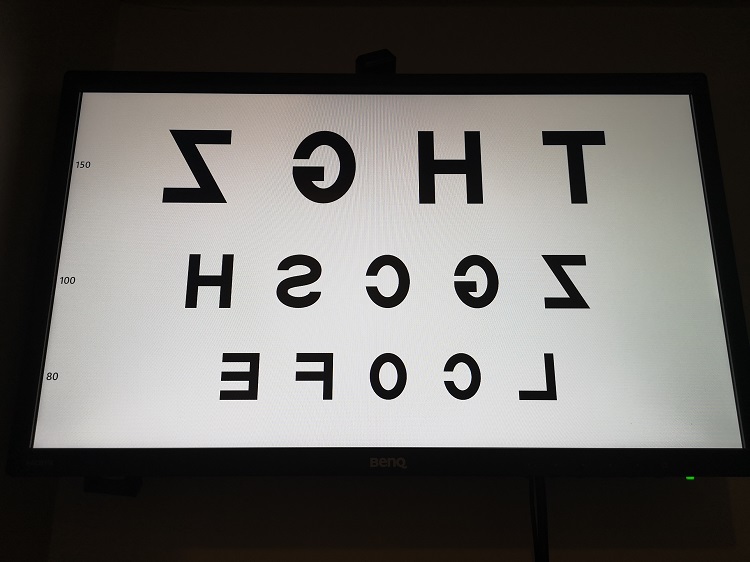
An Eye Chart
Optometrists use an eye chart, often computerized like this one, to assess one’s visual acuity.

But they also sit on a wealth of knowledge that could potentially prevent infants from developing a lazy eye, help a child with their learning deficiency, manage nearsightedness that seems to be out of control, reverse chronically dry & itchy eyes, reverse compensatory head tilts from eye-muscle imbalances, restore a person’s depth perception, or even save a life by detecting subtle signs that could mean big danger.

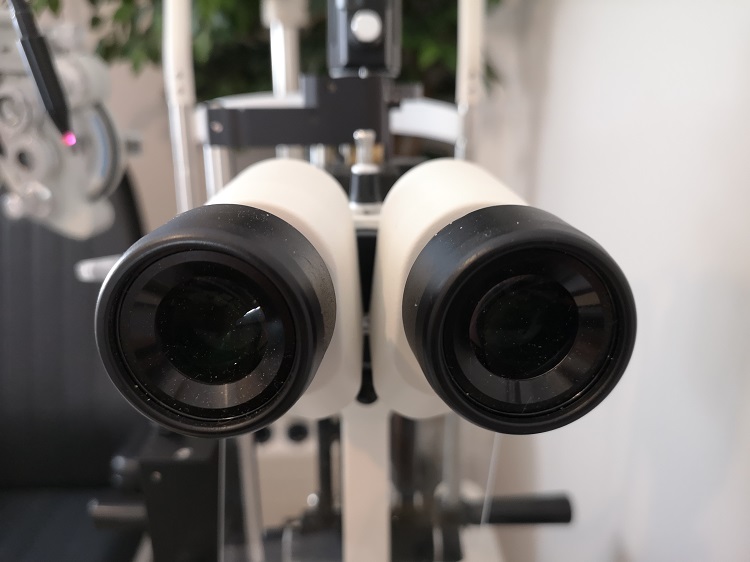
Slit Lamp Biomicroscope
A slit lamp biomicroscope is what optometrists use to observe the eyes under high magnification in order to assess eye health.

Who Are Optometrists?

Optometrists are primary eye care professionals. They are the doctors that you see for routine eye care as well the first doctors you see for emergency eye care.

Optometrists are trained in optometry schools. They are not medical doctors that have chosen to specialize in treating eyes (those would be ophthalmologists), but rather, they are doctors of the separate discipline of Optometry.

Optometry is also distinct (though in many ways related) to opticianry, which you can learn more about here.

What Do Optometrists Do?

Optometrists work out of various clinical settings. They can be found in independent eye care clinics, independent optical shops, chain optical stores, hospitals, laser surgery centers, etc.

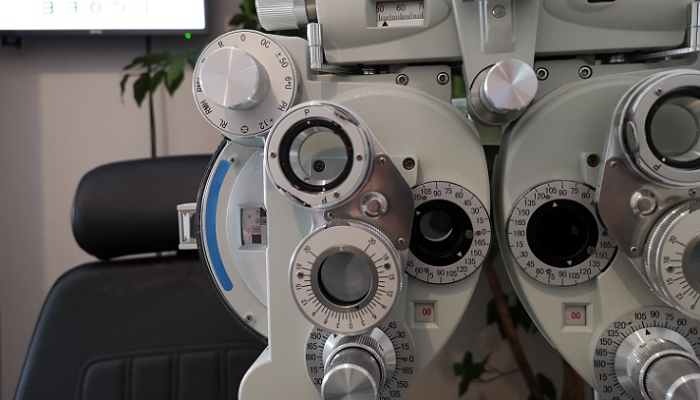
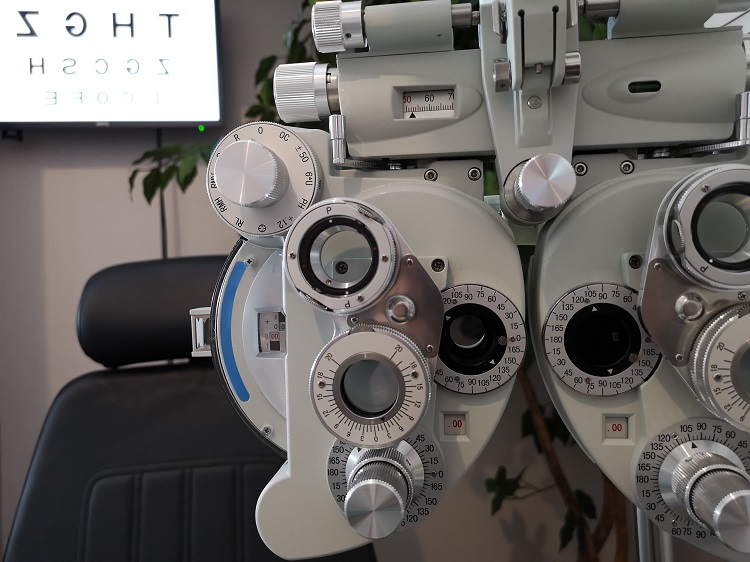
A Phoropter inside an Eye Exam Room
A phoropter is what most optometrists use to measure glasses prescriptions.

Mainly, optometrists conduct eye exams. During an comprehensive eye exam, optometrist will:

  1. Gather information about your eyes, your health, your family, etc in order to understand your history and uncover potential needs & problems.
  2. Establish baseline measurement for your vision, eye movements, eye coordination, pupil reflex, visual field, etc.
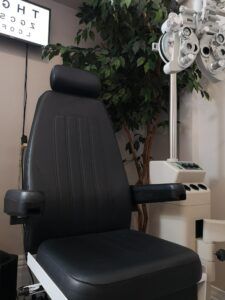
  3. Measure your prescription for glasses.Patient Chair inside an Eye Exam Room
  4. Investigate the health of your eyes.
  5. Develop a treatment plan for any diagnosis discovered during the exam.
  6. Inform and educate patients about issues relevant to them.
  7. And more!

Optometrists also perform a slew of different types of appointments as well such as contact lens fitting, first-time contact lens teachings, follow ups for different kinds of eye conditions & diseases, laser surgery consultations & post-op follow ups, foreign body removal, vision therapy, etc.

Where Do Optometrists Work?

Optometrists can work in a variety of different settings. Here are some of the most common ones:

  • Privately owned optometry clinics
  • Privately owned optical stores
  • Large optical chain stores
  • Ophthalmology (eye specialist/surgeon) clinics
  • Hosptials

How Do Optometrists Get Paid?

Generally speaking, optometrists are paid per patient. How much they get paid per patient depends on their professional fees and how much insurance companies/government bodies reimburse them for insured services.

An entrepreneurly-inclined optometrist can open his/her own practice and supplement income from eye exams with sales of glasses, contact lenses, eye care products, special testing, etc.

Some optometrists choose not to own a practice but instead work for an optometrist who does. In this case he/she would earn a negotiated percentage of exam exam fees as well as generated glasses sales.

Alternatively, it is possible for optometrists to find salaried positions where the optometrist’s pay does not depend on the volume of patients seen or number of glasses sold.

It is very unlikely for optometrists to be paid an hourly wage.

How Often To See An Optometrist?

The recommended frequency of eye exams varies based on jurisdiction.

The Canadian Association of Optometrists recommends:Canadian Association of Optometrists

  • First eye exam between 6 and 9 months
  • At least one eye exam between the age of 2 and 5
  • Every year from ages 6 to 19
  • Every 2-3 years for people aged 20 to 39
  • Every 2 years for people age 40 to 64
  • Annually after age 65

The American Optometric Association recommends:American Optometric Association Logo

  • First eye exam between 6 and 12 months
  • At least one eye exam between the age of 3 and 5
  • Every year from ages 6 to 17
  • At least every 2 years for people aged 18 to 64
  • Annually after age 65

You’ve probably got a general sense for what optometry is now, but of course, the information on this page just barely scratches the surface. If you want to know more, then by all means drop your question in the comments below and I would be happy to answer if for you.

If you are interested in becoming an optometrist – specifically in Canada, read this helpful resource.

Cheers,

Jason