How To Become An Optometrist In Canada

How To Become An Optometrist In Canada

Are you thinking of becoming an optometrist or an optician? Well, you’ve come to the right place! On this website, you’ll find tons of resources to help you along your journey. In this article, I will be detailing how to become an optometrist in Canada.

How To Become An Optometrist In Canada Flowchart

Many Paths

The first thing to understand is that there isn’t just one way. I will try to cover as many possible paths to becoming an optometrist in Canada, but just know that if your circumstances are different it doesn’t necessarily mean that you shouldn’t give it a try.

With that said, all paths inevitably have you going through an optometry school, so that’s where we should start.

Choosing An Optometry School

Depending on how far you’re willing to travel and how much you’re willing to spend on going to optometry school, you have a lot of options.

With the exception of a couple of optometry schools in the United States, if you graduate from optometry school anywhere in North America you will be eligible to take Canada’s national optometry board exam without the need for additional schooling.

However, if you intend on going to optometry school in the United Kingdom, Australia, or anywhere else in the world, you will be required to complete a bridging program upon your return to Canada. Once completed, you will be able to challenge the board exam and become licensed. This is called the International Optometric Bridging Program and it is offered at the University of Waterloo in Waterloo, Ontario.

Here are some different optometry school options for you around the world:

Optometry Schools in Canada:

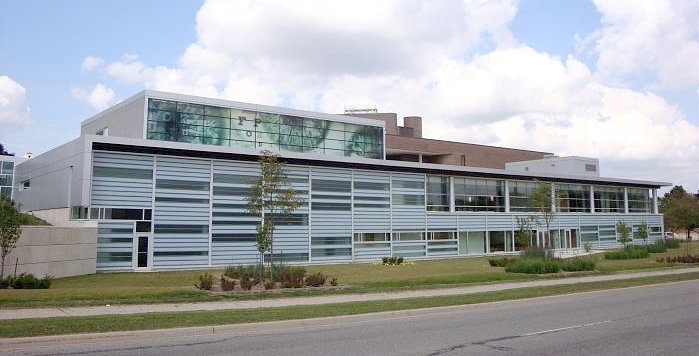
University of Waterloo School of Optometry and Vision Science
An exterior view of the University of Waterloo School of Optometry and Vision Science

Optometry Schools in The United States of America:

Optometry Schools in The United Kingdom:

Optometry Schools in Australia:

Preparing For Your Optometry School Application

Getting into optometry school can be difficult. The field of applicants is always very large and thus, very competitive. For your application to stand out and to improve your chances, here are a few recommendations.

Ensure A High GPA

Your GPA will be one of the most important factors in your application. This goes without saying and is obviously easier said than done. Take your university studies seriously, choose your courses carefully and seek all available help if you are struggling (and even if you’re not).

Score Well On The Optometry Admission Test (OAT)

Your OAT score will be compared to every other applicant, therefore it must be above average for you to have a good chance.

For many optometry schools, you can look up the average OAT score of successful applicants. If you can’t find it on the school’s website, try to contact someone at the school to find out. This can help prevent you from applying with a substandard OAT score.

Job Shadow

Optometry schools want to know if you’re motivated to become an optometrist. Having a good GPA and a high OAT score proves that you’re intelligent, but if you don’t show that you’re seriously considering entering optometry, it’ll hurt your chance.

Job shadowing is a basic and frankly expected way to demonstrate that you’ve spent time researching the profession and know what you’re getting yourself into.

I would recommend spending at least a summer or two volunteering/job shadowing at a busy full-scope optometry practice.

Get A Reference Letter From Someone Who Knows You Well

As part of your optometry school application, you will have to submit a reference letter written by a licensed optometrist.

It is difficult for an optometrist to highlight your strengths in a reference letter if he/she does not know you well.

That’s why spending lots of time job shadowing and volunteering in an optometry clinic is helpful. By doing so, not only are you showing your dedication to the profession, but you’re also allowing your supervising optometrist to get to know you and really boast about you in your reference letter.

Acquire Relevant Work Experience

Job shadowing and volunteering can open doors to new opportunities like part-time work. Having real-world job experience in the eye care industry is a great asset for your application and can really set you apart from other applicants.
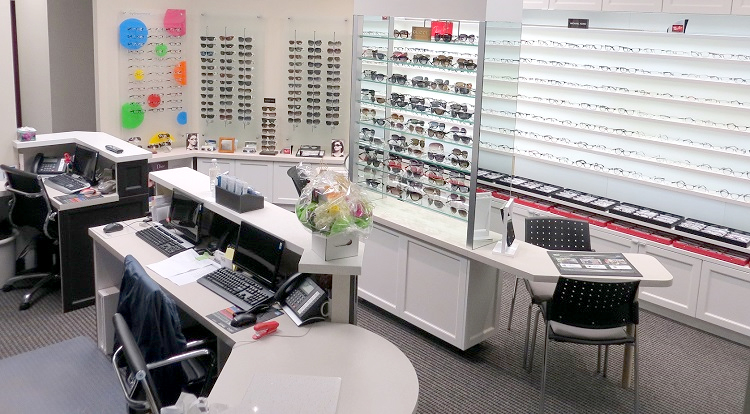
Optometry Office
Working or volunteering in an optometry office is a great experience and looks good for your application.

Show That You Are Well Rounded

Having a one-track mind on optometry isn’t necessarily a good thing. You don’t want your time spent volunteering in optometry offices to come off something you did only to pad your application.

Make sure you have solid volunteer experience in other fields. Volunteer opportunities are not difficult to find when you’re in university so it’s almost expected that you should be involved in some clubs or charitable organizations.

Making It Through Optometry School

Optometry School is a fairly rigorous 4-year program, but nothing you can’t handle if you’ve been accepted into one. Just pass all your courses and graduate.

Don’t worry, there are plenty of opportunities to have fun along the way as well. These 4 years will fly by.

Graduating From University of Waterloo School of Optometry
Here I am posing for pictures with classmates at my convocation ceremony in 2012.

Taking The National Board Exam

To become an optometrist in Canada, in or after your last year of Optometry School you will have to take Canada’s national board exam called the OEBC (Optometry Examining Board of Canada) exam.

The OEBC exam consists of 2 parts. They are the:

  1. Written Exam
  2. Objective Structured Clinical Exam (OSCE)

Believe me when I say that you only want to take the OEBC exam once, so prepare well! The exam is only offered twice per year so having to retake it will delay you getting licensed by at least 6 months. Furthermore is it not cheap!

Here’s the list of OEBC fees:
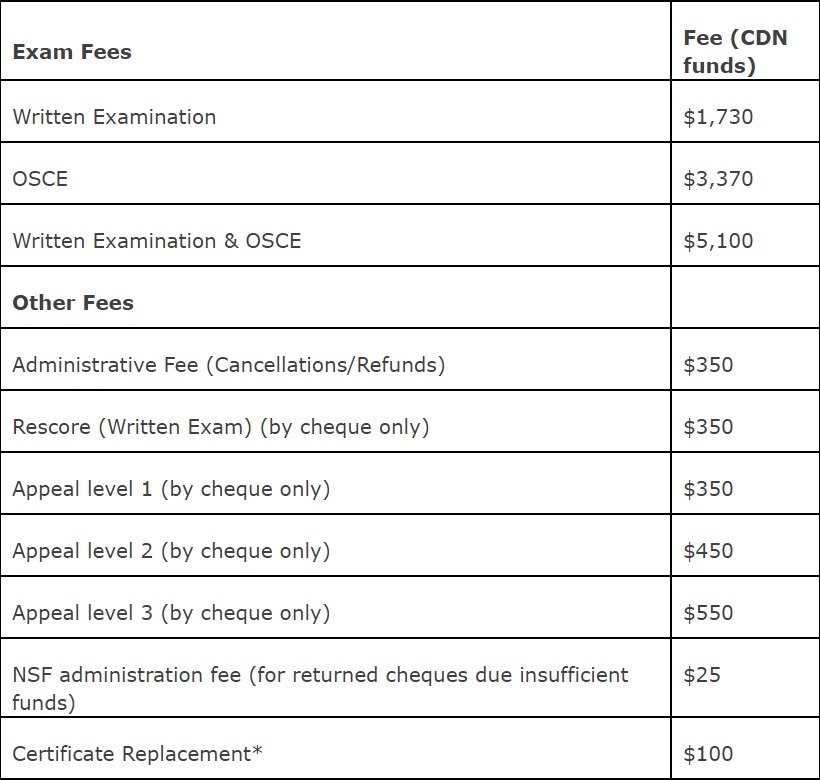
Optometry Examining Board of Canada Fees

Getting Licensed

When you finally graduated from your chosen Optometry School and pass the board exam, you’re not an optometrist yet. You still have to become licensed in the jurisdiction that you plan to work in.

In Canada, each province has it’s own regulatory body called a College (or Association) that is responsible for licensing optometrists. I.e., The College of Optometrists of Ontario, The Alberta College of Optometrists, L’Ordre des optométristes du Québec, etc.

Each province’s College may have slightly different requirements, but in general, the requirements for obtaining a license to practice Optometry are:

  1. Pay a registration fee
  2. Provide your optometry diploma
  3. Provide your official optometry school transcript
  4. Provide results of your national board exam (called the OEBC)
  5. Pass a provincial jurisprudence exam
  6. Provide your CPR certification
  7. Provide a clean police background check

Here is a list of every province’s College/Association for more registration details:

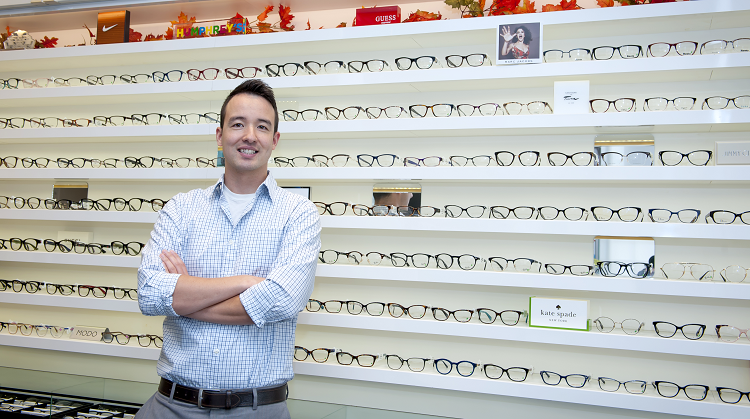
Congratulations, You’ve Now Become An Optometrist in Canada!
Dr Jason Woo Optometrist in Toronto Canada1

And that’s how to become an optometrist in Canada! Yes it’s a long road and there’s a lot of work involved, but nothing in life worth doing is easy. If you have questions about any step of the process, I’m here to help, just leave a comment below.

Do you think optometry is not for you? Check out how to become an optician in Canada!

 

how-to-make-the-most-of-your-studies-person-studying

How to Make the Most of Your Studies

In this post, I’m going to share with you some tips to help you make the most of your studies. Note that I chose Opticianry as an example, but these tips can be applied to any field of study. Ready? Let’s dive in!

1. Know What to Expect

Knowing what to expect from your chosen program, is mentally preparing yourself for what lies ahead, so that you are less likely to feel stressed out, confused, and frustrated down the road. This is especially important if you have been away from school for a while or are going to enter a new school system in a new country. If you are considering studying Opticianry, I recommend reading my previous posts on;

In general, you want to gather as much information as you possibly can, and there are many ways to do that. 

The Website

The first and most obvious one is; read the school’s website inside and out! Usually, all schools have a website that highlights key information for new applicants and current students. You can learn about the school’s reputation, and faculty, the specific program’s curriculum, and possible career paths. You can also directly contact the program coordinator, or join a student forum if you have specific questions.

The Regulatory Body & Association

Next, look up the profession’s regulatory body website. This should be your primary reference for field-specific information, such as; regulations, and standards of practice. Professional association websites have a variety of resources available, as well. You can access educational material, updates and news on the industry, and much more. For Ontario Opticians, the College of Opticians of Ontario (COO) is the regulatory body, and the Ontario Optician Association (OOA) is the professional association. Provincial associations are usually part of national associations, like the Optician Association of Canada (OAC) for OOA.

Orientation & Open House

Make sure to attend the school’s open house and orientation days. If you happen to miss the open house, make sure you do attend the orientation day! Because it would be your first official day at the school! You will have the opportunity to;

  • Get a feel for the school’s atmosphere,
  • See the facilities, such as your classrooms and labs,
  • Meet your program coordinator, future classmates, and some of your teachers in person,
  • Ask any unanswered questions that came up during your research,
  • And if the weather condition allows, you can party under the sky and eat hot dogs and veggie burgers! Yay!

Other Resources

Last but not least, take your research a step further by looking up other field-specific forums, websites, online magazines, and blogs. An example would be…ahem…The Lost Contacts 🙂 You can find useful information that might help you before, during, and after your studies! I will share with you a list of these resources in the near future.

Remember to collect any and all information you find during your research in a file; it can be a folder in your browser’s Bookmarks section, a folder on your computer, or a physical copy. Keep this collection, and use it as your reference throughout your studies.

2. Develop a Plan of Action

Now that you know what to expect, it’s time to develop a plan of action. To do so, there are a few things you need to gather;

  • Your list of strengths & weaknesses (We covered this here)
  • Your research collection (explained above)
  • Pen & paper (or your journal)

To create your plan of action the best way is the top-down approach. I divided the study period into four general categories;

  • Getting Licensed,
  • Writing the Board Exam,
  • Graduate,
  • and Enroll.

You can assign a time-line to each category, plus definitive sub-categories that are necessary to complete, to climb the pyramid. Here’s when your research collection comes handy!
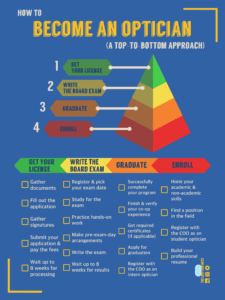
To paint a clearer picture for you, I used Opticianry as an example in the diagram below. Let’s have a look;

As you see, at the top of the pyramid is “registered/licensed Optician” which is where you want to land after finishing your studies. (Now, of course, getting your license is not the end of the journey, rather it’s the beginning. However, for the sake of this article, our focus is on studies, only.) From the top, we work our way backward, creating a list of requirements step by step. As you progress through school, you can update your plan to reflect your current situation and help you stay on track.

3. Prepare Your Environment

Now that you know what to expect and have your plan of action, it’s time to prepare your environment for execution! And by that I mean, submerging yourself into your field of study. Since we have limited resources, like time and energy, the best way to make the most out of them is to focus our attention. It’s not easy to do so, not at all! But there are things we can do to minimize distraction as much as possible. Let’s get down to it!

First, look at your strengths & weaknesses list.

In Choosing your field of study we talked about how to identify your strengths and weaknesses. Your time at school is the best opportunity to work on improvement areas. It is also an opportunity for you to start building your resume, by relying on your strengths to get involved in extracurricular activities.

Second, start looking for a position in the field.

If you are not currently working in your field of study, I suggest starting your job search ASAP. The position you come across during your job search, probably will not be your dream job. However, I recommend taking it even if it’s slightly/remotely related to your field. This helps to keep your mental energy more focused, and you could explore the career possibilities out there with your specific education. For instance, if you are starting to study Optometry or Opticianry, but don’t have any experience in the optical field look for jobs as a sales associate, or a frame stylist at an optical store, or a receptionist position at an Optometrist’s or Ophthalmologist’s office. 

Third, connect with your teachers, classmates and other students.

Not only you will be creating an academic support system for yourself, but also you might end up making valuable connections that can help you in the future.

And finally, register with the regulatory body and professional association as a student.

As I mentioned in part 1, you will have access to valuable resources, and you get discounts and offers to attend professional events.


Summary

Today we learned the key to making the most of your studies lies in three things, and those are;

  • Do your research, so you know what to expect,
  • Categorize the information you collected to develop a plan of action,
  • Start executing your plan, by preparing your environment to work your way up.

I hope you find this post helpful!
Feel free to share your tips for making the most out of your studies, I would love to hear your thoughts!
Talk to you in the next post!

Choosing Your Field of Study

Choosing Your Field of Study

Choosing your field of study, or more specifically, choosing what to take on as your career, can be one of the hardest decisions anyone has to make in life. No matter what stage of life you are in, it is worth taking some time to get to know yourself better. This is called self-awareness, and if you commit to it before making any life-changing decisions, in a few years when you look back, you will see how much physical, mental, and emotional energy you have saved, not to mention money!

Now, some of you might say that’s not the case for you! And you decided on a career at a young age! If that’s you, well…kudos to you! However, I bet there are some of you who don’t know what to pursue. At least not as of yet! In that case, don’t worry…you are not alone! 

Today, I’m sharing with you a few tips that helped me in making a decision.

Make a list of your strengths & weaknesses

When choosing a field of study it’s a good idea to take inventory of your strengths and weaknesses before committing to anything. All of us have some sort of idea of what we do well and what we don’t. However, having a tangible representation, such as a list, can help in reinforcing the good qualities and developing a plan of action for areas of improvement. I suggest taking your time when preparing this list, maybe over a few days. Try to find a time and place where you cannot be distracted and can gather your thoughts. To start identifying your areas of strength and weakness think of the things you have done and your experiences until this point in time, and look at them objectively.

For instance, think of any subject you have studied at school, hobbies or activities that you do, compliments or criticism you’ve received from someone regarding your character or skills, something you have done or accomplished that made you feel proud or disappointed. If you are still in high school, looking at the rubrics from your assignments and the mark you received can be very helpful to gain more insight into things. Remember to give yourself a break after spending some time thinking and writing. 

You can also, talk to your trusted acquaintances – friends, family, colleagues, etc. – to learn more about yourself. Usually, people see us differently than we see ourselves. It can be interesting to hear their point of view, as well. When you are done, keep your list as a reference to go back to every once in a while to see where you stand with your improvements, and to remind yourself of the good things about you.

Consider Volunteering

How to choose your field of study

Volunteering is a great opportunity to meet new people and learn new things. The experience you gain through volunteer work can impact what you choose to study in the future. 

Try to find a position in a field you are interested in or are curious about. If you are a student try to take on different roles in different industries to expand your views. You might end up hating a field or falling in love with one. Whatever the outcome, you will have a better understanding of your likes and dislikes. If you are interested in giving it a try, check out the links below to get started;

  1. Volunteer Canada
  2. Volunteer Match
  3. Ontario Nature
  4. Canadian Red Cross
  5. Volunteer Ontario
  6. Toronto Charities
  7. City of Toronto
  8. Volunteer Toronto
  9. The CNIB Foundation

Take Personality Tests

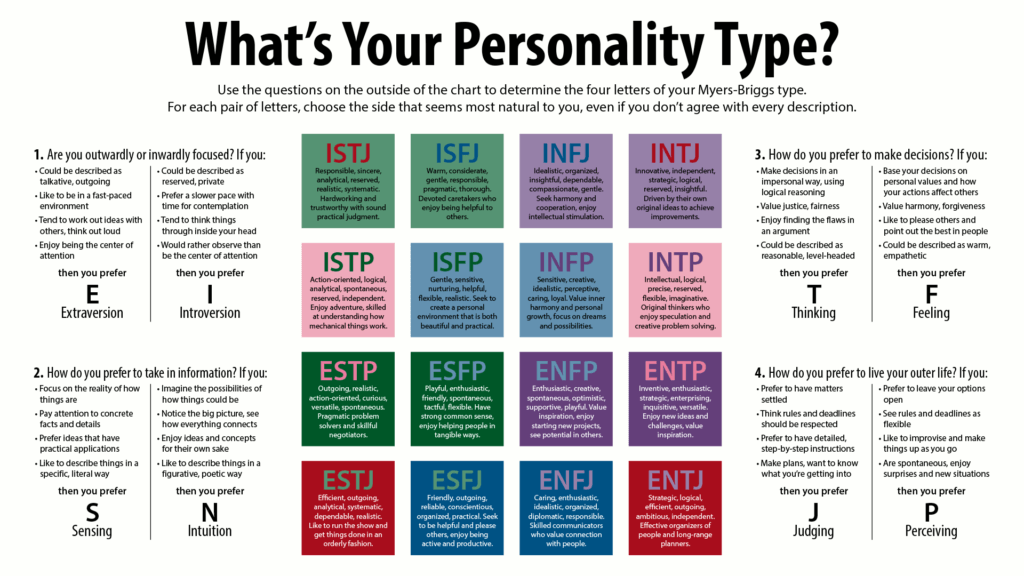
Chart of Myers Briggs Types

Another way to learn more about yourself is by taking standardized personality tests. Standardized Personality tests are tools developed by scientists and scholars, especially in the field of psychology. The purpose of these tests is to identify and categorize different aspects of human behaviour. The insight that these tests give us, can have many practical applications, one of which is finding a suitable field of study or career.

 One of the most popular personality tests out there is the Myer-Briggs Type Indicator or MBTI. Some of you might already be familiar with this test. For those of you who might not be, here’s a little background;

MBTI or Myer-Briggs Type Indicator is named after its developers, Isabel Briggs Myers and Katharine Cook Briggs, a mother-daughter duo, who developed this tool over 30 years of careful study, research, and analysis of similarities and differences between humans. The test identifies 16 personality types each made of 4 major indicators of human behavioural tendencies. Each of these 4 indicators has 2 contrasting qualities. Based on MBTI our personalities are made up of how we view the world, how we perceive information, how we process that information to make decisions, and how we structure our values. Take a look at the chart below, for a summary of these 16 personality types, and their characteristics.

If you can’t wait to find out what your personality type is, and you love to learn and have fun, then you’re going to love these;

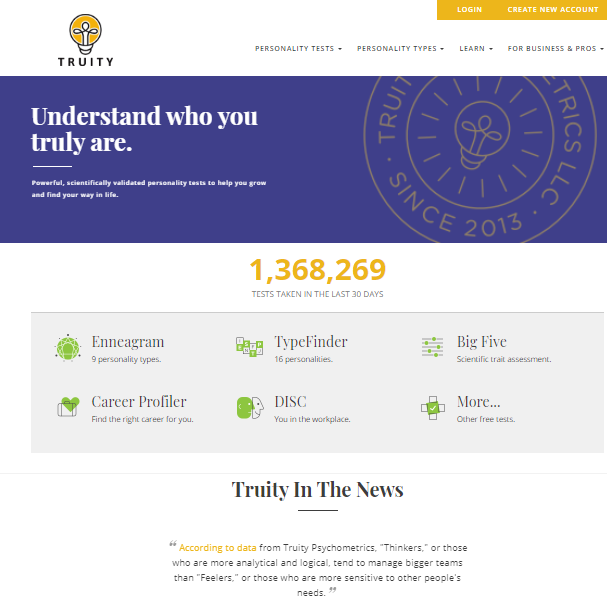
Truity

Take Personality Tests

Truity is a website dedicated to psychometric tests, and it offers both free and paid tests. An account is not needed to take the tests and view your results. However, you might want to consider one if you want to save your results & review them later on. What I like about Truity is that the test results include potential career options. And if you find yourself interested in a field you can go ahead and read on job-specific requirements, or take their career aptitude test to narrow down your options. You can take the MBTI test here, for free!

16 Personalities

Take Personality Test

As you might have guessed, 16 Personalities offers only the MBTI test. What makes it interesting is that you can join their community and find like-minded people to connect with, or read on interesting blog posts to learn more about your type and maybe those of your friends!

Frank James

And my personal favourite, Frank James, a Youtuber who specializes in MBTI comedy sketches! So, if you are tired after all the test-taking, check out his channel and refresh with a good laugh. You might also learn a thing or two about other personalities in your life! 😉

Visit Job Bank Canada

Last but not least is a useful resource, great for gaining insight not only into your qualities but also into different fields of study and work. Job Bank Canada provides local, and current data and trends on occupations and fields of study. You can use the career planning tool to;

  • learn about a field of study,
  • take career quizzes or in other words, personality and aptitude tests,
  • discover job profiles,
  • and use the skills and knowledge checklist to take inventory of your abilities.  

I hope this post helps you to have a better understanding of what your desires are. Also, I hope you find these ideas helpful in choosing your field of study. If you are interested to know about my field of study, check out this post. I  also recommend reading this post on optometry, to learn more about careers in the eye care industry.  As always feel free to ask any questions, or leave a comment. I would love to hear about what helped you choose a career!

What is Optometry - Featured Image

What is Optometry?

Optometry Definition

In a neat little sentence, you could say that: Optometry is a regulated health care profession whose practitioners are responsible for examining the eyes in order to diagnose, treat, and/or prevent disorders of the visual system.

OK, boooring… right?

Wrong!

Sure, optometrists do all the typical things that you think they do. They get you to read letters on a chart, they ask you “1 or 2” a bunch of times until they find your prescription for glasses, they poke around your eyes to see if you have cataracts, or glaucoma, or macular degeneration, etc.

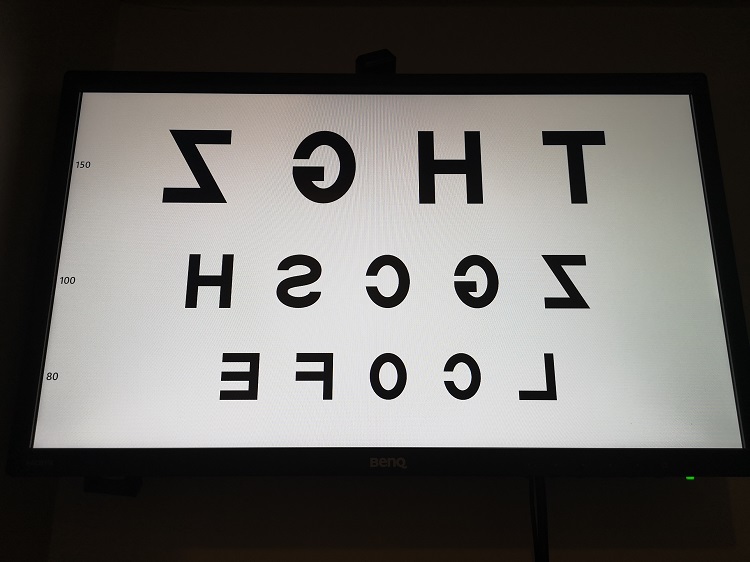
An Eye Chart
Optometrists use an eye chart, often computerized like this one, to assess one’s visual acuity.

But they also sit on a wealth of knowledge that could potentially prevent infants from developing a lazy eye, help a child with their learning deficiency, manage nearsightedness that seems to be out of control, reverse chronically dry & itchy eyes, reverse compensatory head tilts from eye-muscle imbalances, restore a person’s depth perception, or even save a life by detecting subtle signs that could mean big danger.

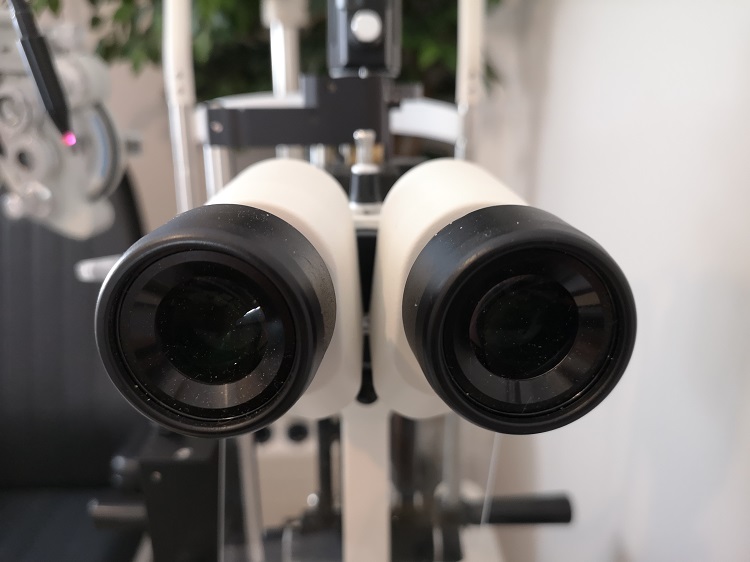
Slit Lamp Biomicroscope
A slit lamp biomicroscope is what optometrists use to observe the eyes under high magnification in order to assess eye health.

Who Are Optometrists?

Optometrists are primary eye care professionals. They are the doctors that you see for routine eye care as well the first doctors you see for emergency eye care.

Optometrists are trained in optometry schools. They are not medical doctors that have chosen to specialize in treating eyes (those would be ophthalmologists), but rather, they are doctors of the separate discipline of Optometry.

Optometry is also distinct (though in many ways related) to opticianry, which you can learn more about here.

What Do Optometrists Do?

Optometrists work out of various clinical settings. They can be found in independent eye care clinics, independent optical shops, chain optical stores, hospitals, laser surgery centers, etc.

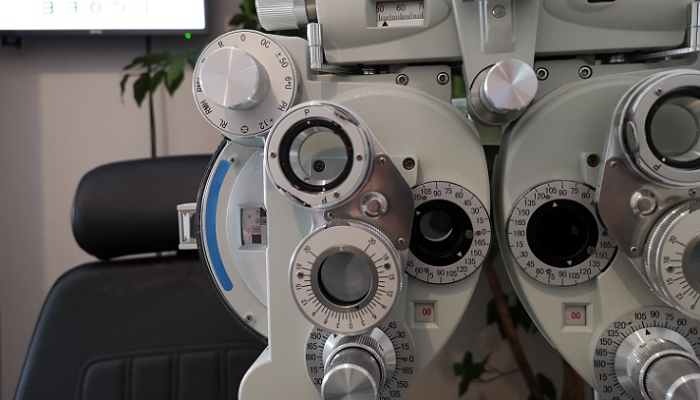
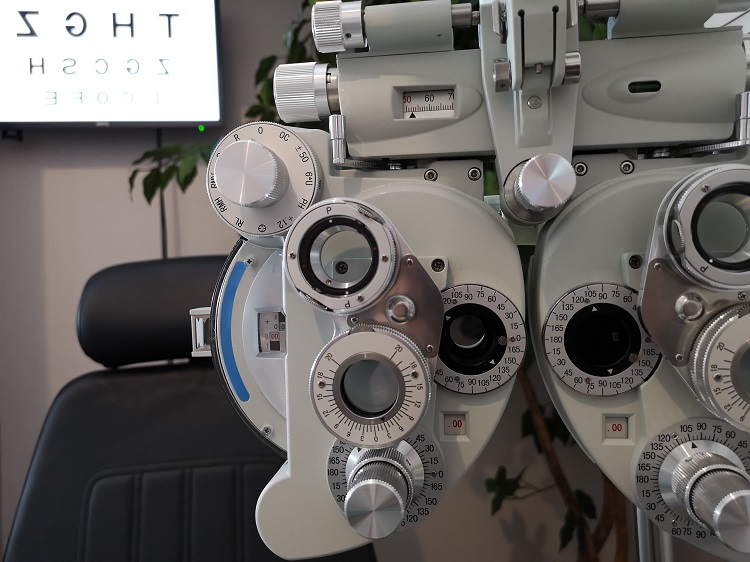
A Phoropter inside an Eye Exam Room
A phoropter is what most optometrists use to measure glasses prescriptions.

Mainly, optometrists conduct eye exams. During an comprehensive eye exam, optometrist will:

  1. Gather information about your eyes, your health, your family, etc in order to understand your history and uncover potential needs & problems.
  2. Establish baseline measurement for your vision, eye movements, eye coordination, pupil reflex, visual field, etc.
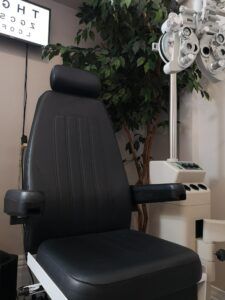
  3. Measure your prescription for glasses.Patient Chair inside an Eye Exam Room
  4. Investigate the health of your eyes.
  5. Develop a treatment plan for any diagnosis discovered during the exam.
  6. Inform and educate patients about issues relevant to them.
  7. And more!

Optometrists also perform a slew of different types of appointments as well such as contact lens fitting, first-time contact lens teachings, follow ups for different kinds of eye conditions & diseases, laser surgery consultations & post-op follow ups, foreign body removal, vision therapy, etc.

Where Do Optometrists Work?

Optometrists can work in a variety of different settings. Here are some of the most common ones:

  • Privately owned optometry clinics
  • Privately owned optical stores
  • Large optical chain stores
  • Ophthalmology (eye specialist/surgeon) clinics
  • Hosptials

How Do Optometrists Get Paid?

Generally speaking, optometrists are paid per patient. How much they get paid per patient depends on their professional fees and how much insurance companies/government bodies reimburse them for insured services.

An entrepreneurly-inclined optometrist can open his/her own practice and supplement income from eye exams with sales of glasses, contact lenses, eye care products, special testing, etc.

Some optometrists choose not to own a practice but instead work for an optometrist who does. In this case he/she would earn a negotiated percentage of exam exam fees as well as generated glasses sales.

Alternatively, it is possible for optometrists to find salaried positions where the optometrist’s pay does not depend on the volume of patients seen or number of glasses sold.

It is very unlikely for optometrists to be paid an hourly wage.

How Often To See An Optometrist?

The recommended frequency of eye exams varies based on jurisdiction.

The Canadian Association of Optometrists recommends:Canadian Association of Optometrists

  • First eye exam between 6 and 9 months
  • At least one eye exam between the age of 2 and 5
  • Every year from ages 6 to 19
  • Every 2-3 years for people aged 20 to 39
  • Every 2 years for people age 40 to 64
  • Annually after age 65

The American Optometric Association recommends:American Optometric Association Logo

  • First eye exam between 6 and 12 months
  • At least one eye exam between the age of 3 and 5
  • Every year from ages 6 to 17
  • At least every 2 years for people aged 18 to 64
  • Annually after age 65

You’ve probably got a general sense for what optometry is now, but of course, the information on this page just barely scratches the surface. If you want to know more, then by all means drop your question in the comments below and I would be happy to answer if for you.

If you are interested in becoming an optometrist – specifically in Canada, read this helpful resource.

Cheers,

Jason