
Choosing your field of study, or more specifically, choosing what to take on as your career, can be one of the hardest decisions anyone has to make in life. No matter what stage of life you are in, it is worth taking some time to get to know yourself better. This is called self-awareness, and if you commit to it before making any life-changing decisions, in a few years when you look back, you will see how much physical, mental, and emotional energy you have saved, not to mention money!
Now, some of you might say that’s not the case for you! And you decided on a career at a young age! If that’s you, well…kudos to you! However, I bet there are some of you who don’t know what to pursue. At least not as of yet! In that case, don’t worry…you are not alone!
Today, I’m sharing with you a few tips that helped me in making a decision.
Make a list of your strengths & weaknesses

When choosing a field of study it’s a good idea to take inventory of your strengths and weaknesses before committing to anything. All of us have some sort of idea of what we do well and what we don’t. However, having a tangible representation, such as a list, can help in reinforcing the good qualities and developing a plan of action for areas of improvement. I suggest taking your time when preparing this list, maybe over a few days. Try to find a time and place where you cannot be distracted and can gather your thoughts. To start identifying your areas of strength and weakness think of the things you have done and your experiences until this point in time, and look at them objectively.
For instance, think of any subject you have studied at school, hobbies or activities that you do, compliments or criticism you’ve received from someone regarding your character or skills, something you have done or accomplished that made you feel proud or disappointed. If you are still in high school, looking at the rubrics from your assignments and the mark you received can be very helpful to gain more insight into things. Remember to give yourself a break after spending some time thinking and writing.
You can also, talk to your trusted acquaintances – friends, family, colleagues, etc. – to learn more about yourself. Usually, people see us differently than we see ourselves. It can be interesting to hear their point of view, as well. When you are done, keep your list as a reference to go back to every once in a while to see where you stand with your improvements, and to remind yourself of the good things about you.
Consider Volunteering

Volunteering is a great opportunity to meet new people and learn new things. The experience you gain through volunteer work can impact what you choose to study in the future.
Try to find a position in a field you are interested in or are curious about. If you are a student try to take on different roles in different industries to expand your views. You might end up hating a field or falling in love with one. Whatever the outcome, you will have a better understanding of your likes and dislikes. If you are interested in giving it a try, check out the links below to get started;
- Volunteer Canada
- Volunteer Match
- Ontario Nature
- Canadian Red Cross
- Volunteer Ontario
- Toronto Charities
- City of Toronto
- Volunteer Toronto
- The CNIB Foundation
Take Personality Tests
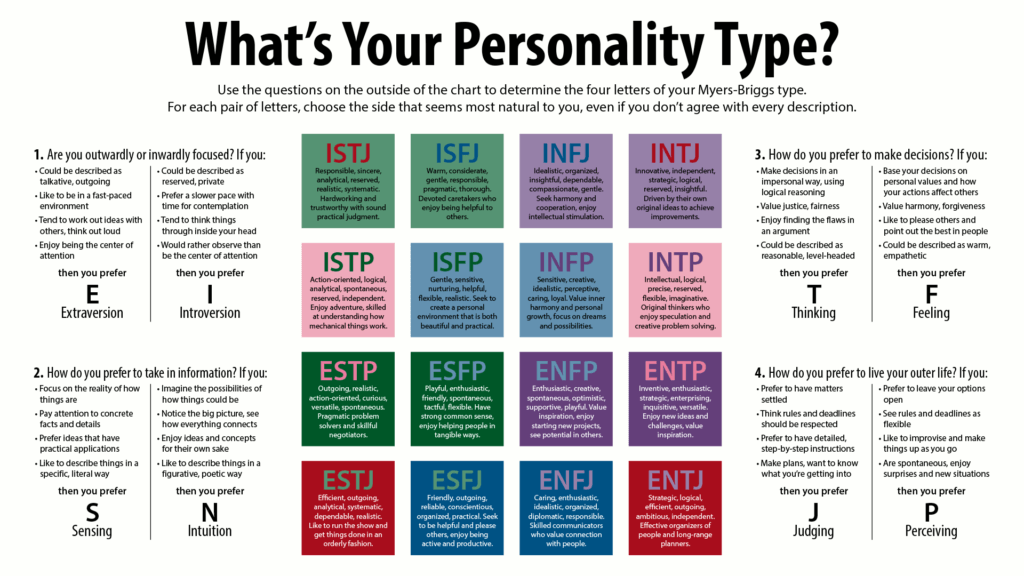
Another way to learn more about yourself is by taking standardized personality tests. Standardized Personality tests are tools developed by scientists and scholars, especially in the field of psychology. The purpose of these tests is to identify and categorize different aspects of human behaviour. The insight that these tests give us, can have many practical applications, one of which is finding a suitable field of study or career.
One of the most popular personality tests out there is the Myer-Briggs Type Indicator or MBTI. Some of you might already be familiar with this test. For those of you who might not be, here’s a little background;
MBTI or Myer-Briggs Type Indicator is named after its developers, Isabel Briggs Myers and Katharine Cook Briggs, a mother-daughter duo, who developed this tool over 30 years of careful study, research, and analysis of similarities and differences between humans. The test identifies 16 personality types each made of 4 major indicators of human behavioural tendencies. Each of these 4 indicators has 2 contrasting qualities. Based on MBTI our personalities are made up of how we view the world, how we perceive information, how we process that information to make decisions, and how we structure our values. Take a look at the chart below, for a summary of these 16 personality types, and their characteristics.
If you can’t wait to find out what your personality type is, and you love to learn and have fun, then you’re going to love these;
Truity
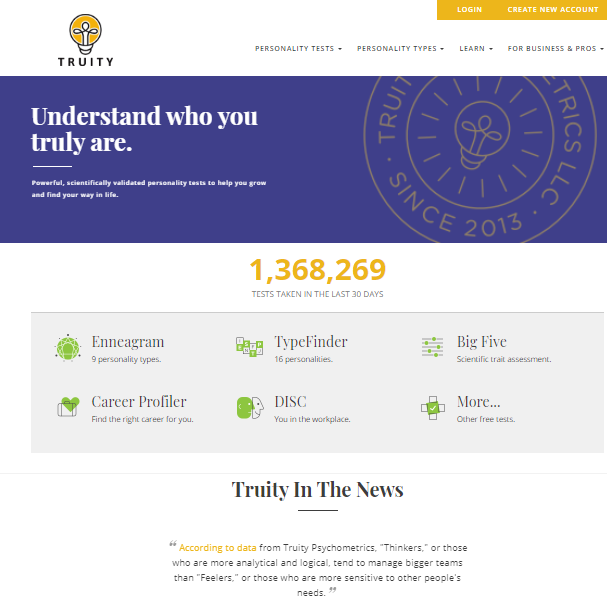
Truity is a website dedicated to psychometric tests, and it offers both free and paid tests. An account is not needed to take the tests and view your results. However, you might want to consider one if you want to save your results & review them later on. What I like about Truity is that the test results include potential career options. And if you find yourself interested in a field you can go ahead and read on job-specific requirements, or take their career aptitude test to narrow down your options. You can take the MBTI test here, for free!
16 Personalities
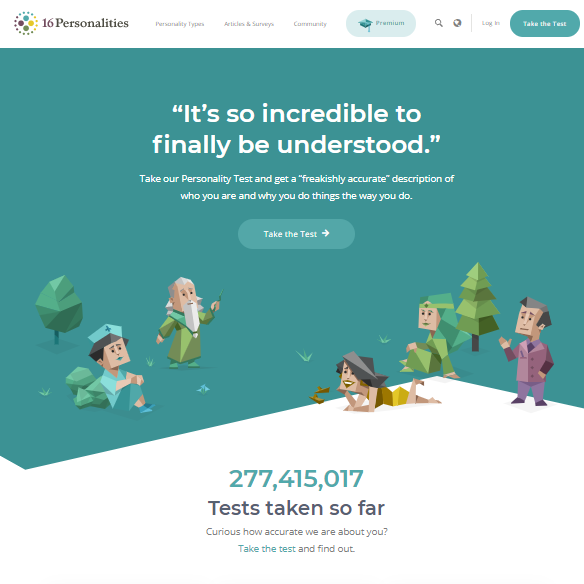
As you might have guessed, 16 Personalities offers only the MBTI test. What makes it interesting is that you can join their community and find like-minded people to connect with, or read on interesting blog posts to learn more about your type and maybe those of your friends!
Frank James
And my personal favourite, Frank James, a Youtuber who specializes in MBTI comedy sketches! So, if you are tired after all the test-taking, check out his channel and refresh with a good laugh. You might also learn a thing or two about other personalities in your life! 😉
Visit Job Bank Canada
Last but not least is a useful resource, great for gaining insight not only into your qualities but also into different fields of study and work. Job Bank Canada provides local, and current data and trends on occupations and fields of study. You can use the career planning tool to;
- learn about a field of study,
- take career quizzes or in other words, personality and aptitude tests,
- discover job profiles,
- and use the skills and knowledge checklist to take inventory of your abilities.
I hope this post helps you to have a better understanding of what your desires are. Also, I hope you find these ideas helpful in choosing your field of study. If you are interested to know about my field of study, check out this post. I also recommend reading this post on optometry, to learn more about careers in the eye care industry. As always feel free to ask any questions, or leave a comment. I would love to hear about what helped you choose a career!